Gate Valve vs Ball Valve: Which Is Better for Residential Plumbing?
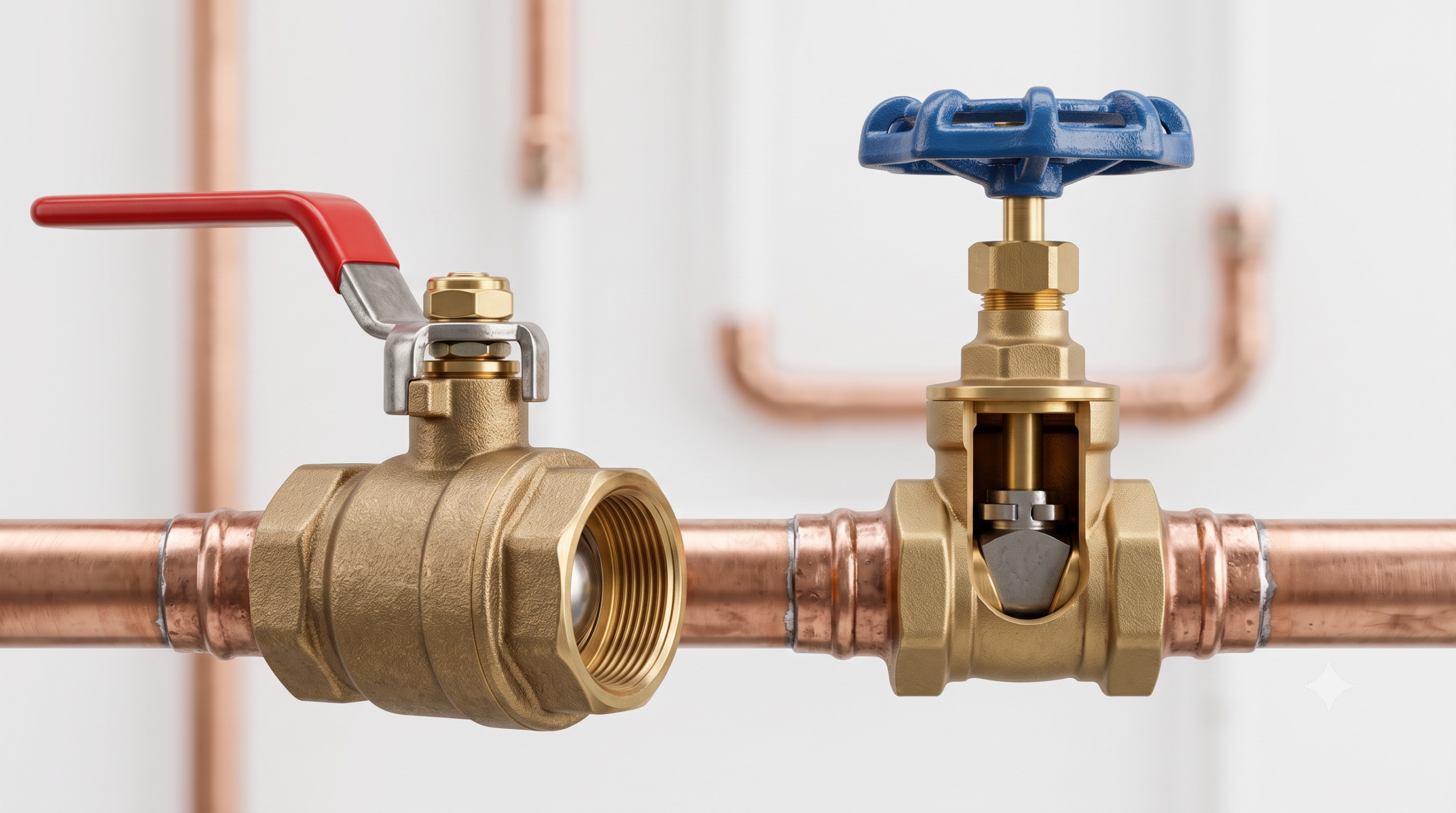
Gate valves and ball valves are two of the most common shut-off valves used in residential plumbing, but they are not designed for exactly the same job.
Both can stop water flow effectively, yet they differ in operation, maintenance, durability, and how often they should be used.
Choosing the wrong valve can lead to difficult operation, worn internal parts, leaks, and unnecessary replacement work.
After more than 15 years in the plumbing and hardware industry, I’ve found that ball valves are usually better for frequent household use, while gate valves still have advantages in certain main-line and concealed installations.
In this ToollQ comparison guide, you’ll learn the key differences between gate valves and ball valves, where each one performs best, and which valve is the better choice for your home.
Quick Answer
🏆 Quick Recommendation
✅ Choose a Ball Valve if you:
- Need a valve that’s opened and closed regularly
- Want quick quarter-turn operation
- Prefer easier maintenance
- Are upgrading most household plumbing fixtures
✅ Choose a Gate Valve if you:
- Need a valve for the main water supply
- Plan to leave the valve fully open or fully closed
- Are installing it inside a wall or concealed location
- Want minimal flow restriction when fully open
For most modern homes, a quality ball valve is the better all-around choice. However, gate valves still have an important role in specific residential plumbing applications.
Why You Can Trust ToollQ
Many comparison articles simply list specifications.
In real plumbing projects, the best valve depends on where it’s installed, how often it’s used, and how easy it will be to maintain in the future.
After more than 15 years in the plumbing and hardware industry, I’ve helped homeowners, plumbers, and contractors choose both gate valves and ball valves for a wide range of residential applications.
This guide is based on real customer questions and practical experience—not just technical specifications.
✅ What You’ll Learn
✔ The key differences between gate valves and ball valves
✔ Which valve is better for different plumbing applications
✔ Common mistakes homeowners make
✔ How to choose the right valve with confidence
💡 ToollQ Pro Tip
There isn’t a “best” valve for every situation.
The best choice depends on how and where the valve will be used.
What’s the Difference?
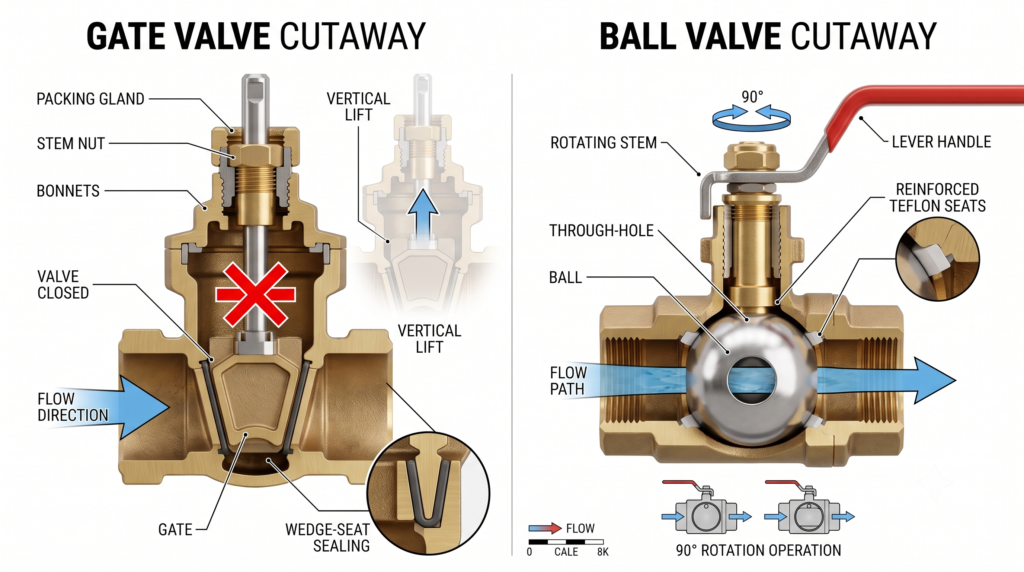
Although both valves are designed to stop water flow, they work in very different ways.
Understanding how each valve operates will help you choose the right one for your plumbing system.
Gate Valve
A gate valve uses an internal gate that moves up and down to control water flow.
It is designed to remain either fully open or fully closed, making it ideal for main water supply lines and concealed plumbing installations.
✔ Best For
- Main water supply
- Water storage tanks
- Concealed plumbing
- Long-term shut-off applications
Ball Valve
A ball valve uses a rotating ball with a hole through its center.
A simple quarter-turn of the handle opens or closes the valve, making it the preferred choice for most modern residential plumbing systems.
✔ Best For
- Kitchen plumbing
- Bathroom plumbing
- Outdoor faucets
- Water filters
- Water heaters
- Any valve used regularly
Both valve types perform well when used in the right application.
The key is choosing the valve that matches how often it will be operated and where it will be installed.
Side-by-Side Comparison
Both gate valves and ball valves are excellent shut-off valves when used correctly.
The table below highlights the key differences to help you decide which one is better for your plumbing system.
| Feature | Gate Valve | Ball Valve |
| Operation | Multiple turns | Quarter-turn |
| Ease of Use | Good | Excellent |
| Water Flow | Excellent when fully open | Excellent when fully open |
| Frequent Operation | ❌Not recommended | ✅Highly recommended |
| Maintenance | Moderate | Easy |
| Best Installation | Main supply, concealed lines | Kitchens, bathrooms, outdoor taps |
| Durability | Excellent | Excellent |
| Typical Cost | Usually higher | Usually lower |
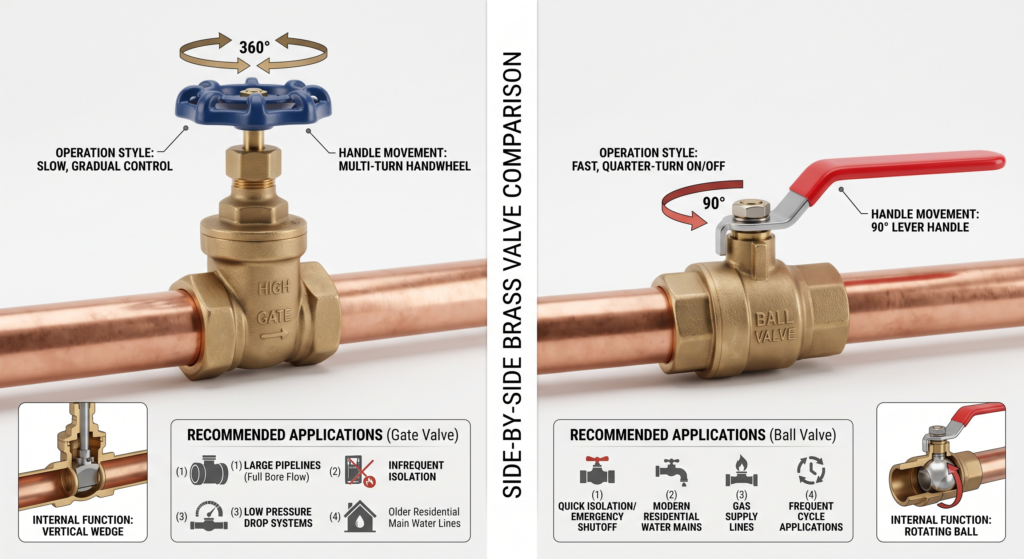
For most homeowners, a ball valve is the more practical choice because it’s easier to operate and requires less maintenance.
A gate valve remains an excellent option for main shut-off points and concealed installations where the valve is rarely operated.
💡 ToollQ Pro Tip
Don’t choose a valve based only on price.
Choose the valve that’s designed for how it will actually be used.
Which Valve Should You Choose?
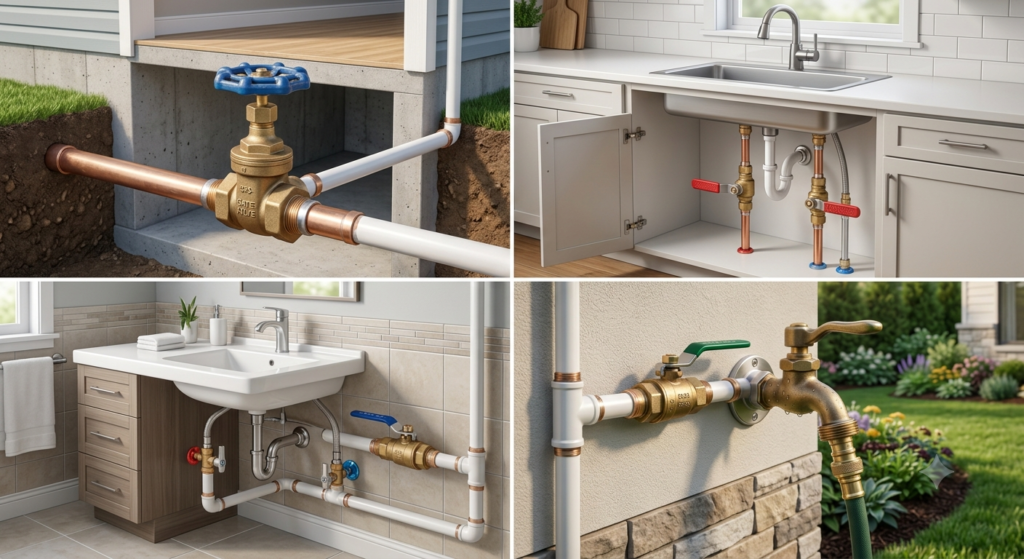
The right valve depends on where it will be installed and how often you’ll need to operate it.
Here are the recommendations I give most often based on real residential plumbing applications.
Main Water Supply
For the main water supply, a quality gate valve is still an excellent choice because it usually remains fully open for long periods and provides reliable shut-off when needed.
✅ Recommended
✔ Gate Valve
Reason:
Designed for long-term open or closed positions with minimal flow restriction.
Kitchen & Bathroom Plumbing
For kitchen sinks, bathroom fixtures, and other household plumbing that may need regular maintenance, a ball valve is usually the better option.
✅ Recommended
✔ Ball Valve
Reason:
Quick quarter-turn operation and easy shut-off during repairs or maintenance.
Outdoor Plumbing
Outdoor taps and garden plumbing are used more frequently than many homeowners realize.
A quality brass ball valve offers fast operation and dependable long-term performance.
✅ Recommended
✔ Ball Valve
Reason:
Easy to operate, durable, and ideal for repeated daily use.
Concealed Installations
If the valve will be installed inside a wall or another difficult-to-access location, durability becomes even more important.
Choose a high-quality valve that’s built to last, because replacing it later can be expensive.
✅ Recommended
✔ High-Quality Gate Valve
or
✔ Premium Brass Ball Valve
Choose based on the plumbing design and accessibility.
💡 ToollQ Pro Tip
Don’t ask which valve is better.
Ask which valve is better for your specific application.
Common Buying Mistakes
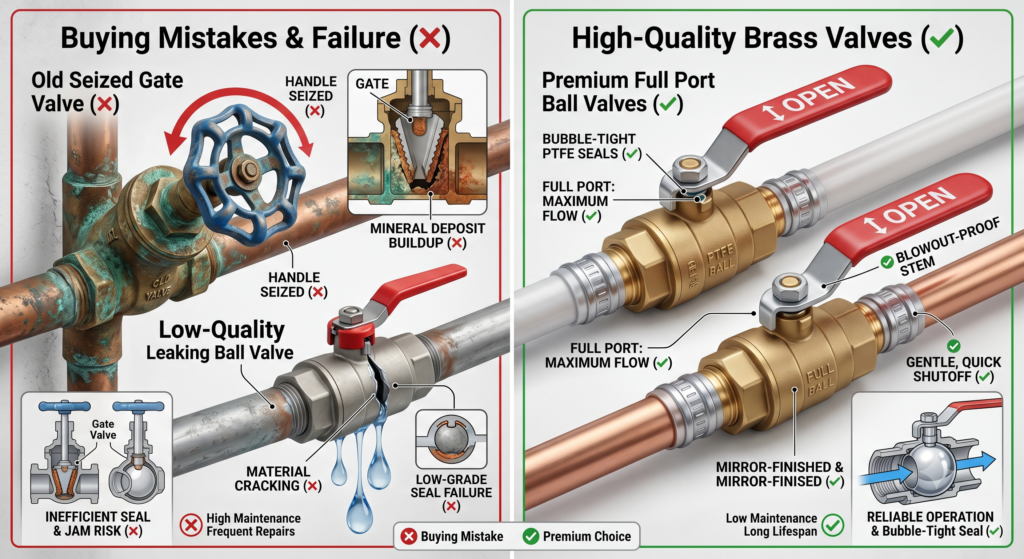
Choosing the Wrong Valve Type
Many homeowners assume gate valves and ball valves are interchangeable.
In reality, each valve is designed for different applications, and choosing the wrong type can reduce convenience and long-term reliability.
💡 ToollQ Tip
Choose the valve based on how it will be used—not just its appearance or price.
Buying Low-Quality Valves
Not all valves are manufactured to the same standard.
Low-quality valves may use thinner bodies, poor machining, or lower-grade internal components, which can shorten their lifespan.
💡 ToollQ Tip
A well-made valve is usually a better investment than the cheapest option available.
Ignoring Installation Location
A valve installed inside a wall or another difficult-to-access location should be chosen carefully.
Replacing a hidden valve later can require major plumbing work.
💡 ToollQ Tip
For concealed installations, prioritize quality and long-term reliability over initial cost.
Focusing Only on Purchase Price
Saving a few dollars on a valve may lead to much higher repair costs in the future if the valve leaks, fails, or becomes difficult to operate.
💡 ToollQ Tip
Think about the total cost of ownership, not just the purchase price.
Real-World Experience
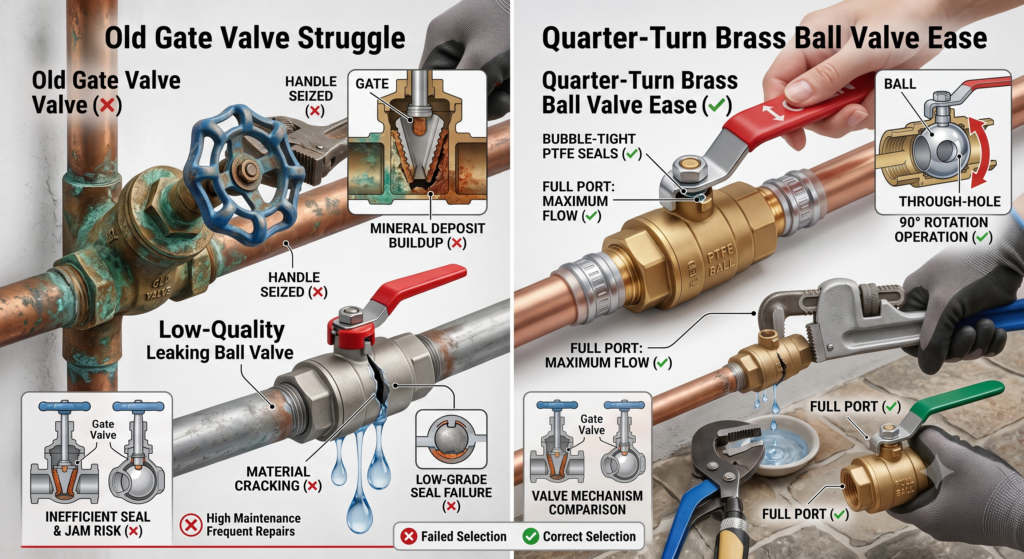
One homeowner needed to replace a leaking kitchen faucet, but the old gate valve had not been operated for many years.
When they tried to shut off the water, the valve was extremely difficult to turn and no longer closed completely.
🔧 The Lesson
A valve that is rarely operated should still be tested occasionally to ensure it works when you need it.
A Ball Valve Made Maintenance Easier
During a kitchen renovation, we replaced an old shut-off valve with a quality brass ball valve.
The homeowner immediately appreciated how easy it was to turn the water on and off with a simple quarter-turn handle.
💡 The Lesson
For valves that are used regularly, convenience and ease of operation can make a big difference over time.
Saving Money Ended Up Costing More
One customer chose a low-cost valve because it looked almost identical to a higher-quality model.
A few years later, the valve developed problems and had to be replaced, resulting in additional labour and repair costs.
💰 The Lesson
The cheapest valve isn’t always the most economical choice when long-term reliability is considered.
💡 ToollQ Lesson
Choosing the right valve isn’t about buying the most expensive product.
It’s about choosing the right valve for the right application.
Frequently Asked Questions
Which is better for most homes: a gate valve or a ball valve?
For most residential plumbing applications, a quality ball valve is the better choice because it’s easier to operate, seals reliably, and requires less maintenance.
Gate valves are still ideal for certain main water supply and concealed installations.
Can I replace a gate valve with a ball valve?
In many exposed residential plumbing systems, yes.
Just make sure the replacement valve matches your pipe size, pressure rating, and installation requirements.
Why are ball valves easier to use?
A ball valve only requires a quarter-turn to open or close.
This makes it faster, more convenient, and easier to operate during repairs or emergencies.
When should I choose a gate valve?
Choose a gate valve for main water supply lines or installations where the valve will stay fully open or fully closed for long periods.
They are not designed for frequent operation.
Which valve lasts longer?
Both gate valves and ball valves can last for many years when they’re well made and used in the right application.
The quality of the valve and proper installation are just as important as the valve type.
Does a ball valve reduce water flow?
No.
A fully open ball valve allows excellent water flow and is designed to provide minimal flow restriction during normal operation.
Final Verdict
Both gate valves and ball valves are reliable shut-off valves when used in the right application.
The key is choosing the one that matches how your plumbing system will actually be used.
For most modern homes, a quality brass ball valve is the better everyday choice because it’s easier to operate, requires less maintenance, and performs well in locations where the valve is used regularly.
Gate valves still play an important role in main water supply lines and concealed installations, where they remain fully open or fully closed for long periods.
💡 ToollQ Final Verdict
Don’t choose a valve because it’s more popular.
Choose the valve that’s designed for your plumbing system, your usage, and your long-term maintenance needs.
Related Guides
Want to learn more about residential plumbing valves and fittings?
These ToollQ buying guides can help you choose the right products with confidence.
Best Ball Valve Buying Guide (2026)
Learn how to choose a high-quality ball valve based on material, construction, and real-world applications.
Best Gate Valve Buying Guide (2026)
Discover how to choose the right gate valve for main water supply lines and concealed plumbing systems.
Best Outdoor Water Tap Buying Guide (2026)
Find out why ball valves are commonly used in outdoor plumbing and how to choose the right outdoor water tap.
Best Floor Drain Buying Guide (2026)
Learn how to choose the right floor drain based on material, drain size, and anti-odor performance.
Explore more ToollQ Buying Guides to make smarter plumbing decisions and avoid costly mistakes before you buy.