Best Float Valve Buying Guide (2026): How to Choose the Right Float Valve
A float valve is a small component, but when it fails, the problem is easy to see: an overflowing tank, wasted water, or a water pump that keeps running.
Choosing the right float valve involves more than matching the inlet thread. Water pressure, refill speed, tank layout, float ball strength, and internal construction can all affect performance.
Based on 15 years of plumbing hardware experience, this guide explains how to compare float valve types, materials, sizes, and duty levels without paying for features you do not need.
This guide focuses on float valves used in rooftop and ground-level water storage tanks, not toilet cistern fill valves.
At a Glance
Quick Answer
For most residential water tanks, a brass lever-arm float valve with a PE float ball offers a practical balance of durability, easy maintenance, and cost.
However, the final choice should match the required refill speed, available water pressure, inlet size, installation space, and water quality.
| Your Situation | Recommended Starting Point |
| Standard residential tank | Brass float valve with PE float ball |
| Frequent or fast refilling | High-flow or heavy-duty model with verified specifications |
| Limited space inside the tank | Compact internal float valve |
| Pump-fed water supply | Match the valve with the pump and pressure-control system |
| Corrosive environment | Compatible stainless steel or engineered plastic model |
| Existing valve is leaking | Inspect the seal, float ball, and arm before replacing everything |
| Drinking-water storage tank | Confirm the exact model is approved for potable water |
Do not choose by material, price, or thread size alone. Two float valves that look similar may have very different flow rates, pressure limits, internal parts, and service life.
Why You Can Trust ToollQ
ToollQ’s recommendations are based on 15 years of experience helping customers choose, repair, and replace plumbing hardware.
Customers usually look for a new float valve after a tank overflows, a sealing component begins to leak, or the float ball and connecting arm stop working correctly.
This guide focuses on the details that affect everyday performance—not simply which valve looks stronger or costs more.
What ToollQ Evaluates
- Water tank application
- Inlet connection size
- Required refill speed
- Available water pressure
- Valve body and internal components
- Seal material and replaceability
- Float ball and connecting arm strength
- Availability of replacement parts
A float valve earns our recommendation only when its construction and operating specifications match the water system where it will be installed.
Before You Buy a Float Valve
Do not start by choosing brass, stainless steel, or heavy duty. First, collect the basic information about your tank and water supply.
A valve that fits the inlet thread may still refill too slowly, operate poorly at your water pressure, or leave insufficient space for the float ball to move.
| Check Before Buying | Why It Matters |
| Inlet connection size | The valve must match the tank connection and thread type |
| Available water pressure | The valve must operate within its rated pressure range |
| Required refill speed | Compare the published flow rate at your available pressure |
| Space inside the tank | The float ball and arm need enough room to move freely |
| Installation position | Some valves require a particular mounting direction |
| Water application | Drinking-water tanks require a suitable approved model |
| Pump and control system | The valve’s closing action must suit the pump controls |
| Maintenance access | Leave enough space to inspect or replace seals and internal parts |
Before Going to the Store
Take a clear photo of the existing valve, inlet connection, float ball, and installation position. Record the valve size and measure the available movement space inside the tank.
Do not rely only on the outside diameter of the pipe. Plumbing sizes are nominal, so the measured diameter may not match the size printed on the valve.
Important: A float valve controls the normal water level, but it should not be treated as the tank’s only overflow protection. Keep the overflow pipe clear and correctly positioned.
How a Float Valve Works
A float valve uses the rising and falling water level to control the tank’s inlet. The float provides the movement, while the valve’s piston, diaphragm, or sealing washer opens and closes the water passage.
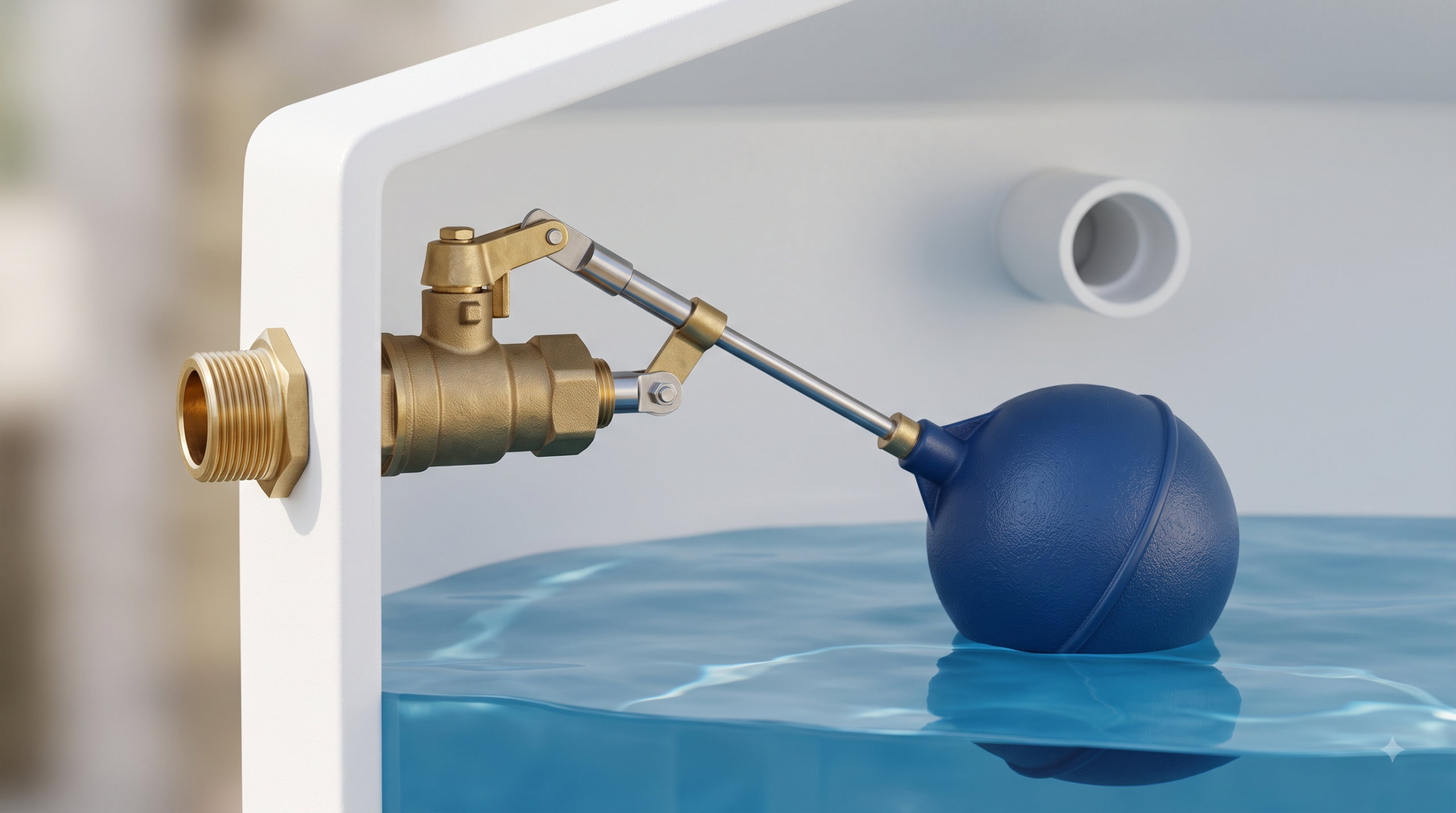
Traditional models use a float ball and lever arm. Compact models place most of the operating mechanism closer to or inside the valve body.
| Stage | What Happens |
| Water level drops | The float moves downward and opens the inlet |
| Tank begins refilling | Incoming water raises the float gradually |
| Water reaches the set level | The float activates the closing mechanism |
| Valve closes | The seal presses against the valve seat and stops the water |
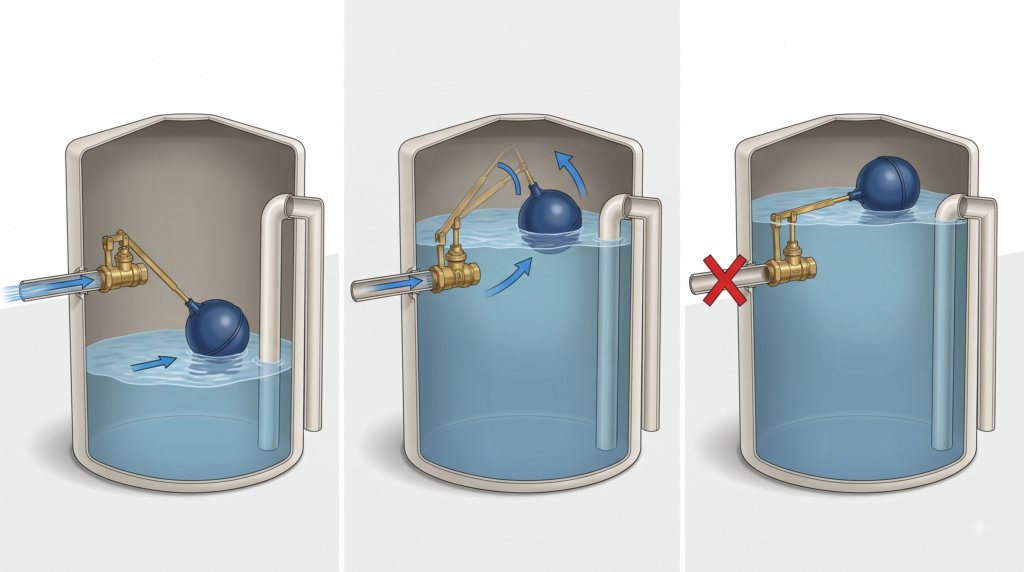
The float ball does not stop the water by itself. It moves the valve mechanism that presses the seal against the inlet.
If the seal becomes hard or worn, the float ball fills with water, or the connecting arm becomes stuck, the valve may not close completely. Water can then continue entering the tank and escape through the overflow pipe.
Water pressure also affects closing performance. The valve, float ball, lever arm, and sealing mechanism must work together within the manufacturer’s specified operating range.
Types of Float Valves
Tank float valves are available in several operating designs. The best type depends on the required refill rate, available space, water pressure, and maintenance needs.
This guide focuses on mechanical float valves used in residential and commercial water storage tanks.
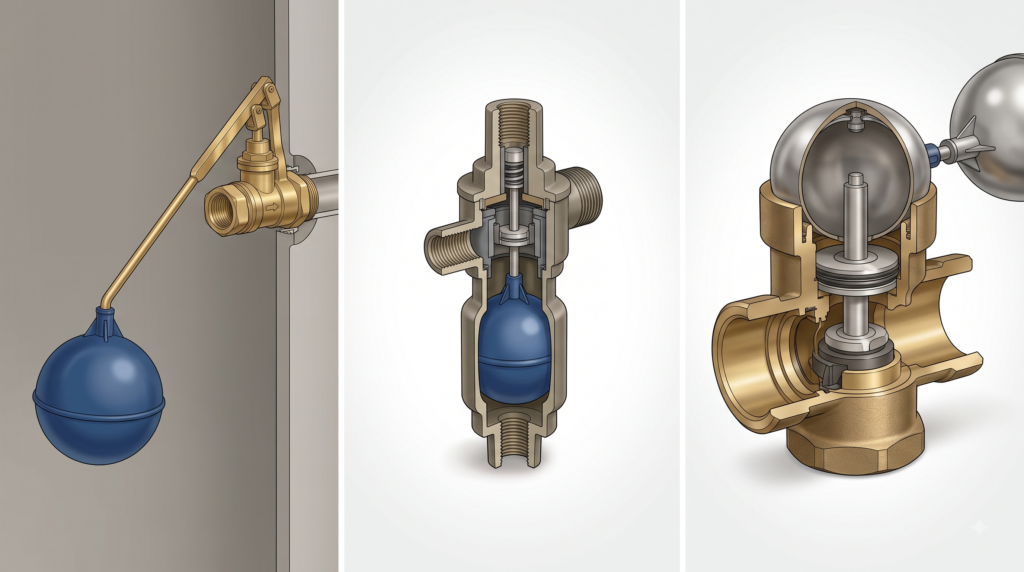
Traditional Lever-Arm Float Valve
This design uses an external float ball connected to the valve by a metal or plastic arm. As the water rises, the arm gradually pushes the valve closed.
Best for: Most rooftop and ground-level residential water tanks.
Advantages: Simple construction, widely available parts, visible operation, and easy maintenance.
Check before buying: The float ball needs enough space to move without touching the tank wall, cover, or nearby pipework.
Compact Internal Float Valve
A compact float valve places the float mechanism close to or inside the valve body. It does not require a long external arm or a large float ball.
Best for: Tanks with limited internal space or installations requiring a compact design.
Advantages: Space-saving construction and a more controlled water shutoff.
Check before buying: Confirm the mounting position, pressure range, water cleanliness requirements, and compatibility with the water supply system.
High-Flow Float Valve
A high-flow float valve is designed to refill a tank more quickly. Depending on the model, it may use a larger water passage, stronger internal parts, or a piston-operated design.
Best for: Large storage tanks, frequent refill cycles, agricultural tanks, and commercial applications.
Advantages: Faster refilling and better performance where water demand is high.
Check before buying: Do not rely only on the words “high flow” or “heavy duty.” Compare the published flow rate at your actual water pressure.
| If You Need | Start With |
| A simple residential solution | Traditional lever-arm float valve |
| More space inside the tank | Compact internal float valve |
| Faster tank refilling | High-flow float valve with verified specifications |
Light Duty vs Heavy Duty Float Valves
Light-duty and heavy-duty float valves may look similar, but their body construction, internal components, operating capacity, and service life can be different.
However, “heavy duty” is not a universal technical rating. The meaning can vary between manufacturers, so always compare the exact product specifications.
| Choose Light Duty When | Choose Heavy Duty When |
| Normal household use | Frequent refill cycles |
| Standard refill speed | Faster refilling is required |
| Smaller installation | Stronger construction is needed |
| Lower initial cost matters | Longer-term durability matters |
The terms “light duty” and “heavy duty” are not universal performance ratings. Always check the exact model’s pressure rating, flow rate, internal components, and replacement-part availability.
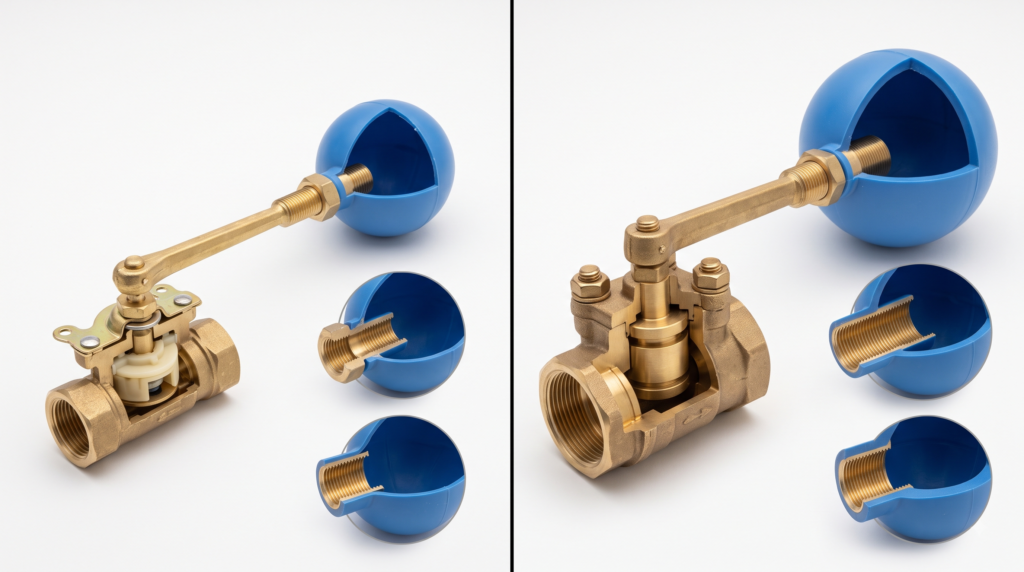
What ToollQ Checks
- Published pressure rating
- Flow rate at the available water pressure
- Valve body construction
- Internal piston material
- Material of the nuts and connecting arm
- Availability of replacement seals
Do not judge quality by weight or the brass body alone. Two valves with a similar appearance may use very different internal components.
Float Valve and Float Ball Materials
The valve body and float ball do not need to use the same material. Each component performs a different job and should be evaluated separately.
Material affects corrosion resistance, weight, durability, maintenance, and cost—but it does not replace proper pressure and flow specifications.
Float Valve Body Materials
| Material | Best Fit |
| Brass | Most residential water tanks |
| Stainless steel | Corrosive or demanding environments |
| Engineered plastic | Lightweight and corrosion-resistant installations |
Brass: Durable, widely available, and easy to maintain. For drinking-water tanks, confirm that the exact model is certified for potable-water use, such as NSF/ANSI/CAN 61 where applicable
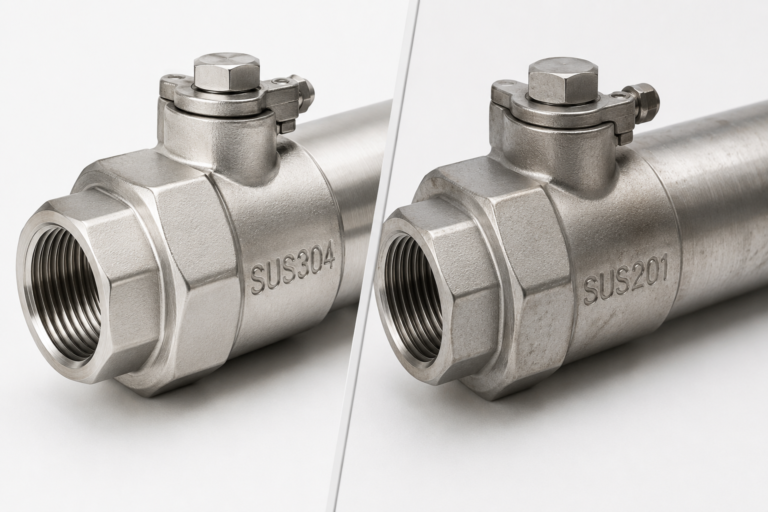
Stainless steel: Provides strong corrosion resistance, but the steel grade and product quality still matter. Its higher cost is unnecessary for many normal household tanks.
Engineered plastic: Lightweight and resistant to corrosion. A properly rated plastic valve can perform well, so it should not automatically be treated as lower quality.
Float Ball Materials
| Float Ball | Main Consideration |
| PE plastic | Lightweight, affordable, and widely used |
| Brass | Strong but heavier and more expensive |
| Stainless steel | Corrosion-resistant but usually costs more |
The float ball must provide enough buoyancy to close the valve and must fit inside the available tank space. Also check the threaded connection and compatibility with the float arm.
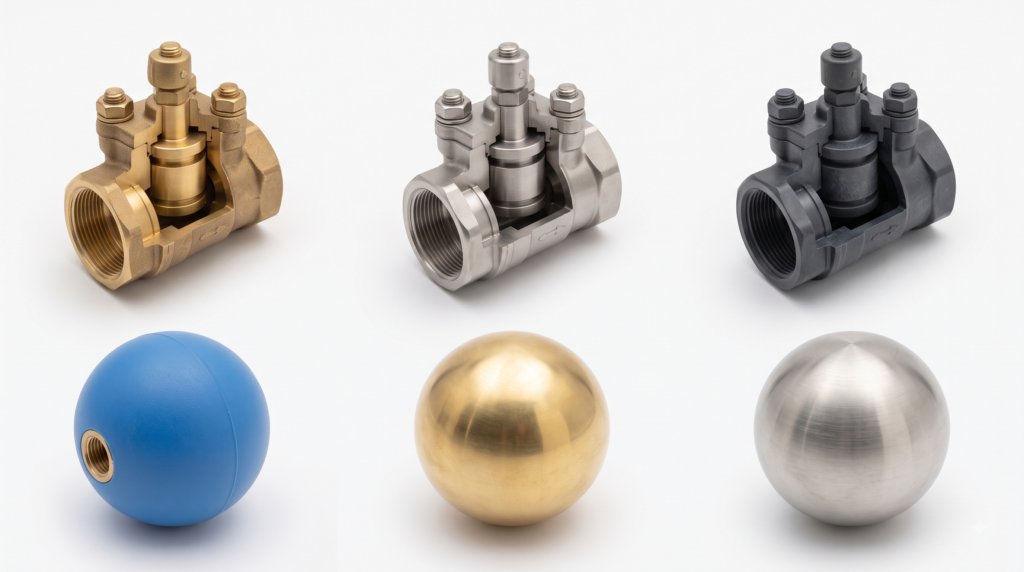
Light Duty vs Heavy Duty PE Float Balls
Light duty: Usually smaller and lighter, with a thinner wall and shorter threaded connection. It is suitable for normal residential use when properly matched.
Heavy duty: Usually has a thicker wall, larger body, and longer threaded connection. This can provide a stronger attachment and better durability during frequent operation.
A larger heavy-duty float ball also requires more movement space inside the tank.
ToollQ’s Practical Starting Point
For most residential water tanks, a suitable brass float valve paired with a good-quality PE float ball provides a practical balance of durability, maintenance, and cost.
Upgrade to stainless steel, engineered plastic, or a heavy-duty float ball only when the water conditions, operating demand, or product specifications justify it.
How to Choose the Right Float Valve
The right float valve should match the complete water system—not only the tank size or valve material. Follow these six checks before making your decision.
Match the Inlet Connection
Confirm the tank connection’s nominal size and thread type. Do not choose based only on the outside diameter measured with a ruler.
Avoid using unnecessary reducers simply to make the valve fit. A smaller connection may restrict the refill rate.
Decide How Quickly the Tank Must Refill
A larger tank does not automatically require a larger float valve. The more important question is how quickly the tank must recover after water is used.
Compare the required refill time with the available water supply. A high-flow valve cannot deliver its full capacity if the supply pipe or water pressure is insufficient.
Check the Pressure and Flow Rating
Read the manufacturer’s pressure rating and flow data for the exact model. The words “heavy duty” or “high flow” are not enough.
Excessive pressure can cause noise, leakage, rapid wear, or harsh closing. Low pressure may result in slow tank refilling.
Check the Installation Space and Position
A traditional float ball and lever arm must move freely without touching the tank wall, cover, overflow pipe, or nearby fittings.
Also confirm the required mounting direction. A valve installed in the wrong position may not open or close correctly.
Consider the Water Supply System
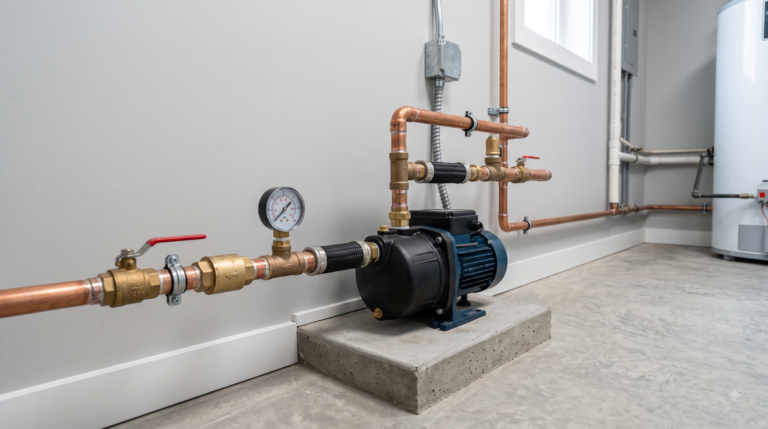
A traditional lever-arm float valve works well in many direct water-supply systems. A compact or faster-closing valve may suit some pump-fed systems, but it is not automatically the correct choice.
Confirm how the pump starts and stops, and make sure the valve’s closing action is compatible with the pump and pressure-control system.
Check Materials and Replacement Parts
For drinking-water storage, confirm that the complete valve—including its body, seals, and internal components—is suitable for potable-water use.
Also check whether replacement seals, float balls, arms, and internal parts are available. A serviceable valve may cost less over its full working life.
Quick Selection Guide
- Standard tank → Brass lever-arm valve + PE float ball
- Limited space → Compact internal float valve
- Faster refill → Verified high-flow model
- Frequent operation → Serviceable heavy-duty model
- Corrosive conditions → Compatible stainless steel or plastic
- Pump-fed system → Check the pump controls first
Common Buying Mistakes
Most float valve problems begin before installation. The valve may fit the tank but still perform poorly because an important operating detail was overlooked.
Buying by Thread Size Alone
Risk: The valve fits the connection but provides the wrong refill rate or cannot operate correctly at the available pressure.
Better approach: Confirm the size, thread type, pressure rating, and flow data together.
Assuming a Larger Tank Always Needs a Larger Valve
Risk: An oversized valve may cost more without improving performance, especially when the supply pipe cannot deliver enough water.
Better approach: Choose according to the required refill time and available water supply.
Trusting Material or “Heavy Duty” Labels
Risk: A stainless steel or heavy-duty valve may still use unsuitable internal parts or provide the wrong flow rate.
Better approach: Check the exact construction, pressure rating, flow data, and replacement-part availability.
Ignoring Float Ball Movement
Risk: The float ball or connecting arm may touch the tank wall, cover, overflow pipe, or another fitting.
Better approach: Measure the available movement space before buying.
Ignoring the Pump-Control System
Risk: A valve that closes too quickly or does not match the system may contribute to noise, pressure surges, or unnecessary pump operation.
Better approach: Check the valve and pump-control method as one complete system.
Choosing a Valve with No Replacement Parts
Risk: A small worn seal may force you to replace the complete valve.
Better approach: Look for models with available seals, float balls, arms, and serviceable internal components.
Do Not Ignore the Overflow Pipe
Never block or remove the tank’s overflow pipe. A float valve can wear out or become stuck, so the tank still needs a clear path to discharge excess water safely.
Hidden Regret Costs
A low-priced float valve may save money on the day of purchase but create higher costs later. The real cost can include wasted water, repeat labour, slow tank refilling, and premature replacement.
These problems are often more expensive than the difference between a suitable valve and the cheapest available option.
| Saving Now | Cost Later |
| Cheapest valve | Early replacement |
| Small flow capacity | Slow refilling |
| No spare seals | Replace the whole valve |
| Weak float or arm | Overflow repairs |
| Wrong pump match | Noise or pump wear |
| Poor maintenance access | Higher labour cost |
Buy for Total Value
A better-value float valve should:
- Match the required pressure and refill rate
- Use a reliable float ball and connecting arm
- Allow worn seals or parts to be replaced
- Remain accessible for future maintenance
Paying more is worthwhile only when it improves performance, durability, or serviceability in your actual water system.
Real Customer Experience
One of the most common float valve problems ToollQ has seen is water continuing to enter a residential tank after it is already full.
This problem has occurred in both rooftop water tanks and ground-level storage tanks. The customer usually notices it only after water begins flowing continuously from the overflow pipe.
Real Case: Water Flowing from the Overflow Pipe
Customer’s complaint: Water continued flowing from the overflow pipe even after the tank was full.
Inspection findings: The valve could no longer shut off the incoming water correctly.
Possible failures found: An aged sealing component, a float ball containing water, or a connecting arm that had become stuck.
Solution: The complete float valve assembly was replaced because more than one operating component was no longer reliable.
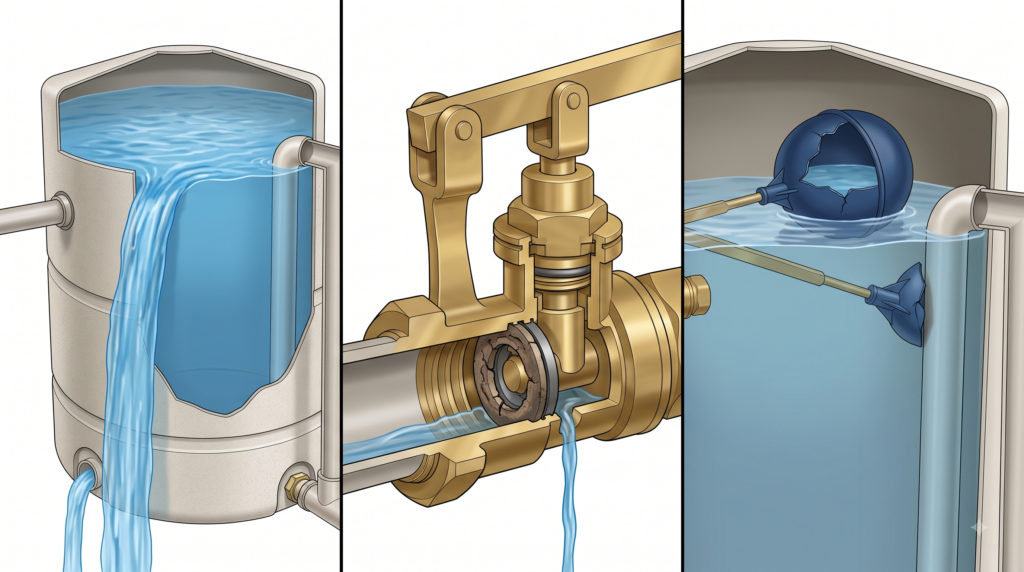
When water keeps flowing from the overflow pipe, the overflow pipe is not the problem. It is warning you that the tank’s inlet is not shutting off.
If only the sealing washer is worn and every other component remains in good condition, replacing the seal may be enough. Replacing the complete valve is more reasonable when the float ball, arm, and internal mechanism also show wear or damage.
After any repair or replacement, refill the tank and observe a complete shutoff cycle. Confirm that the float moves freely and that water stops before reaching the overflow level.
Should You Repair or Replace a Float Valve?
A leaking float valve does not always require complete replacement. The correct decision depends on which component has failed and whether the remaining parts are still reliable.
Inspect the seal, valve body, float ball, connecting arm, and internal mechanism before buying new parts.
Repair the Valve When:
- Only the replaceable seal is worn
- The valve body is not cracked
- The float ball is dry and undamaged
- The arm moves freely
- The correct replacement part is available
Replace the Complete Valve When:
- The body is cracked or badly corroded
- Several components are worn
- The float ball contains water
- The arm or internal mechanism keeps sticking
- Correct replacement parts are unavailable
- The existing valve has the wrong pressure or flow rating
Before inspecting or servicing the valve, shut off the incoming water and isolate any connected pump. If the tank is difficult or unsafe to access, use a qualified plumber.
After completing the work, test one full refill cycle and check every connection for leakage.
ToollQ Pro Tips
Small installation details can make a major difference to float valve reliability. Use these practical checks during installation and maintenance.
ToollQ Installation Checklist
- Set the water level: Adjust the valve to close before water reaches the overflow pipe.
- Check the clearance: Make sure the float and arm cannot touch the tank, cover, pipes, or fittings.
- Protect the thread: Start the float ball connection by hand to prevent cross-threading.
- Remove debris: Dirt trapped at the valve seat can prevent complete shutoff.
- Keep a spare seal: Store the correct replacement seal if the valve is serviceable.
- Test twice: Observe two complete refill and shutoff cycles after installation.
Inspect the valve if tank refilling becomes slower, the inlet becomes noisy, or water appears at the overflow pipe. Early inspection can prevent complete valve failure.
ToollQ’s Choice
There is no single float valve that is best for every water tank. The right choice depends on the tank layout, refill demand, pressure, water conditions, and maintenance needs.
For most residential applications, simplicity and correct specifications are more valuable than premium materials or marketing labels.
| Application | ToollQ’s Starting Choice |
| Standard home tank | Brass lever-arm valve + PE float |
| Frequent refill cycles | Serviceable heavy-duty model |
| Limited tank space | Compact internal float valve |
| Faster refill required | Verified high-flow model |
| Corrosive conditions | Compatible stainless steel or plastic |
| Pump-fed system | Check pump controls before choosing |
Best All-Around Choice for Most Homes
A properly rated brass lever-arm float valve paired with a good-quality PE float ball.
This combination is simple to inspect, practical to maintain, and usually provides good value for rooftop and ground-level residential water tanks.
Before buying, confirm the inlet size, pressure rating, required flow rate, float clearance, and suitability for the stored water.
Frequently Asked Questions
What is the best float valve for a residential water tank?
For most homes, a properly rated brass lever-arm float valve with a quality PE float ball offers a practical balance of durability, maintenance, and cost.
How do I choose the correct float valve size?
Match the nominal inlet size and thread type first. Then check whether the valve provides the required flow rate at your available water pressure.
Will a larger float valve refill the tank faster?
Not always. The supply pipe, available pressure, valve design, and inlet restriction can limit the actual refill rate.
Why does water keep flowing from the overflow pipe?
Common causes include a worn seal, debris at the valve seat, a water-filled float ball, or a stuck connecting arm. Inspect the complete mechanism before replacing parts.
Can I replace only the float valve seal?
Yes, if the valve is serviceable and every other component remains in good condition. Replace the complete valve when several parts are worn or damaged.
Is a heavy-duty float valve always better?
No. Heavy-duty models usually cost more, and the label does not guarantee a suitable pressure or flow rating for your tank.
Is stainless steel better than brass?
Stainless steel may be useful in corrosive conditions, but brass is often the more practical choice for normal residential tanks. Always check the exact material grade and water-use approval.
Which float valve should I use with a water pump?
Do not choose based on the pump alone. Check the valve’s closing action, pressure rating, flow rate, and compatibility with the pump-control system.
Can a float valve completely prevent tank overflow?
A correctly working valve controls the normal water level, but any mechanical valve can wear out or become stuck. Keep the tank’s overflow pipe clear as secondary protection.
Related Guides
Continue learning about the valves commonly used with residential water tanks and plumbing systems.
Best Check Valve Buying Guide (2026)
Learn how check valves prevent reverse flow and help water pumps maintain their prime.
Best Ball Valve Buying Guide (2026)
Compare ball valve materials, internal construction, sizes, and residential applications.
Gate Valve vs Ball Valve
Understand which shut-off valve is more suitable for your home plumbing system.
Final Recommendation
For most residential rooftop and ground-level water tanks, a properly rated brass lever-arm float valve with a good-quality PE float ball is the most practical starting point.
Choose a heavy-duty or high-flow model only when frequent operation or faster refilling requires it. Consider a compact, stainless steel, or engineered plastic valve when the installation space, water conditions, or system design justifies the change.
Before buying, confirm the inlet connection, pressure and flow rating, float movement space, water-use suitability, pump-control compatibility, and availability of replacement parts.
ToollQ’s Final Rule
Buy the float valve that matches your water system—not the one with the largest body, highest price, or strongest marketing label.
If the specifications are unclear, take photos and measurements to a reliable plumbing supplier or ask a qualified plumber before purchasing.