Best Water Pressure Booster Pump Buying Guide (2026): How to Choose the Right Booster Pump
Low water pressure can make showers weak and cause pressure to drop when several faucets are used at the same time. A water pressure booster pump can improve performance, but only when it matches the home’s water supply system.
Choosing a pump by horsepower alone is a common mistake. The correct pump also depends on the water source, required flow, total head, pipe size, and number of fixtures used together.
This guide compares automatic household booster pumps, variable-speed constant-pressure pumps, and jet pumps with pressure tanks. It will help you choose a suitable pump without paying for power or features your home does not need.
At a Glance
For a tank-fed home with 1–2 bathrooms:Choose an automatic household booster pump for a simple and affordable setup.
For several bathrooms used at the same time:Choose a variable-speed constant-pressure pump for more stable water pressure.
For a shallow well or a system that needs self-priming:Choose a jet pump with a pressure tank.
Before buying:Check the water source, required flow, total head, pipe size, and voltage. Do not choose by horsepower alone.
Why You Can Trust ToollQ
ToollQ’s recommendations are based on 15 years of plumbing and hardware experience. This includes helping customers choose pumps and identify problems such as low pressure, frequent cycling, excessive noise, and incorrect pump sizing.
We focus on the complete water supply system—not horsepower alone. Water source, required flow, total head, pipe size, repair parts, and after-sales support are all considered before recommending a pump.
Before You Buy a Booster Pump
Before buying a booster pump, confirm that low water pressure affects several fixtures. If only one faucet or shower is weak, the problem may be a clogged aerator, a partially closed valve, or a restricted pipe—not the pump.
Check These Four Things First
• Is the whole house affected or only one fixture?
• Are any pipes, valves, faucets, or flexible hoses leaking?
• Is the tank or well providing enough water?
• Does the system use a storage tank, municipal supply, or shallow well?
If the pump will connect directly to a municipal water supply, check local utility and plumbing requirements before installation. Direct boosting may be restricted in some locations.
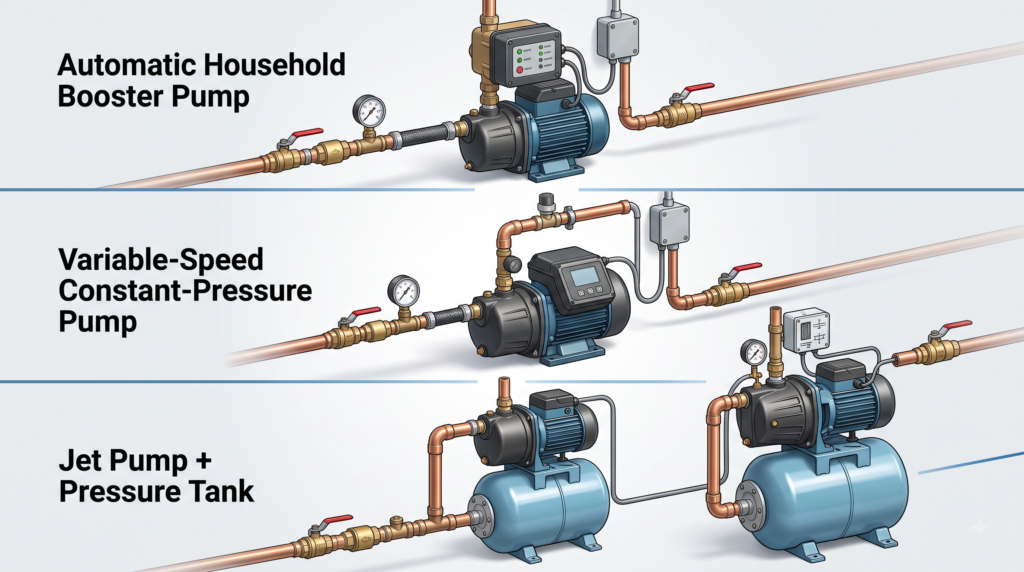
Three Types of Booster Pumps
Booster pumps are sometimes sold under overlapping names. Before buying, check how the pump starts, maintains pressure, and connects to the water source—not just the product label.
1. Automatic Household Booster Pump
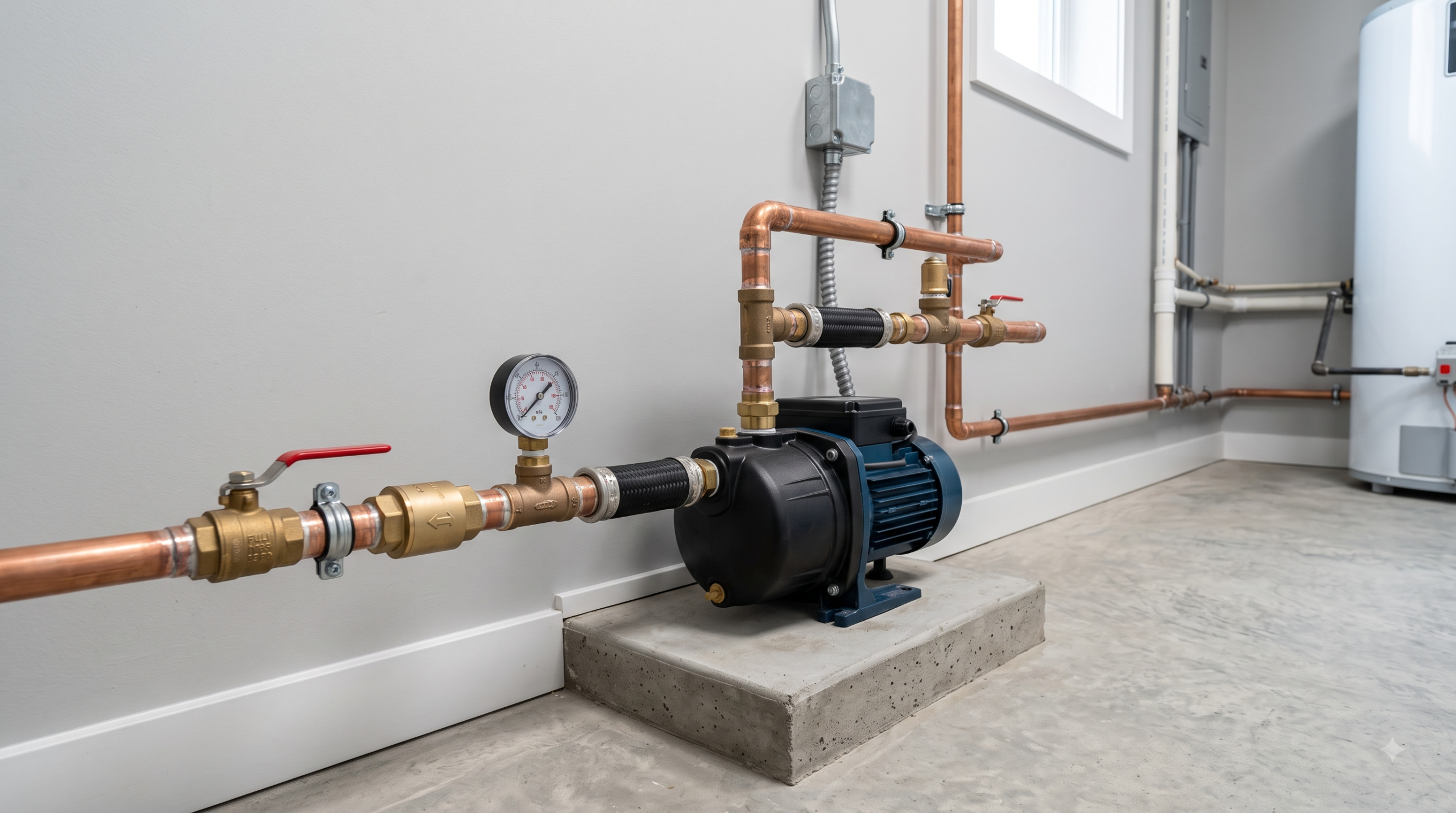
This compact pump uses a built-in flow or pressure controller. It starts automatically when water is used and stops after the outlet is closed.
Best for: Tank-fed homes with one or two bathrooms.
Watch out: Basic models may lose pressure when several fixtures are used together. Choose one with dry-run protection.
2. Variable-Speed Constant-Pressure Pump
This pump adjusts its motor speed to match changing water demand. It provides more stable pressure and usually operates more quietly.
Best for: Homes with several bathrooms or multiple fixtures used at the same time.
Watch out: The purchase price is higher, and replacing a pressure sensor or control board can be expensive.
3. Jet Pump with a Pressure Tank
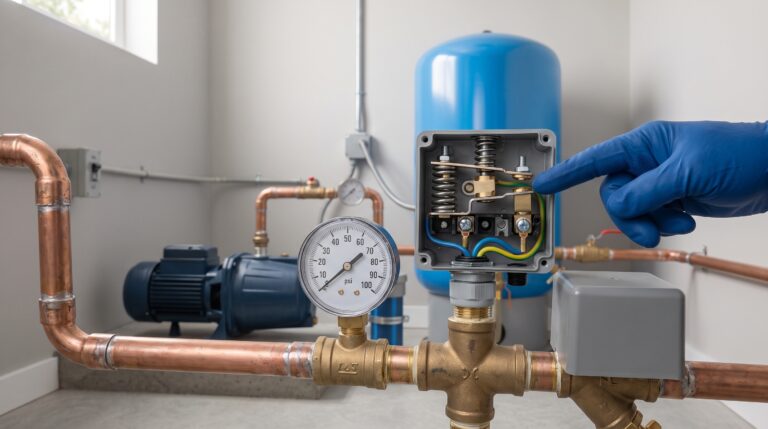
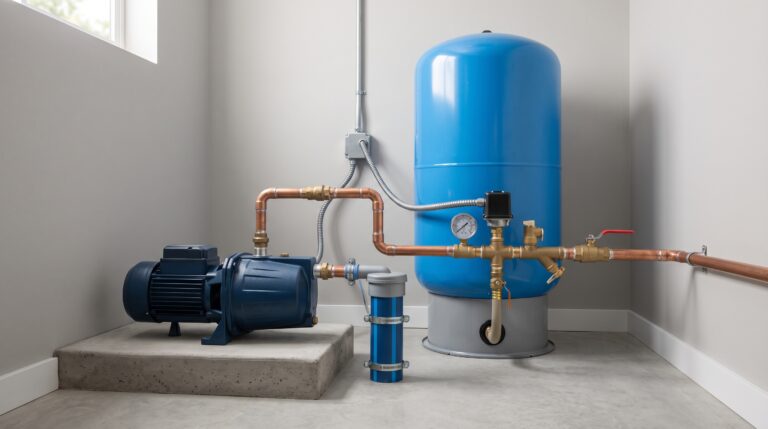
A self-priming jet pump works with a pressure tank and pressure switch. It is commonly used for shallow wells or tank-fed systems that require suction.
Best for: Shallow-well systems and homeowners who value repairable mechanical components.
Watch out: The suction pipe must be airtight, and the pump must be primed before its first start. This system also needs more installation space.
Choose by Water Supply System
The correct pump type depends on where the water comes from and whether the pump must lift water. Identify your water supply system before comparing horsepower.
Rooftop Storage Tank
For one or two bathrooms, an automatic household booster pump is usually sufficient. Choose a variable-speed constant-pressure pump when several bathrooms may be used together.
Ground Storage Tank
Check the pump position in relation to the water level. If the pump must lift water from the tank, choose a self-priming model and confirm its maximum suction lift.
Municipal Water Supply
Only use a direct booster pump when permitted by the local water authority and plumbing code. Choose a model designed for the available inlet pressure.
Shallow Well
A jet pump with a pressure tank is the usual starting point for a shallow well. Confirm the pumping water level and available water supply before selecting the pump.
How to Choose the Right Booster Pump Size
A correctly sized pump must provide enough flow at the pressure your home requires. Do not rely on the maximum flow or horsepower printed on the box.
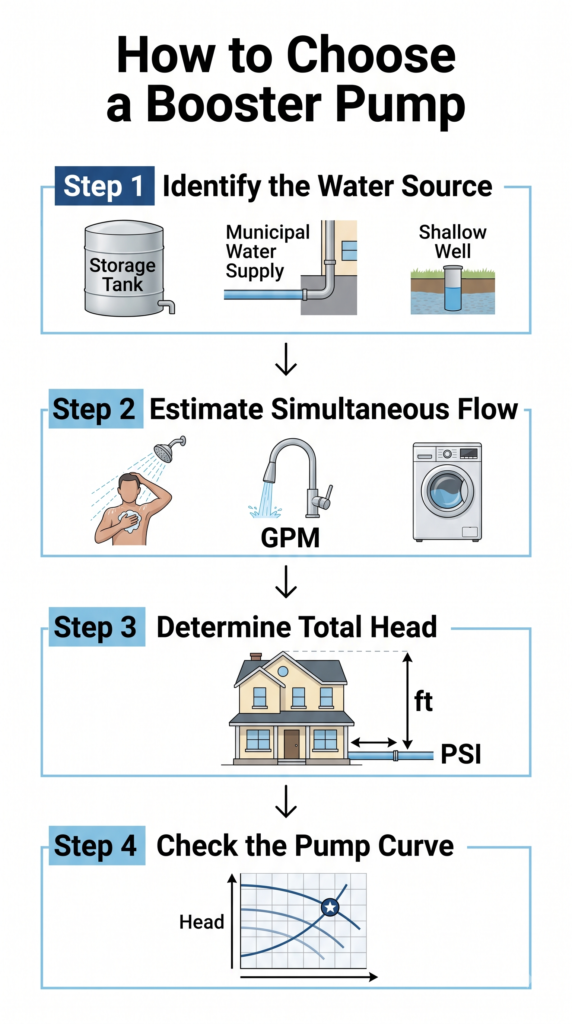
1. Estimate Simultaneous Water Use
Count how many showers, faucets, and appliances may operate at the same time. Use this demand to estimate the required flow in gallons per minute (GPM), then check the manufacturer’s pump curve.
2. Check Total Head
Total head includes vertical lift, the pressure required at the fixtures, and pressure loss through the pipes. Choose a pump that can deliver the required GPM at your calculated total head in feet (ft), not under zero-head conditions.
3. Treat Horsepower as a Reference
In ToollQ’s residential experience, 0.75 HP and 1 HP pumps are common starting points. However, pumps with the same horsepower can provide different flow and pressure, so always compare their performance curves.
ToollQ Buying RuleDon’t choose a booster pump by horsepower alone. First check the water source, required flow, total head, and availability of repair parts.
Essential Buying Checklist
A suitable pump must match your plumbing, electrical supply, and long-term maintenance needs. Check the following details before comparing prices.
Check the Specifications
• Pump curve: Confirm the required GPM at your total head.
• Pipe connections: Match the existing pipe size and avoid unnecessary reductions.
• Electrical supply: Check the voltage, current, grounding, and required circuit breaker.
• Protection: Prioritize dry-run, overload, and overheating protection.
Check Long-Term Ownership
• Repair parts: Check whether seals, impellers, switches, and sensors are available.
• Support: Compare the warranty and local after-sales service.
• Installation: Consider available space, ventilation, rain protection, and noise location.
• Materials: Choose by pump quality and specifications—not material alone.
Cast iron and stainless steel pump bodies can both perform well. Brass, stainless steel, and engineering-plastic impellers are also suitable when correctly designed for the pump.
Common Booster Pump Buying Mistakes
A poorly chosen pump may increase noise, electricity use, repair costs, and pressure problems. Avoid these common mistakes.
• Choosing by horsepower alone: Horsepower does not show the actual GPM available at the required total head.
• Buying the wrong pump type: A standard booster pump may not work when the system requires self-priming or suction lift.
• Buying a pump that is too large: Excessive pressure can cause noise, leaks, uncomfortable showers, and frequent cycling.
• Replacing the pump before diagnosing the system: Leaks, a faulty check valve, pressure tank, or pressure switch can produce pump-like symptoms.
• Choosing the lowest price: A cheap pump can become expensive when repair parts, protection features, or local service are unavailable.
Real Customer Experience : A tank-fed booster pump started and stopped every few seconds during showers. It also restarted after the faucets were closed. The real causes were a small plumbing leak and a failed pressure tank—not the pump itself. Repairing the leak and replacing the pressure tank solved the problem.
ToollQ’s Choice
There is no single best booster pump for every home. The best choice is the pump that matches the water source and expected water demand.
Best Value for 1–2 Bathrooms Automatic household booster pump
Best for Stable Whole-House Pressure Variable-speed constant-pressure pump
Best for a Shallow Well or Self-Priming System Jet pump with a pressure tank
Choose the correct pump type first. Compare flow, total head, repair parts, protection features, and warranty before using horsepower as the final reference.
Frequently Asked Questions
What size booster pump do I need?
The correct size depends on simultaneous water demand, total head, pipe size, and available inlet water. Compare the required GPM and head with the manufacturer’s pump curve.
Should I choose a 0.75 HP or 1 HP pump?
Both sizes are common in residential systems, but horsepower alone cannot determine the correct choice. A 1 HP pump may be unnecessary if the required flow and pressure are low.
Which booster pump is best for a water tank?
An automatic household booster pump is suitable for many tank-fed homes with one or two bathrooms. Choose a variable-speed pump when several fixtures may be used together.
Can a booster pump fix every low-pressure problem?
No. A booster pump cannot correct an empty tank, insufficient well supply, clogged pipe, serious leak, or undersized plumbing.
Why does my booster pump keep starting and stopping?
Common causes include plumbing leaks, a failed pressure tank, a faulty check valve, incorrect pressure-switch settings, or an oversized pump. Diagnose the system before replacing the pump.
Related Guides
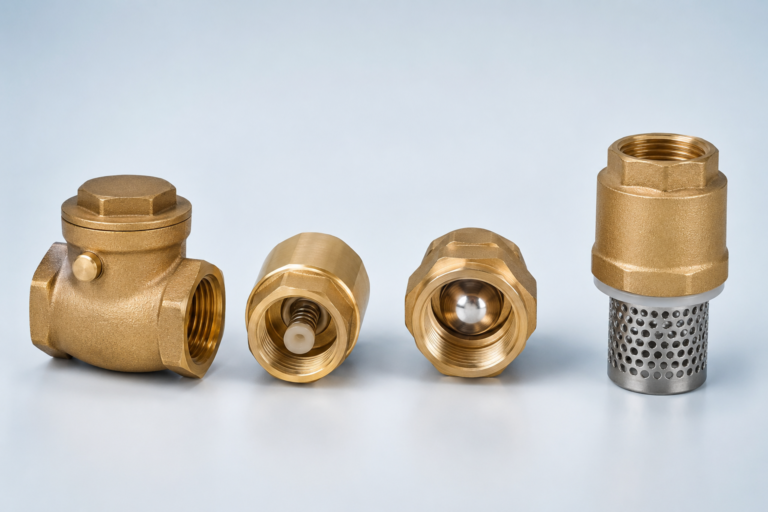
A booster pump system often needs a reliable check valve to prevent reverse flow and help maintain pressure. Read our Best Check Valve Buying Guide before selecting one.
If your home uses a storage tank, the float valve must also refill and shut off correctly. Read our Best Float Valve Buying Guide to choose the right type.
Final Recommendation
Start by identifying your water source and the number of fixtures that may be used together. Then compare the required flow and total head with the manufacturer’s pump curve.
For a tank-fed home with one or two bathrooms, an automatic household booster pump is often the simplest choice. For several bathrooms, a variable-speed constant-pressure pump usually provides steadier pressure.
Choose a jet pump with a pressure tank when the system requires self-priming or draws from a shallow well. Before buying, confirm the pipe size, voltage, protection features, repair parts, and local after-sales support.