Why Does My Booster Pump Keep Cycling? Common Causes and Fixes (2026)
A booster pump that starts and stops every few seconds is usually experiencing short cycling. The pump may cycle while someone is showering or restart even after every faucet has been closed.
Frequent cycling can increase noise, waste electricity, and shorten the life of the motor, pressure switch, and other components. Common causes include small plumbing leaks, a failed pressure tank, a leaking check valve, an unstable water source, or an incorrectly sized pump.
This guide explains how to identify the most likely cause, what you can check safely, and when the pump should be repaired or replaced. Always disconnect the power before inspecting the system and use a qualified technician for electrical repairs.
At a Glance
Cycles every few seconds while water is running:Check the pressure tank, pressure settings, pump size, and water demand.
Restarts after every faucet is closed:Look for a plumbing leak, leaking check valve, or pressure loss in the system.
Loses prime or struggles to draw water:Check the water source, suction pipe, foot valve, and air leaks.
Runs hot, becomes noisy, or trips the breaker:Stop using the pump and have the electrical and mechanical components inspected.
What Is Booster Pump Short Cycling?
An automatic booster pump normally starts when a faucet or shower is opened and stops after it is closed. One start-and-stop cycle during normal water use does not necessarily indicate a problem.
Short cycling occurs when the pump repeatedly starts and stops within a short period, sometimes every few seconds. It may happen while water is running or after every outlet has been closed.
Real Customer Experience
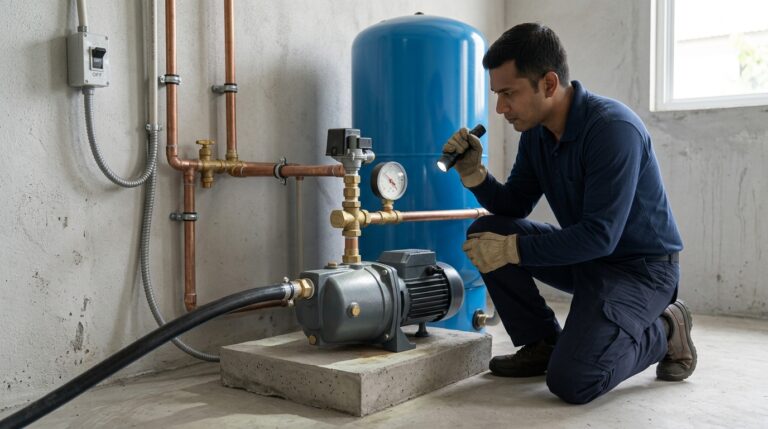
One customer had a rooftop water tank supplying a booster pump connected to the bathroom. The pump had previously operated normally.
Symptom:The pump started and stopped every few seconds during a shower. It also restarted intermittently after the faucet was closed.
Diagnosis:A small plumbing leak was causing pressure loss, and the pressure tank could no longer maintain its charge because its internal diaphragm had failed.
Solution:The leak was repaired and the pressure tank was replaced. The pump then returned to normal operation.
This case shows why the complete system should be inspected before replacing the pump. Frequent cycling is often caused by pressure loss or a supporting component—not the pump motor itself.
Common Causes of Booster Pump Cycling
The correct diagnosis depends on whether the pump cycles while water is being used or after every outlet is closed. Start with the simplest causes before adjusting or replacing any component.
1. A Small Plumbing Leak
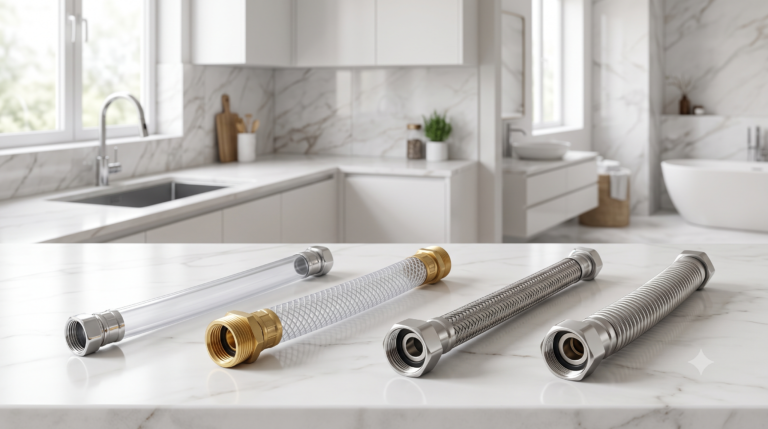
A leaking faucet, toilet valve, pipe joint, or flexible hose can slowly reduce system pressure. The pump may restart even when nobody is using water.
2. A Failed Pressure Tank
In systems with a pressure tank, low air charge or a damaged diaphragm leaves too little usable water between pump cycles. The pump may then start and stop rapidly during normal use.
3. A Leaking Check Valve or Foot Valve
A valve that does not close tightly allows pressure or water to flow backward after the pump stops. This can cause repeated restarting, pressure loss, or loss of prime.
4. A Faulty Pressure Switch or Sensor
A worn pressure switch may start or stop the pump at the wrong pressure. On variable-speed pumps, a faulty pressure sensor or controller can also cause unstable operation.
5. An Unstable Water Source
An empty tank, insufficient well supply, a leaking suction pipe, or trapped air can interrupt the incoming water. Some pumps repeatedly stop and restart as their dry-run protection activates.
6. An Oversized or Incorrect Pump
An oversized pump can reach its shut-off pressure too quickly, especially with low water demand or a small pressure tank. However, pump size should only be blamed after leaks, valves, settings, and water supply have been checked.
How to Diagnose Booster Pump Cycling
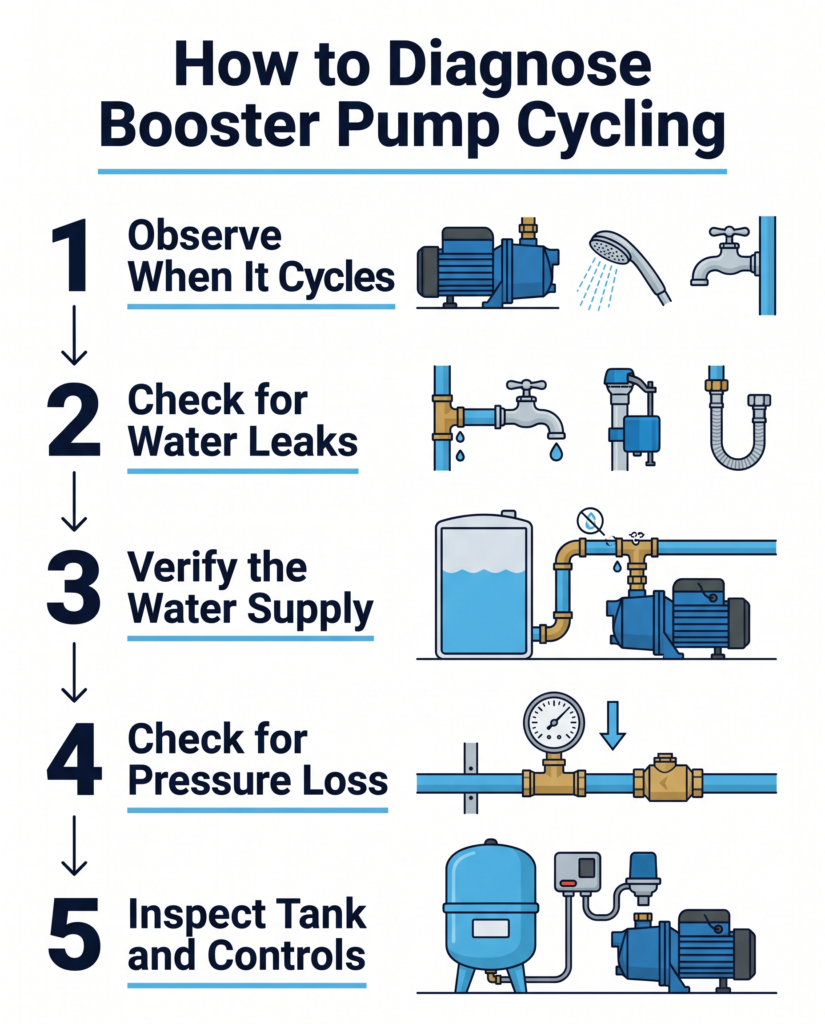
Observe when the cycling occurs before replacing any parts. Follow this order to avoid unnecessary repairs.
Check in This Order
- Close every faucet and appliance, then check whether the pump restarts.
- Inspect faucets, toilets, pipe joints, and flexible hoses for leaks.
- Confirm that the storage tank or well has enough water.
- Check whether pressure drops after the pump stops.
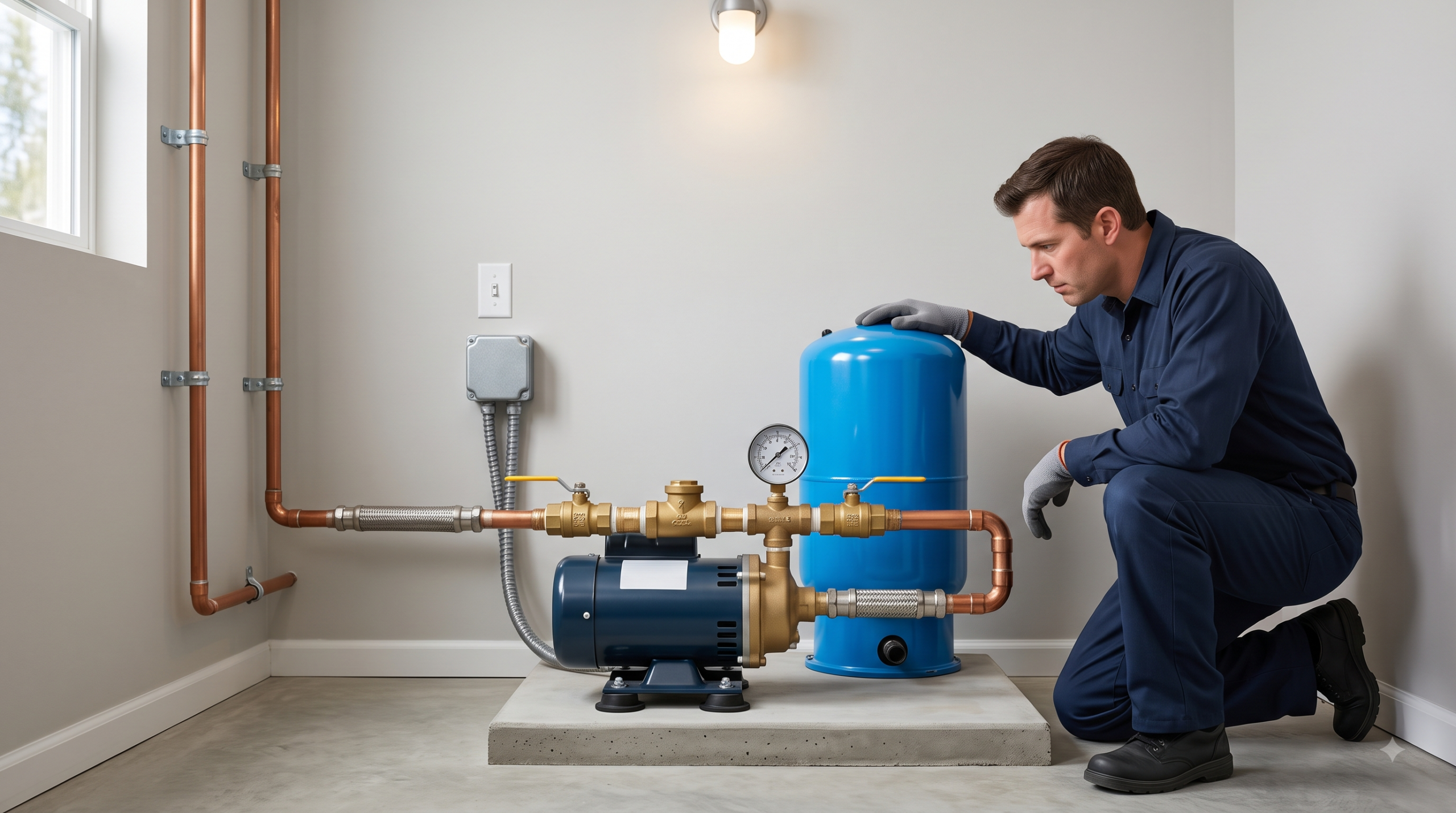
- Inspect the pressure tank, check valve, pressure switch, or sensor.
- Confirm that the pump size and control settings suit the system.
Do not open electrical controls or adjust pressure settings unless you understand the manufacturer’s procedure. Stop the pump if it becomes hot, runs dry, produces unusual noise, or repeatedly trips the breaker.
How to Fix Booster Pump Cycling
The correct repair depends on the cause. Replacing the pump without confirming the fault may waste money and leave the cycling problem unchanged.
Repair Plumbing Leaks
Repair leaking pipe joints, faucets, toilet valves, or flexible hoses. After the repair, confirm that the system can hold pressure while every outlet is closed.
Service or Replace the Pressure Tank
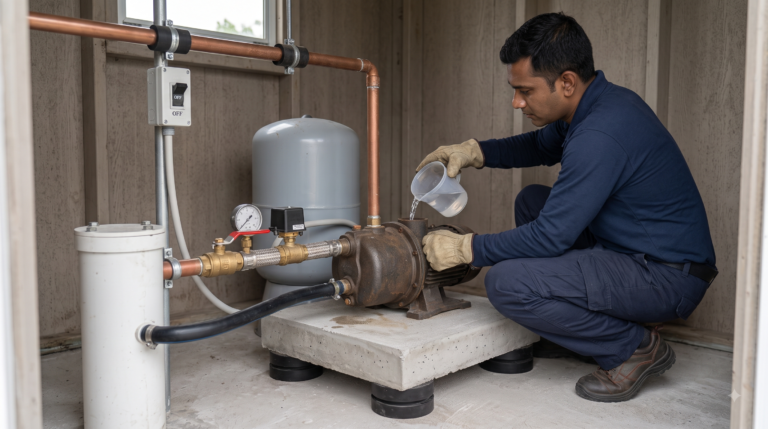
Check the tank’s air charge according to the pump or tank manufacturer’s instructions. Replace the tank if its diaphragm has failed or water comes from the air valve.
Replace a Leaking Check Valve
Replace a check valve or foot valve that allows pressure or water to flow backward. Confirm the correct size, flow direction, and installation position.
Inspect the Pump Controls
A technician should test a faulty pressure switch, flow switch, pressure sensor, or variable-speed controller. Settings should follow the manufacturer’s specifications rather than a universal pressure value.
Correct Water Supply or Sizing Problems
Repair suction leaks and restore a stable water supply before restarting the pump. If the pump is oversized or unsuitable for the system, resizing the pump or adding a correctly sized pressure tank may be necessary.
Should You Repair or Replace the Booster Pump?
Frequent cycling does not automatically mean the complete pump must be replaced. Compare the failed component, repair cost, pump condition, and whether the original pump was correctly selected.
Repair Is Often Practical When:
• The fault is a mechanical seal, impeller, pressure switch, flow switch, or pressure sensor.
• The motor and pump body remain in good condition.
• Replacement parts and qualified service are available.
Replacement May Be Better When:
• The motor has burned out or the pump body is cracked.
• Several major components have failed together.
• The pump is old, badly worn, or expensive to repair.
• The original pump type or size is unsuitable for the system.
Diagnose leaks, valves, the pressure tank, and controls before replacing the pump. A new pump will still cycle if the original system problem remains.
How to Prevent Booster Pump Cycling
Regular inspection and correct system design can reduce unnecessary pump starts and extend component life.
• Repair small plumbing leaks before they become larger.
• Check the pressure tank and valve system during routine maintenance.
• Keep the tank or well supplied with enough water.
• Use dry-run protection where water supply may be unstable.
• Choose the pump by required flow and total head—not horsepower alone.
ToollQ Pro Tip : If a pump suddenly begins cycling after working normally, inspect the system before blaming the pump size. A new leak, failed pressure tank, leaking check valve, or faulty control is often more likely than the pump suddenly becoming oversized.
Frequently Asked Questions
Can a small leak make a booster pump cycle?
Yes. Even a small leak can slowly reduce system pressure and cause an automatic pump to restart after every outlet has been closed.
Why does my pump cycle while I am showering?
Possible causes include a failed pressure tank, incorrect control settings, unstable water supply, or an oversized pump. Check for leaks and pressure loss before blaming the pump size.
Can frequent cycling damage the pump?
Yes. Repeated starts can increase heat and wear on the motor, switch, capacitor, and control components. Diagnose the problem instead of allowing the pump to continue cycling.
When should I turn the pump off immediately?
Turn it off if it runs dry, overheats, smells burned, produces unusual mechanical noise, leaks near electrical parts, or repeatedly trips the breaker.
Related Guides
If the pump type or size is unsuitable for your home, read our Best Water Pressure Booster Pump Buying Guide before choosing a replacement.
A leaking check valve can allow pressure or water to flow backward after the pump stops. Read our Best Check Valve Buying Guide to understand valve types, sizing, and installation direction.
Final Recommendation
When a booster pump cycles frequently, first observe whether it happens during water use or after every outlet is closed. Check for leaks, water supply problems, pressure loss, and failed supporting components before replacing the pump.
Stop using the pump if it runs dry, overheats, produces unusual noise, or repeatedly trips the breaker. Electrical controls, pressure settings, and internal pump repairs should be handled according to the manufacturer’s instructions or by a qualified technician.