Jet Pump vs Submersible Pump: Which Well Pump Should You Choose? (2026)
Choosing between a jet pump and a submersible pump is not simply a matter of shallow well versus deep well. The correct choice depends on the pumping water level, required flow, total head, well yield, casing diameter, and installation conditions.
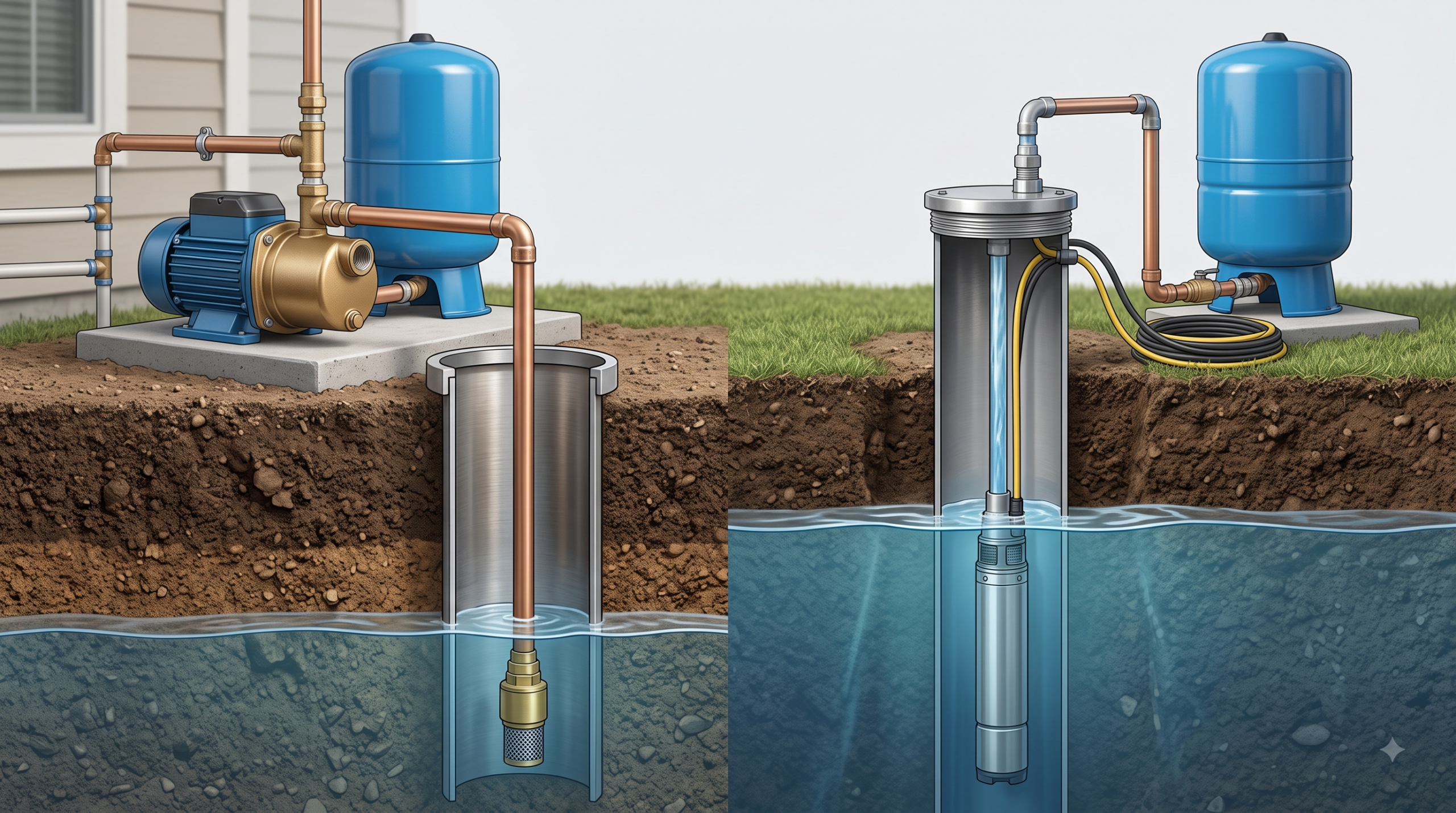
A jet pump stays above ground and draws water through a suction pipe. A submersible pump operates inside the well and pushes water upward, making it more suitable when the water level is beyond the practical suction range of a jet pump.
This guide compares performance, installation, maintenance, noise, and long-term costs. It will help you identify which pump type suits your well without choosing by horsepower or well depth alone.
At a Glance
Choose a Jet Pump:When the pumping water level is within the pump’s rated suction lift and easy ground-level maintenance is important.
Choose a Submersible Pump:When the water level is deeper, quieter operation is preferred, or suction problems need to be avoided.
Do Not Choose by Well Depth Alone:A deep well can still have a high water level, while a shallower well may experience a large drawdown during pumping.
Measure Before Buying:Confirm the pumping water level, well yield, total head, required flow, casing diameter, voltage, and installation depth.
How Jet Pumps and Submersible Pumps Work
In this guide, “jet pump” mainly refers to a common above-ground shallow-well system. Convertible jet pumps with a down-well ejector are available, but they have different piping and sizing requirements.
How a Jet Pump Works
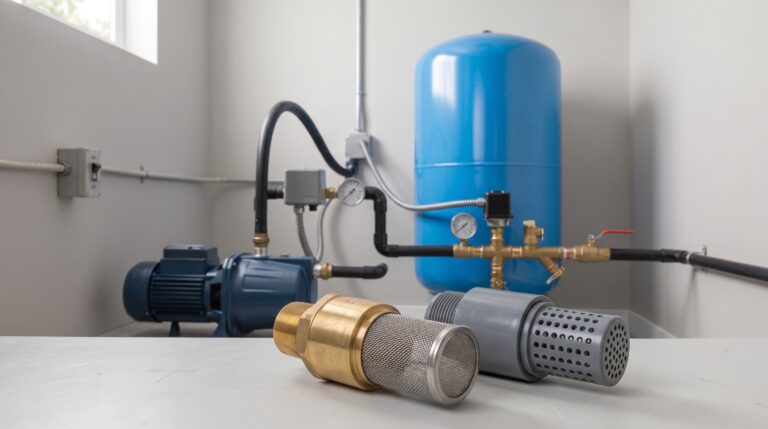
A jet pump stays above ground and creates suction to draw water through a pipe. It normally works with a foot valve, pressure switch, and pressure tank, and must remain properly primed.
How a Submersible Pump Works
A submersible pump operates below the water level inside the well. It pushes water upward through the discharge pipe, so it does not depend on a long suction line or require manual priming.
This difference explains why jet pumps are easier to reach and repair, while submersible pumps usually perform more reliably when the pumping water level is deeper.
Real Customer Experience
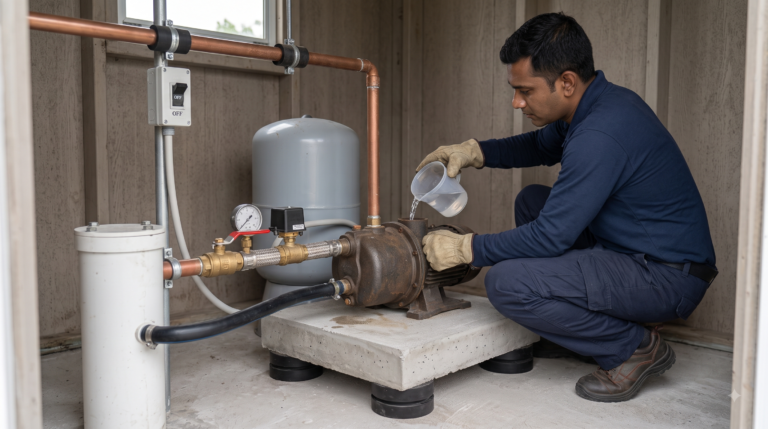
One customer used a shallow well with an above-ground jet pump and pressure tank. The system had previously supplied water normally.
Symptoms:The pump needed to be primed before every start. It sometimes ran without delivering water, produced an uneven flow with air, and lost prime after sitting unused.
Diagnosis:The foot valve was not sealing properly, and the suction pipe was also allowing air into the system.
Solution:The foot valve was replaced, and the suction pipe connections were resealed and repaired. The pump could then maintain prime and draw water normally.
This case shows why a jet pump should not be replaced before checking the complete suction line. A small air leak or leaking foot valve can produce the same symptoms as a damaged pump.
Jet Pump vs Submersible Pump: Key Differences
Jet Pump
Installation:Mounted above ground and connected to the well by a suction pipe.
Advantages:Lower initial cost, easier access, and simpler replacement of seals, impellers, and pressure switches.
Limitations:Limited suction lift, louder operation, and vulnerable to air leaks or loss of prime.
Best for:Shallow pumping water levels, limited budgets, and homeowners who value easier maintenance.
Submersible Pump
Installation:Installed below the water level inside the well and connected to a discharge pipe and electrical cable.
Advantages:Quieter operation, no manual priming, and more reliable performance at deeper water levels.
Limitations:Higher installation cost, more complex electrical requirements, and removal from the well for repairs.
Best for:Deeper or changing water levels and systems where stable, quiet water delivery is important.
How to Choose Between a Jet Pump and a Submersible Pump
Measure the well and water demand before comparing horsepower. The old pump model is useful information, but it does not prove that the original system was correctly sized.
1. Check the Pumping Water Level
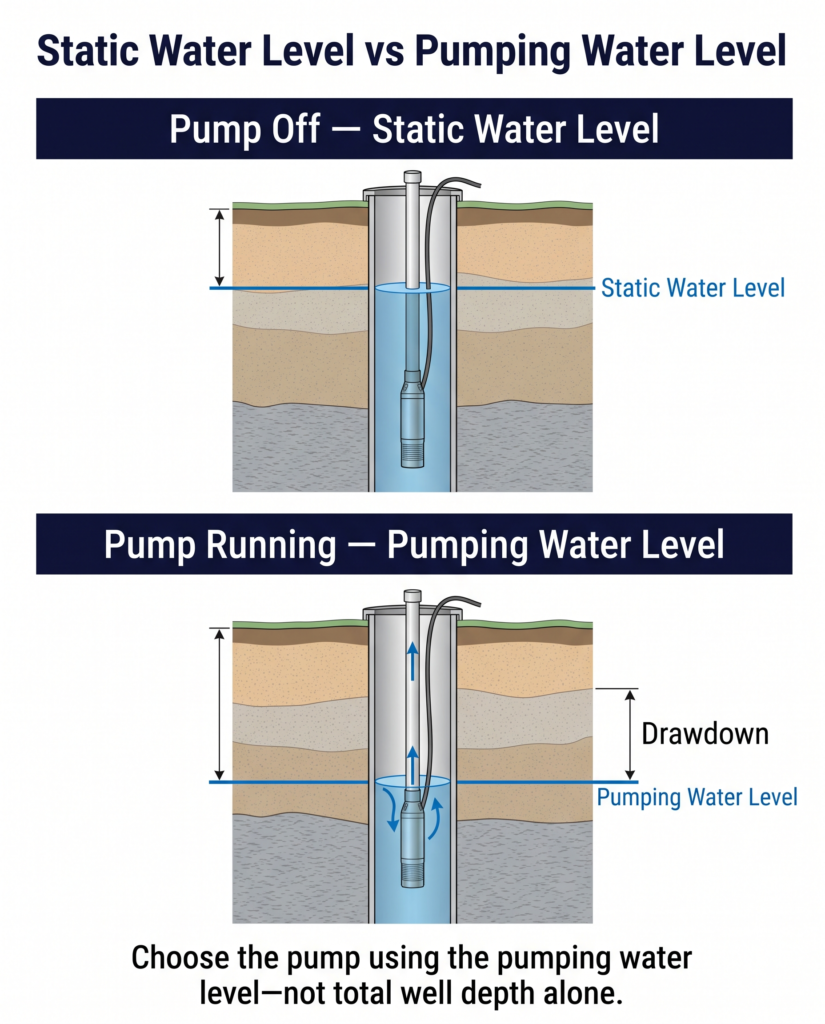
Static water level is measured while the pump is off. Pumping water level is the lower level reached while water is being drawn, and it is the more important measurement when checking whether a jet pump can lift the water.
2. Confirm the Well Yield
Well yield is the amount of water the well can supply continuously. A larger pump cannot solve a low-yield well and may instead lower the water level until the pump runs dry.
3. Calculate Flow and Total Head
Estimate the required gallons per minute (GPM) and total head in feet (ft), including lift, household pressure, and pipe loss. Select a pump that provides the required flow at that head on the manufacturer’s pump curve.
4. Check the Well and Pipe Dimensions
Confirm the well casing diameter before buying a submersible pump. Also check the existing suction or discharge pipe size, because undersized piping can restrict flow and increase pressure loss.
5. Confirm Electrical Requirements
Check the voltage, motor current, cable length, wire size, control box, grounding, and circuit protection. Prioritize dry-run protection when the water level or well yield may be unstable.
ToollQ Buying Rule : Do not choose a well pump by horsepower or total well depth alone. Start with the pumping water level, well yield, required flow, and total head.
Common Mistakes When Buying a Well Pump
A pump that looks affordable can become expensive if it requires new piping, electrical work, or a second installation. Avoid these common mistakes.
• Using total well depth as the only measurement: The pumping water level is more important when deciding whether a jet pump can lift the water.
• Choosing by horsepower alone: Compare the required GPM and total head with the pump curve.
• Ignoring well yield: A pump that removes water faster than the well can recover may run dry.
• Using a jet pump beyond its practical suction range: This can cause poor flow, loss of prime, and unreliable operation.
• Buying the wrong submersible size: Confirm the casing diameter, installation depth, pipe connection, voltage, and cable requirements.
• Choosing the lowest price: Check dry-run protection, sand tolerance, repair parts, warranty, and local service before buying.
Foot valves, check valves, pressure tanks, and control components must also suit the pump system. A correctly selected pump can still perform poorly when one supporting component is undersized or installed incorrectly.
Hidden Costs to Consider Before Buying
The pump price is only part of the total cost. Include the supporting equipment, installation work, and future access required for repairs.
Jet Pump Costs
• Pressure tank, pressure switch, and pressure gauge
• Foot valve and airtight suction piping
• Weather protection and sufficient installation space
• Future repairs for leaks, seals, impellers, or loss of prime
Submersible Pump Costs
• Professional installation and removal equipment
• Correct drop pipe, electrical cable, and control components
• Dry-run or low-water protection where required
• Labor to pull the pump from the well for future repairs
Ask for a complete installed cost—not only the pump price. A lower-priced pump may cost more overall if the system requires extensive piping, electrical work, or difficult future servicing.
Jet Pump or Submersible Pump: Which Is Better for You?
Neither pump type is best for every well. Choose according to the measured water level, required performance, installation conditions, and long-term service costs.
Choose a Jet Pump:When the pumping water level is within the model’s rated suction lift, the budget is limited, and easy ground-level maintenance is important.
Choose a Submersible Pump:When the water level is deeper or changes significantly, quiet operation is important, or suction and priming problems need to be avoided.
Get the Well Measured First:When the pumping water level, well yield, casing diameter, or installation depth is unknown.
If an existing jet pump repeatedly loses prime despite a repaired suction line and foot valve, a submersible pump may offer a more reliable long-term solution. Confirm the well measurements before changing the system.
Frequently Asked Questions
How deep can a shallow-well jet pump lift water?
Many shallow-well jet pumps are rated for a maximum suction lift of about 25 ft (7.6 m). Pipe friction, elevation, air leaks, and local altitude can reduce practical performance, so check the specific model.
Can a jet pump be used for a deeper well?
Some convertible jet pumps use a down-well ejector for deeper water levels. They require different piping and should not be confused with a standard shallow-well jet pump.
Does a submersible well pump need a pressure tank?
Most conventional residential systems use a pressure tank and pressure switch. Some compatible variable-speed systems use different controls, so follow the pump manufacturer’s system design.
Can sand damage both types of well pumps?
Yes. Sand can wear impellers, seals, diffusers, and other internal parts. Identify the source of the sand and choose equipment designed for the actual water conditions.
Related Guides
If you are also comparing household pressure systems, read our Best Water Pressure Booster Pump Buying Guide to understand flow, total head, pump types, and protection features.
A reliable valve helps prevent reverse flow and pressure loss after the pump stops. Read our Best Check Valve Buying Guide before selecting a check valve or reviewing the flow direction.
Final Recommendation
Choose a jet pump when the pumping water level is within the model’s rated suction lift and lower cost or easier ground-level servicing is important. Choose a submersible pump when the water level is deeper, quieter operation is preferred, or suction and priming problems need to be avoided.
Before buying, confirm the pumping water level, well yield, required flow, total head, casing diameter, pipe size, voltage, and installation depth. If these measurements are unknown, have the well inspected instead of selecting a pump by horsepower or total well depth alone.