Brass vs Stainless Steel Faucets: Which Material Is Better?
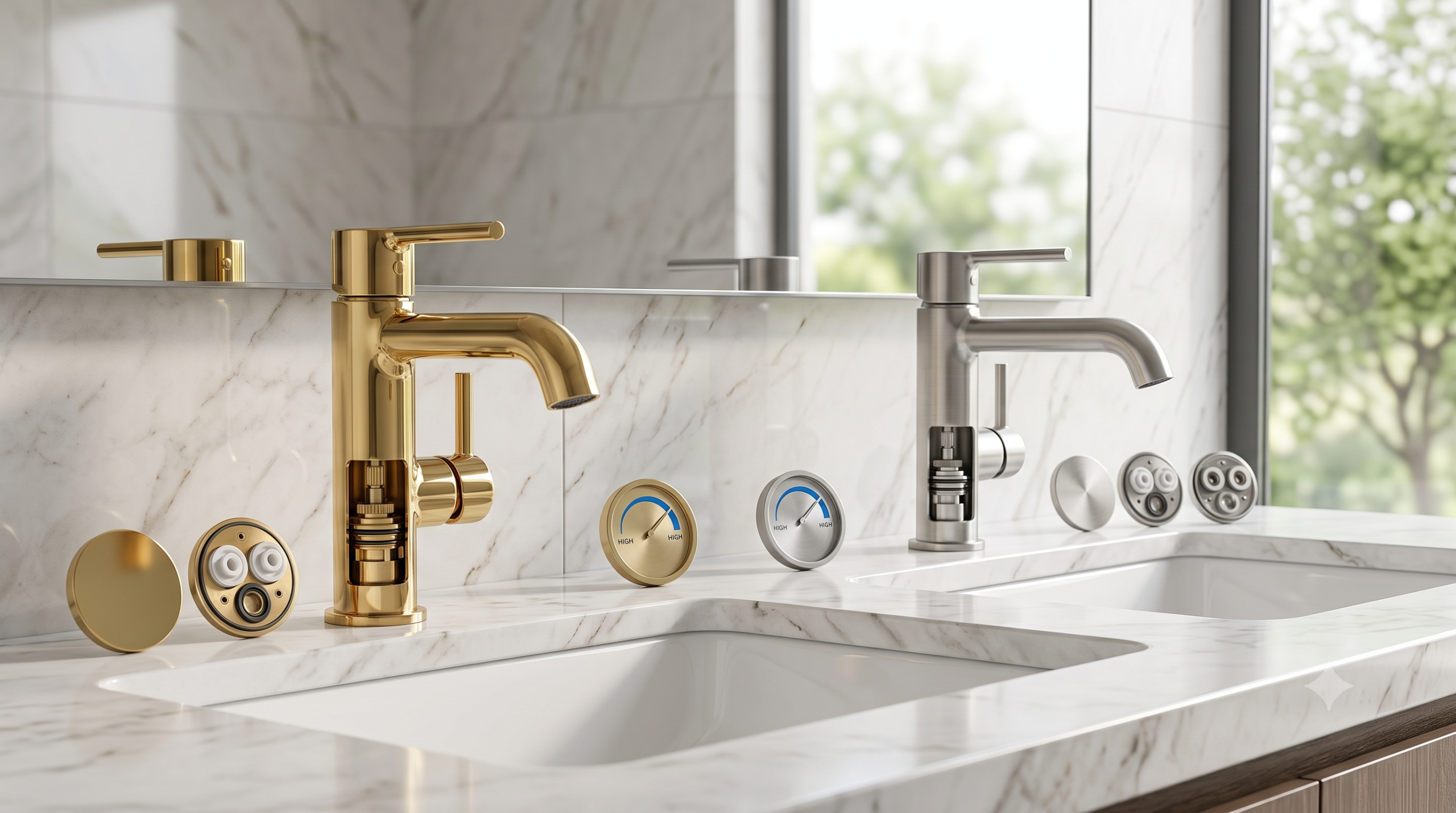
Many people ask whether brass or stainless steel is the better faucet material.
The truth is, the best choice depends on where the faucet will be installed and how it will be used.
After more than 15 years in the plumbing and hardware industry, I’ve found that I never recommend a material before asking where the faucet will be installed. Kitchens, bathrooms, gardens, and rental properties all have different requirements.
In this guide, you’ll compare brass and stainless steel faucets based on durability, corrosion resistance, maintenance, installation location, and long-term value, helping you choose the right material for your home.
Quick Answer
If you’re choosing a faucet for your kitchen or bathroom, a high-quality SUS304 stainless steel faucet is usually the best choice because it offers excellent corrosion resistance, easy maintenance, and long-term durability.
For outdoor garden taps or areas exposed to sun and rain, a quality brass faucet is often the better option because of its strength and proven durability in outdoor environments.
✔ 🍳Kitchen Faucet → SUS304 or Brass (based on your preference)
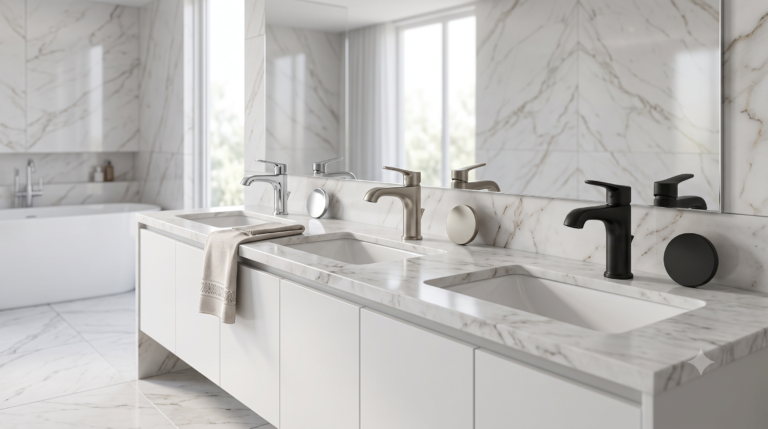
✔ 🚿 Bathroom Faucet → SUS304 Stainless Steel
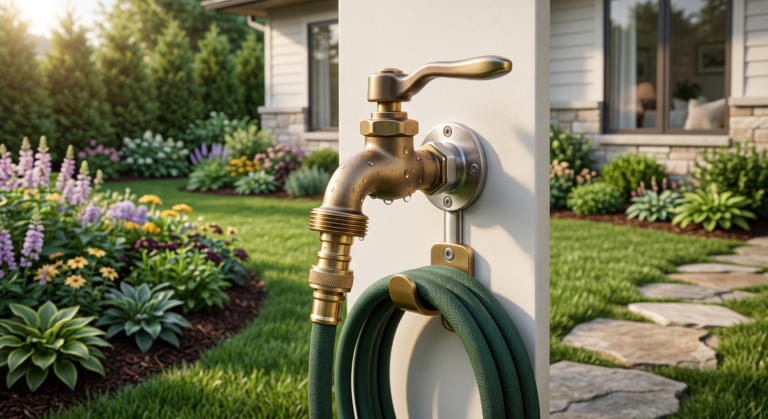
✔ 🌳Garden / Outdoor Faucet → Brass
✔ 💰 Rental Property or Budget Projects → Choose the material that best fits your budget and usage
The best faucet material isn’t simply brass or stainless steel. It depends on where the faucet will be installed, how often it will be used, and your long-term maintenance expectations.
Why You Can Trust ToollQ
At ToollQ, we don’t recommend brass or stainless steel based on marketing claims or price alone.
We first ask where the faucet will be installed because the right material depends on the installation environment, daily usage, and long-term maintenance.
Our recommendations are based on more than 15 years of real plumbing and hardware industry experience, helping homeowners choose the right material instead of simply choosing the most expensive one.
Before making a recommendation, we always ask a few simple questions:
✔ Where will the faucet be installed?
✔ Is it for a kitchen, bathroom, or garden?
✔ Is it for your own home or a rental property?
✔ What’s your budget?
These simple questions help us recommend the right faucet material for your specific needs instead of giving the same answer to everyone.
The ToollQ Comparison Method
When comparing brass and stainless steel faucets, we don’t start with appearance or price.
Instead, we compare where the faucet will be installed, how often it will be used, the maintenance required, and the long-term value each material provides.
Our comparison follows these five steps:
✔ Installation location
✔ Daily usage
✔ Corrosion resistance
✔ Maintenance requirements
✔ Long-term value
Following these five steps makes it much easier to choose the right faucet material instead of relying on price or appearance alone.
💡 ToollQ Expert Tip
Never ask, “Which material is better?”
Ask, “Which material is better for where I’m installing this faucet?”
Brass vs Stainless Steel: Quick Comparison
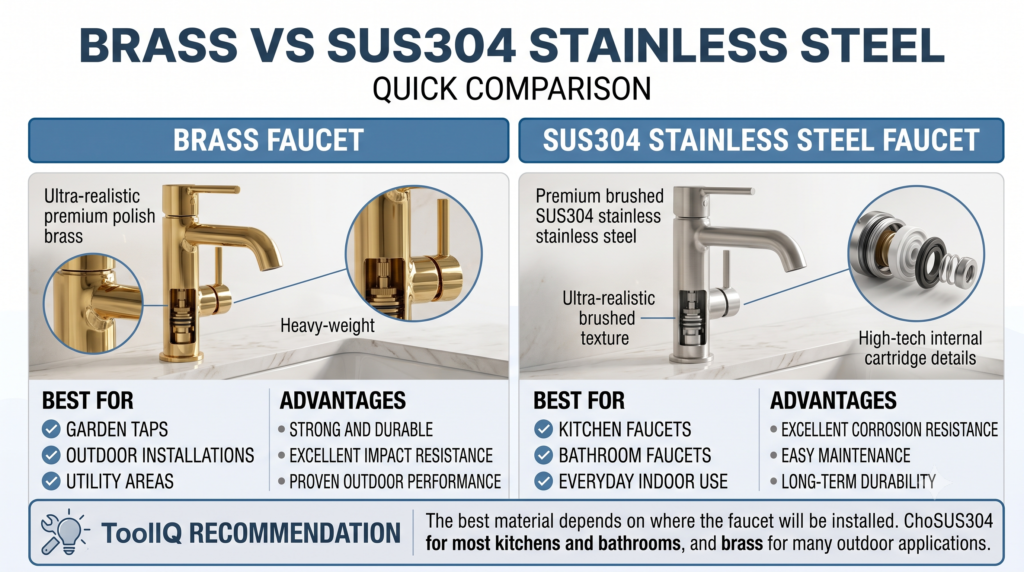
Brass and stainless steel are both excellent faucet materials, but they perform best in different environments.
Instead of asking which material is better, ask where the faucet will be installed and how it will be used.
| Feature | Brass | SUS304 Stainless Steel |
| Best For | Outdoor | Kitchen & Bathroom |
| Corrosion Resistance | Good | Excellent |
| Maintenance | Moderate | Easy |
| Durability | Excellent | Excellent |
| Long-Term Value | Excellent | Excellent |
🛠 ToollQ Real-World Experience
When customers ask which material is better, we don’t answer immediately.
We first ask where the faucet will be installed because that determines whether brass or SUS304 is the better choice.
💡 ToollQ Expert Tip
If you’re comparing two quality faucets, don’t choose based on material alone.
Always consider the installation location and how often the faucet will be used.
Durability Comparison
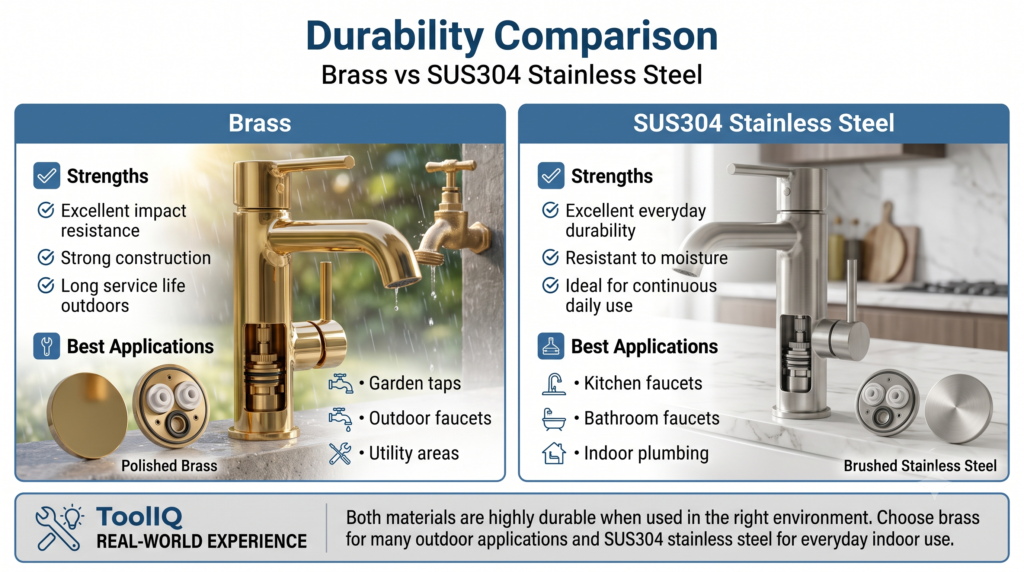
Both brass and SUS304 stainless steel are highly durable materials when used in the right environment.
The better choice depends on where the faucet is installed, how often it’s used, and how well it’s maintained.
Brass
Brass has been trusted in the plumbing industry for decades.
It offers excellent strength and impact resistance, making it a reliable choice for outdoor faucets and heavy-duty applications.
SUS304 Stainless Steel
SUS304 stainless steel is extremely durable for everyday indoor use.
Its excellent corrosion resistance makes it one of the best materials for kitchen and bathroom faucets.
🛠 ToollQ Real-World Experience
Customers often ask which material lasts longer.
In our experience, both can last for many years when used in the right location. The installation environment is usually more important than the material itself.
💡 ToollQ Expert Tip
Don’t compare durability without considering the installation location.
A quality brass faucet outdoors and a quality SUS304 faucet indoors can both provide excellent long-term performance.
Corrosion Resistance
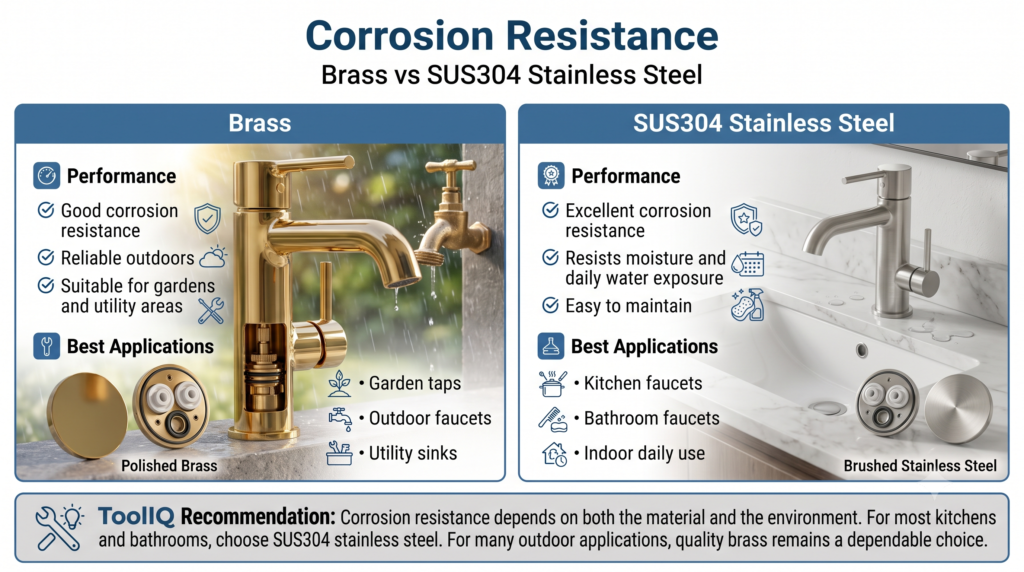
Corrosion resistance is one of the biggest differences between brass and SUS304 stainless steel.
Choosing the right material for the right environment helps your faucet last longer and maintain its appearance.
Brass
Brass offers good corrosion resistance and has been used in plumbing systems for many years.
It performs especially well in outdoor applications such as garden taps and utility areas.
SUS304 Stainless Steel
SUS304 stainless steel provides excellent corrosion resistance in kitchens and bathrooms.
It resists rust, moisture, and daily exposure to water, making it one of the most popular materials for indoor faucets.
🛠 ToollQ Real-World Experience
When customers ask which material is more resistant to corrosion, we first ask where the faucet will be installed. For kitchens and bathrooms, we usually recommend SUS304. For outdoor garden taps, brass remains a reliable choice.
💡 ToollQ Expert Tip
Corrosion resistance isn’t just about the material itself. Using the right material in the right environment is what delivers the best long-term performance.
Water Quality & Safety
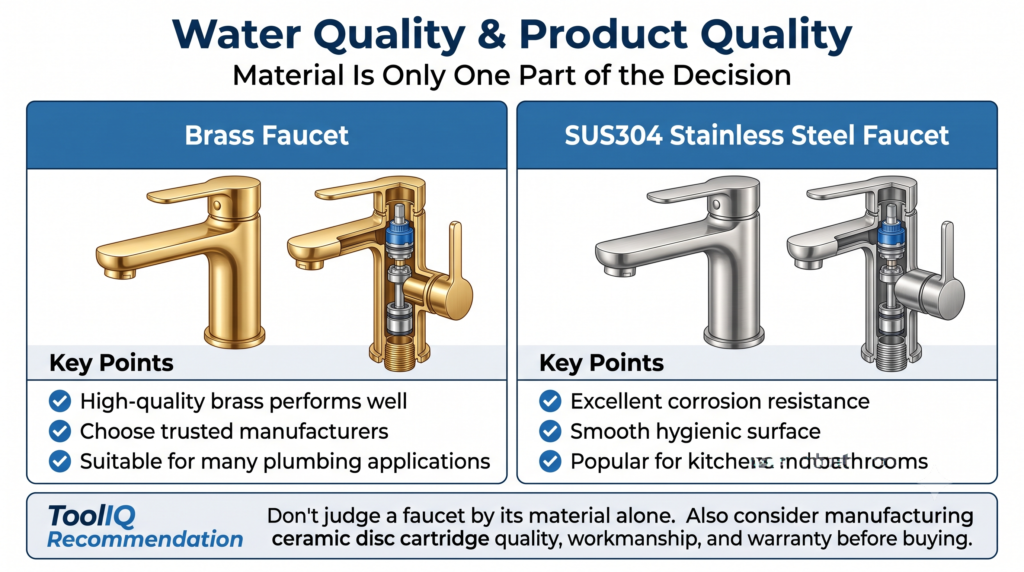
Besides durability, many homeowners also care about water quality and long-term safety.
Choosing a high-quality faucet made from the right material helps ensure reliable performance and peace of mind for everyday use.
Brass
High-quality brass faucets have been used in plumbing systems for many years.
When purchasing a brass faucet, choose products from reputable manufacturers that comply with local drinking water regulations.
SUS304 Stainless Steel
SUS304 stainless steel is widely used in kitchens and bathrooms because of its excellent corrosion resistance and clean, durable surface.
It is one of the most popular materials for modern household faucets.
🛠 ToollQ Real-World Experience
In our experience, customers often focus on whether the faucet is made of brass or stainless steel. We also remind them to check the overall product quality, workmanship, and manufacturer—not just the material itself.
💡 ToollQ Expert Tip
A well-made faucet from a trusted manufacturer is usually a better investment than choosing a material alone. Always consider build quality, cartridge quality, and warranty together.
Price vs Long-Term Value
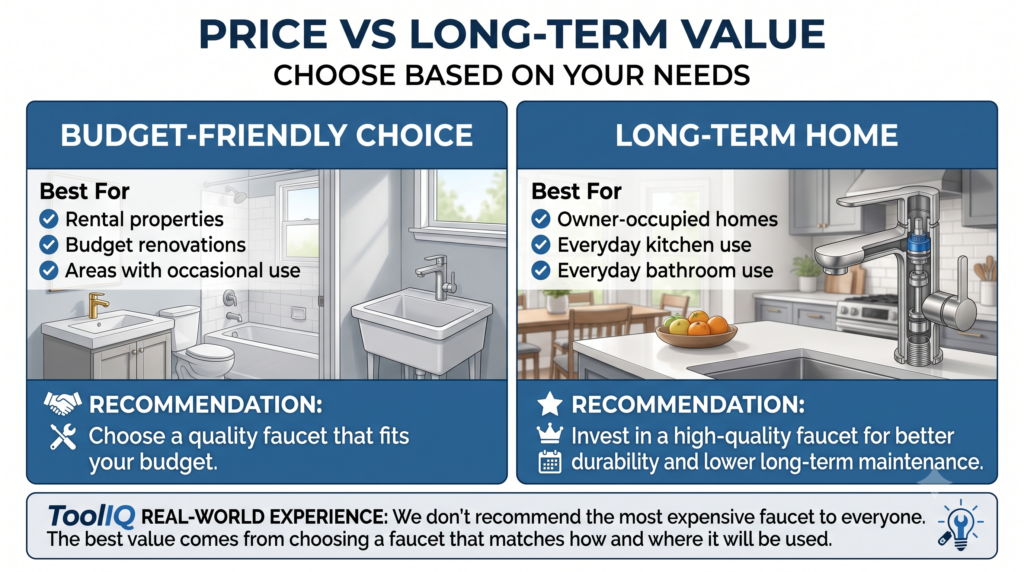
Price is important, but it shouldn’t be the only factor when choosing a faucet.
A faucet that costs a little more may provide better durability, lower maintenance, and a longer service life, making it a better long-term investment.
Budget-Friendly Choice
If you’re renovating a rental property, working with a limited budget, or installing a faucet that won’t be used frequently, choosing a quality faucet that fits your budget is often the most practical decision.
Long-Term Home
If you’re buying a faucet for your own home and expect to use it every day for many years, investing in a high-quality SUS304 stainless steel faucet is often worthwhile because of its excellent durability and low maintenance.
🛠 ToollQ Real-World Experience
We don’t recommend the most expensive faucet to every customer.
For rental properties or rarely used areas, we usually recommend choosing a quality faucet that fits the budget.
For kitchens and bathrooms in owner-occupied homes, investing in a high-quality SUS304 faucet often provides better long-term value.
💡 ToollQ Expert Tip
Buy based on how the faucet will be used—not simply on its price.
The right faucet is the one that matches your needs, your home, and your budget.
Which One Should You Choose?
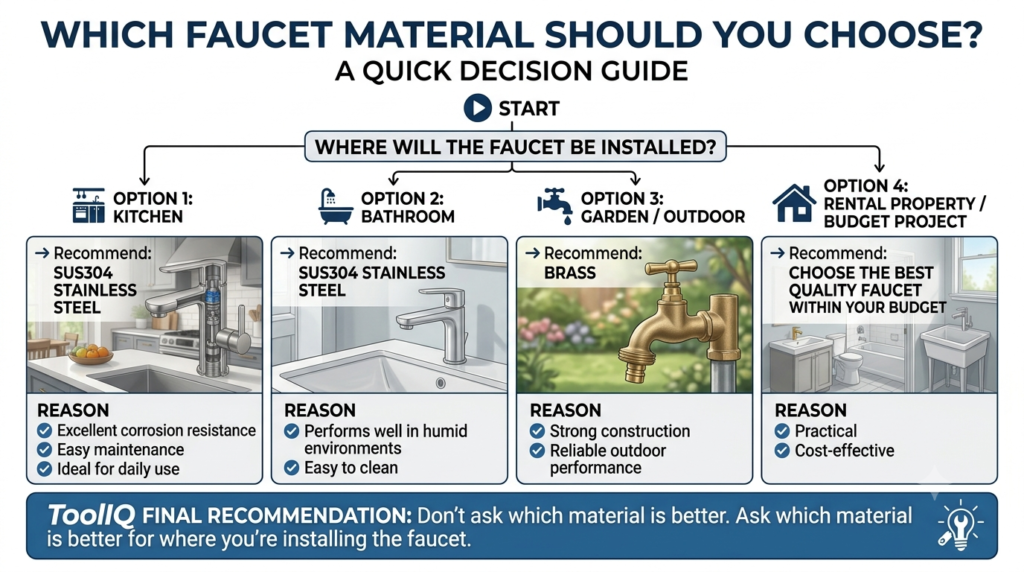
Both brass and SUS304 stainless steel are excellent faucet materials.
The better choice depends on where the faucet will be installed, how often it will be used, and your long-term expectations.
For Kitchens
For most kitchens, we recommend a high-quality SUS304 stainless steel faucet because it offers excellent corrosion resistance, easy maintenance, and reliable everyday performance.
If you prefer the appearance or feel of brass and choose a high-quality product, it can also be an excellent option.
For Bathrooms
For bathrooms, SUS304 stainless steel is usually our first recommendation because it performs well in humid environments and is easy to keep clean.
For Rental Properties
For rental properties or areas that aren’t used frequently, choose a quality faucet that fits your budget.
The most expensive material isn’t always necessary for every application.
🛠 ToollQ Real-World Experience
One of the biggest mistakes buyers make is looking for a single “best” material.
After helping customers for more than 15 years, we’ve found that the best choice depends on the installation location, usage, and budget—not just the material itself.
💡 ToollQ Final Recommendation
Don’t choose brass or SUS304 because someone says one is always better.
Choose the material that best matches where the faucet will be installed and how it will be used.
Frequently Asked Questions
Is brass or stainless steel better for faucets?
Neither material is better in every situation. Brass and SUS304 stainless steel are both excellent choices. The right material depends on where the faucet will be installed, how often it will be used, and your long-term maintenance expectations.
Which material is better for kitchen faucets?
For most kitchens, we recommend a high-quality SUS304 stainless steel faucet because it offers excellent corrosion resistance, is easy to maintain, and performs well with everyday use.
Which material is better for bathroom faucets?
SUS304 stainless steel is usually the preferred choice for bathrooms because it performs well in humid environments and is easy to keep clean.
Why are brass faucets still popular?
Brass faucets remain popular because they are strong, durable, and perform well in outdoor applications such as garden taps and utility areas.
Should I always buy the most expensive faucet?
Not necessarily. The best faucet is the one that matches your installation location, daily usage, and budget. Spending more doesn’t always provide better value for every application.
💡 ToollQ Expert Advice
Don’t ask which material is the best.
Ask which material is best for where you’re installing the faucet.
Related Guides
Continue learning with these expert plumbing guides from ToollQ:
- Best Kitchen Faucet Buying Guide (2026)
- Best Bathroom Faucet Buying Guide (2026)
- Best Shower Head Buying Guide (2026)
- SUS304 vs SUS201 Stainless Steel: What’s the Difference?
Conclusion
Brass and SUS304 stainless steel are both excellent faucet materials.
The right choice depends on where the faucet will be installed, how often it will be used, and your long-term expectations.
For kitchens and bathrooms, a high-quality SUS304 stainless steel faucet is usually our first recommendation because of its excellent corrosion resistance and easy maintenance.
For garden taps and many outdoor applications, a quality brass faucet remains a proven and reliable choice.
💡 ToollQ Final Recommendation
Don’t ask which material is better.
Ask which material is better for where you’re installing the faucet.
That’s how professionals choose the right faucet material.
Still comparing faucet materials?
Explore more ToollQ buying guides to compare plumbing products, understand real-world differences, and choose with confidence.