Best Pressure Reducing Valve (PRV) Buying Guide (2026): How to Choose the Right Pressure Reducing Valve
What Is a Pressure Reducing Valve?
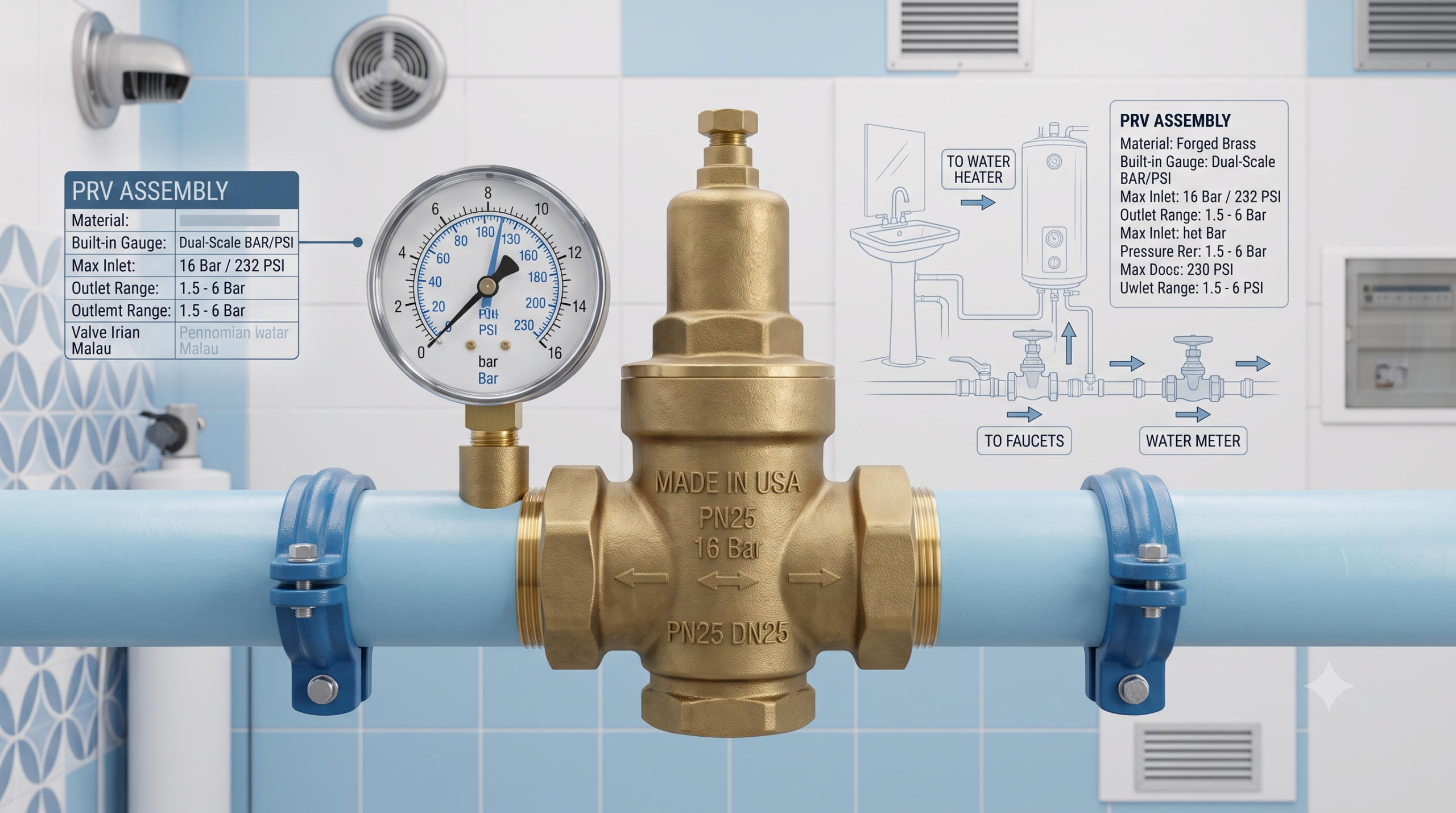
A Pressure Reducing Valve (PRV), also known as a Pressure Regulator Valve, is a plumbing device that automatically reduces high incoming water pressure to a safe and consistent level for residential or commercial plumbing systems.
It helps protect pipes, faucets, water heaters, washing machines, dishwashers, and other plumbing fixtures from excessive water pressure that can lead to leaks, noise, and premature wear.
PRVs are commonly installed near the main water supply line before water enters a building.
Why Choosing the Right Pressure Reducing Valve Matters
A properly selected PRV does much more than lower water pressure.
It can:
- Protect plumbing fixtures from excessive pressure.
- Extend the lifespan of pipes and appliances.
- Reduce water wastage.
- Minimize water hammer.
- Improve overall plumbing system reliability.
- Lower long-term maintenance costs.
Choosing the wrong PRV may result in unstable water pressure, noisy pipes, leaks, or poor water flow throughout the building.
ToollQ Expert Insight
Many homeowners think higher water pressure is always better.
In reality, excessively high pressure can shorten the lifespan of faucets, flexible hoses, toilets, washing machines, and water heaters.
A properly adjusted PRV helps balance performance, comfort, and long-term plumbing protection.
Different Types of Pressure Reducing Valves
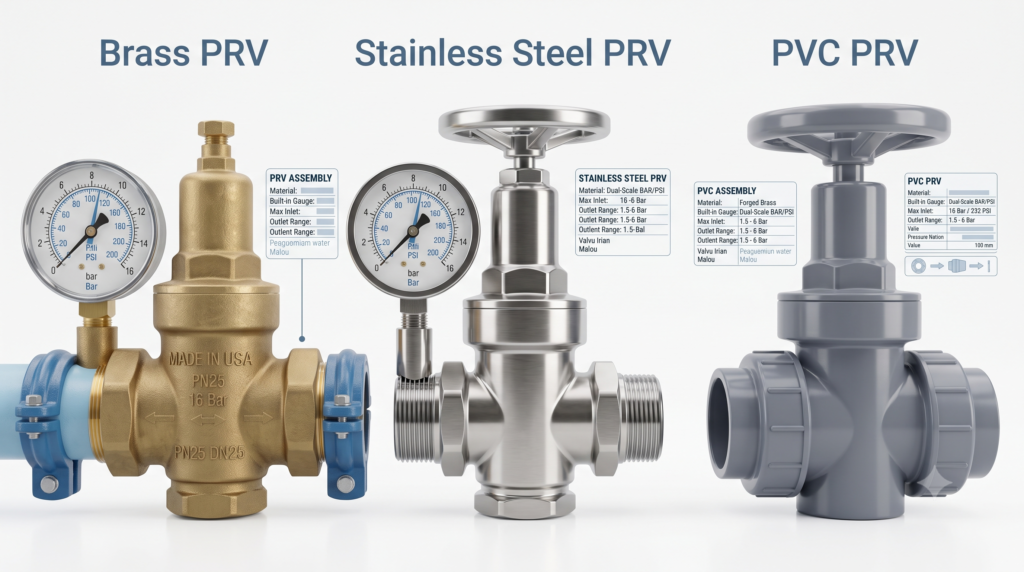
Pressure Reducing Valves (PRVs) are available in different materials and configurations. Choosing the right model depends on your water pressure, budget, and long-term maintenance needs.
Brass Pressure Reducing Valve
Brass PRVs are the most popular choice for residential plumbing systems.
They offer excellent durability, corrosion resistance, and long service life while remaining reasonably priced. For most homeowners, a brass PRV provides the best balance of performance and value.
ToollQ Expert Recommendation
For most homes, a brass PRV is the best overall choice because it is reliable, durable, and cost-effective.
Stainless Steel Pressure Reducing Valve
Stainless steel PRVs provide outstanding corrosion resistance and are suitable for harsh environments or specialized industrial applications.
However, they are significantly more expensive than brass models and are generally unnecessary for standard residential plumbing systems.
PVC Pressure Reducing Valve
PVC PRVs are less common in residential main water supply systems.
Because they operate under continuous water pressure, PVC models may have a shorter service life than brass models, especially in demanding applications.
For this reason, brass is usually the preferred choice for long-term reliability.
Pressure Reducing Valve With Gauge vs Without Gauge
Pressure Reducing Valves are available with or without a built-in pressure gauge.
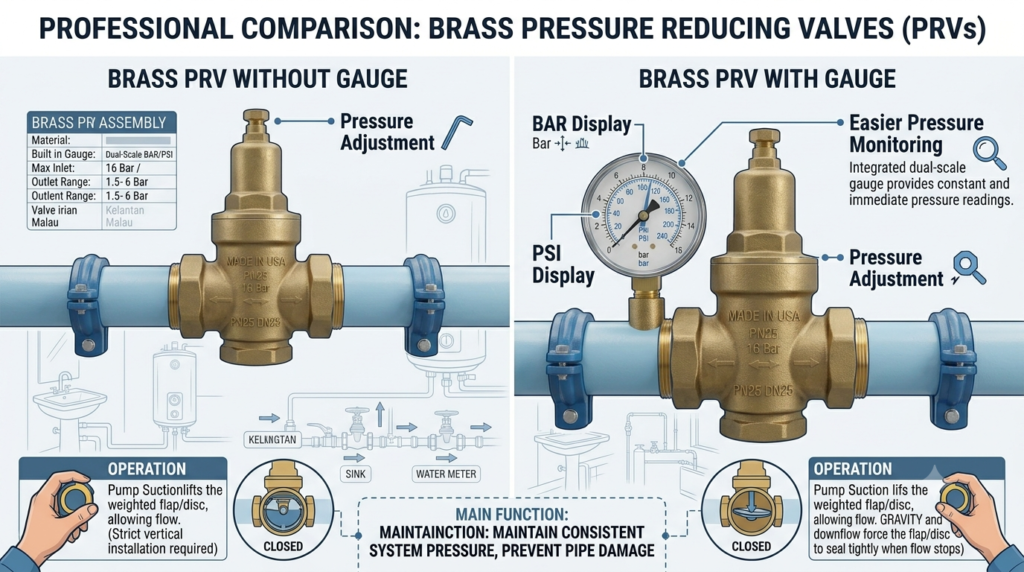
PRV Without Pressure Gauge
A standard PRV without a gauge is suitable for homeowners who simply want to reduce excessive water pressure.
It is more affordable and works well when the incoming water pressure is already known.
PRV With Pressure Gauge
A PRV with a built-in pressure gauge allows homeowners to monitor the current water pressure at any time.
The gauge typically displays pressure in BAR and PSI, making it easier to:
- Check whether the water pressure is too high or too low.
- Adjust the PRV accurately.
- Diagnose plumbing problems quickly.
- Monitor changes in water pressure over time.
ToollQ Expert Recommendation
If your budget allows, choose a PRV with a pressure gauge.
Knowing your home’s water pressure makes troubleshooting much easier and helps ensure the PRV is adjusted correctly.
ToollQ Expert Tip
One of the most common problems is that homeowners do not know their actual water pressure.
Without knowing the pressure (BAR or PSI), it is difficult to determine whether plumbing problems are caused by excessive pressure or another issue.
A pressure gauge provides valuable information and can help prevent unnecessary repairs.
How to Choose the Right Pressure Reducing Valve
Choosing the right Pressure Reducing Valve (PRV) is about more than selecting the correct size. You should also consider water pressure, valve material, monitoring features, and long-term reliability.
1. Choose the Correct Valve Size
Always select a PRV that matches your main water supply pipe.
A valve that is too small can restrict water flow, while a valve that is too large may not fit your plumbing system properly.
Before purchasing, check the pipe size or consult your plumber if you are unsure.
2. Choose the Right Material
Different materials offer different levels of durability.
- Brass – Best overall choice for residential plumbing.
- Stainless Steel – Excellent corrosion resistance but higher cost.
- PVC – Lower initial cost but generally not recommended for continuous high-pressure residential water supply.
For most homeowners, a brass PRV provides the best balance of reliability, durability, and affordability.
3. Choose a PRV With a Pressure Gauge
A pressure gauge allows you to see the actual water pressure inside your plumbing system.
Most gauges display pressure in both BAR and PSI, making it easier to:
- Monitor your home’s water pressure.
- Adjust the PRV accurately.
- Identify pressure-related plumbing problems.
- Confirm whether the PRV is working correctly.
4. Know Your Home’s Water Pressure
Many homeowners install a PRV without ever checking their incoming water pressure.
If you don’t know your water pressure, it becomes difficult to determine whether plumbing problems are caused by excessive pressure or another issue.
Knowing your pressure reading helps you make better adjustments and diagnose problems more accurately.
5. Think About Long-Term Protection, Not Just Price
The cheapest PRV is not always the most economical.
A quality PRV helps protect expensive plumbing fixtures, including:
- Kitchen faucets
- Bathroom faucets
- Toilet inlet valves
- Water heaters
- Washing machines
- Flexible hoses
- Pipe couplings and fittings
Replacing one leaking faucet may cost more than investing in a quality PRV.
ToollQ Expert Recommendation
Based on years of plumbing hardware experience:
🏆 Best Overall: Brass Pressure Reducing Valve
📊 Best Value Upgrade: Brass PRV with a Built-in Pressure Gauge
💰 Budget Choice: Brass PRV without a Pressure Gauge
⚙️ Best for Industrial or Corrosive Environments: Stainless Steel PRV
A pressure gauge is highly recommended because it lets homeowners monitor their water pressure in BAR and PSI, making future troubleshooting much easier.
Common Mistakes When Buying a Pressure Reducing Valve
Buying the wrong Pressure Reducing Valve (PRV) can lead to unstable water pressure, leaking fixtures, and unnecessary repair costs. Here are the most common mistakes homeowners make.
Buying the Wrong Valve Size
One of the most common mistakes is purchasing a PRV that does not match the main water supply pipe.
A PRV with the wrong size may be difficult to install and can affect water flow throughout the plumbing system.
Always verify the pipe size before purchasing.
Choosing a PRV Without Knowing Your Water Pressure
Many homeowners buy a PRV simply because someone recommended it, without knowing their home’s actual water pressure.
Without knowing the pressure in BAR or PSI, it is difficult to determine whether the valve is adjusted correctly or if high pressure is causing plumbing problems.
Choosing the Cheapest PRV
A low-cost PRV may save money initially, but poor-quality internal components can wear out faster.
This may result in:
- Unstable water pressure
- Poor pressure regulation
- Internal leakage
- More frequent replacement
For most homes, investing in a quality brass PRV provides better long-term value.
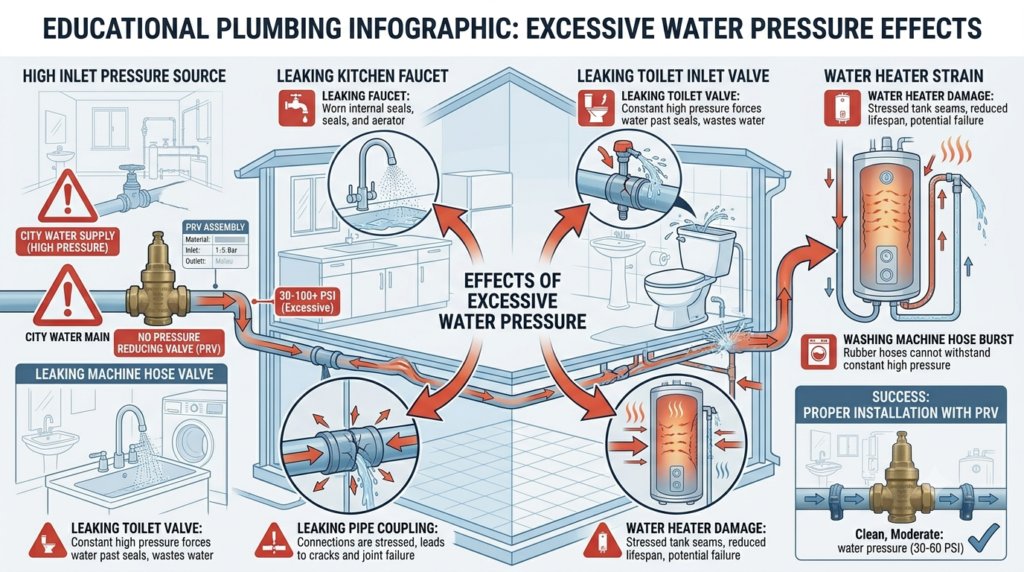
Ignoring Pressure-Related Plumbing Problems
Many homeowners replace leaking plumbing fixtures without realizing that excessive water pressure is the real cause.
High water pressure can shorten the lifespan of:
- Kitchen faucets
- Bathroom faucets
- Toilet inlet valves
- Flexible hoses
- Pipe couplings
- Water heaters
Replacing these parts repeatedly without controlling the water pressure often leads to unnecessary repair costs.
Maintenance Tips
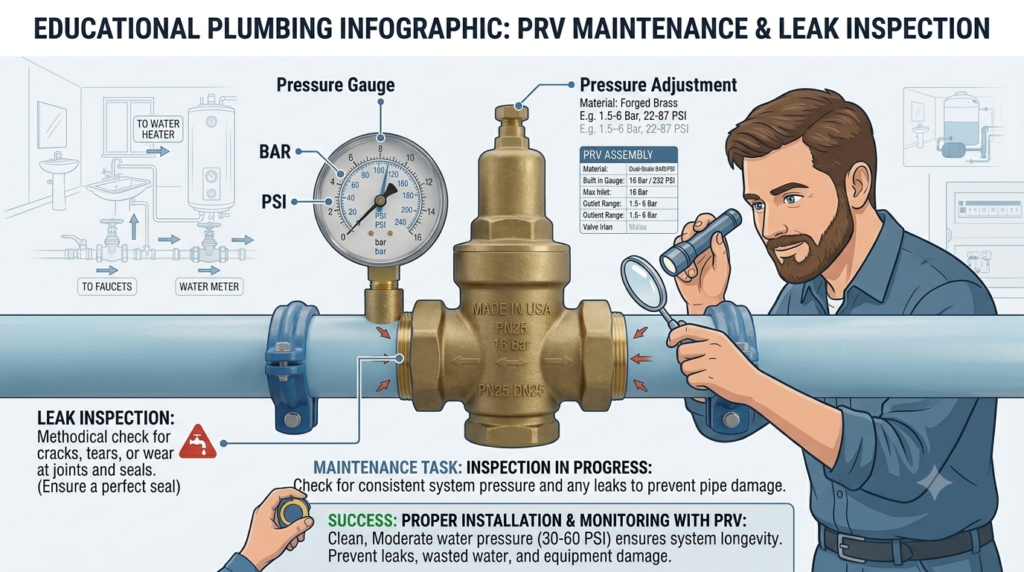
A quality PRV requires very little maintenance, but periodic inspection helps ensure consistent performance.
Monitor Water Pressure Regularly
If your PRV includes a pressure gauge, check it occasionally.
A sudden increase or decrease in pressure may indicate that the valve requires adjustment or inspection.
Inspect for External Leaks
Check the valve body, threaded connections, and surrounding pipe fittings for water leaks.
Repairing small leaks early helps prevent larger plumbing problems.
Adjust the Pressure Correctly
Avoid setting the pressure higher than necessary.
Most residential plumbing systems perform well at a moderate pressure recommended by the PRV manufacturer and local plumbing requirements.
Excessively high pressure increases stress on the entire plumbing system and shortens the lifespan of plumbing fixtures.
ToollQ Expert Tip
From years of plumbing hardware experience, one of the biggest mistakes homeowners make is replacing leaking faucets or toilet inlet valves without checking the home’s water pressure first.
In many cases, excessive water pressure is the root cause. Installing a quality brass PRV and monitoring the pressure with a gauge can help prevent repeated plumbing failures and reduce long-term maintenance costs.
Conclusion
A Pressure Reducing Valve (PRV) is one of the most important components in a plumbing system. It not only controls water pressure but also protects faucets, toilets, water heaters, washing machines, pipe fittings, and other plumbing fixtures from excessive pressure.
For most residential plumbing systems, a brass PRV provides the best balance of durability, performance, and affordability. If your budget allows, choosing a brass PRV with a built-in pressure gauge is even better because it allows you to monitor your home’s water pressure in real time.
Before buying a PRV, always confirm the valve size, understand your home’s water pressure, and choose a quality product that matches your plumbing system. A small investment today can help prevent expensive plumbing repairs in the future.
Frequently Asked Questions (FAQ)
What is the ideal water pressure for a home?
Most residential plumbing systems perform best at around 3–5 BAR (approximately 45–75 PSI). Water pressure that is too high may shorten the lifespan of plumbing fixtures and appliances.
Should I choose a PRV with a pressure gauge?
Yes. A built-in pressure gauge allows you to monitor your home’s water pressure in BAR and PSI, making adjustment and troubleshooting much easier.
Is a brass PRV better than a PVC PRV?
For most homes, yes. Brass PRVs offer better durability and are better suited for continuous water pressure. PVC models are less common for residential main water supply systems.
Why do my faucets and toilet inlet valves keep leaking?
Excessive water pressure is one possible cause. Before repeatedly replacing plumbing parts, check your home’s water pressure and make sure your PRV is functioning correctly.
How do I know if my home’s water pressure is too high?
Common signs include:
- Faucets that leak frequently
- Toilet inlet valves that fail repeatedly
- Pipe couplings that begin leaking
- Loud banging noises in pipes (water hammer)
- Appliances wearing out sooner than expected
Using a PRV with a pressure gauge makes it much easier to identify these problems.
Want to protect your plumbing system even further?
👉 Read our Best Ball Valve Buying Guide to learn how a quality shut-off valve works together with a PRV in residential plumbing systems.
For more information about water efficiency and residential plumbing, visit the EPA WaterSense website.