Best Ball Valve Buying Guide (2026): How to Choose the Right Valve for Your Home
A ball valve is one of the most important shut-off valves in any plumbing system, but not all ball valves are built to the same standard.
Choosing the wrong ball valve can lead to leaks, difficult operation, premature failure, and expensive plumbing repairs that could have been avoided.
After more than 15 years in the plumbing and hardware industry, I’ve helped homeowners, plumbers, and contractors choose the right ball valves for homes, renovations, and commercial projects.
The best ball valve isn’t always the most expensive one. The right choice depends on the material, construction quality, installation location, and how often the valve will be used.
In this ToollQ Buying Guide, you’ll learn how to choose a high-quality ball valve, compare different materials, avoid common buying mistakes, and buy with confidence.
At a Glance
🔍 Quick Overview
✅ Best Overall:
Forged Brass Ball Valve
✅ Best for Cold Water Systems:
PVC Ball Valve
✅ Best for Premium Homes:
SUS304 Stainless Steel Ball Valve
✅ Best for Marine or Chemical Environments:
SUS316 Stainless Steel Ball Valve
✅ Best for Maximum Water Flow:
Full Port Ball Valve
For most residential plumbing systems, a high-quality forged brass ball valve offers the best balance of durability, reliability, and long-term value. The right choice, however, depends on your installation location and plumbing application.
Why You Can Trust ToollQ
Many buying guides simply compare specifications.
In real plumbing projects, the best ball valve depends on where it will be installed, how often it will be used, and the quality of its construction.
After more than 15 years in the plumbing and hardware industry, I’ve helped homeowners, plumbers, and contractors choose ball valves for everything from kitchen renovations to main water supply systems.
This guide is based on real customer experience and practical product knowledge—not just manufacturer specifications.
✅ What You’ll Learn
✔ How to choose the right ball valve material
✔ The difference between full port and standard port valves
✔ How to identify a high-quality ball valve
✔ Common buying mistakes to avoid
✔ Which ball valve is best for your plumbing system
💡 ToollQ Pro Tip
A ball valve may cost only a little more than a cheaper alternative, but choosing the right one can save years of maintenance, leaks, and replacement costs.
Before You Buy a Ball Valve
Before choosing a ball valve, take a moment to think about where it will be installed and how it will be used.
The right material, valve type, and construction quality can make a big difference in long-term reliability.
1. Where Will the Ball Valve Be Installed?
Will it be installed under a kitchen sink, inside a wall, outdoors, or on the main water supply?
The installation location affects the material, durability, and quality level you should choose.
2. What Pipe Material Are You Using?
PVC, PPR, copper, stainless steel, and galvanized pipes may require different types of ball valves or connection methods.
Always choose a valve that matches your plumbing system.
3. How Often Will the Valve Be Operated?
Some valves are opened and closed only during emergencies, while others are used regularly during maintenance or repairs.
Frequent operation requires a valve with smooth action and reliable sealing.
4. Do You Need Maximum Water Flow?
If the valve is installed on the main water supply or another high-flow application, a full port ball valve is usually the better choice.
For many everyday household applications, a standard port valve is often sufficient.
5. Are You Buying for Today or for the Next 10 Years?
A quality ball valve may cost slightly more upfront, but it can help prevent leaks, reduce maintenance, and avoid expensive replacement work later.
Think about long-term value, not just the purchase price.
💡 ToollQ Buying Tip
The best ball valve isn’t the most expensive one.
It’s the one that’s designed for your plumbing system and built to last.
How to Choose the Right Ball Valve
Choose the Right Material
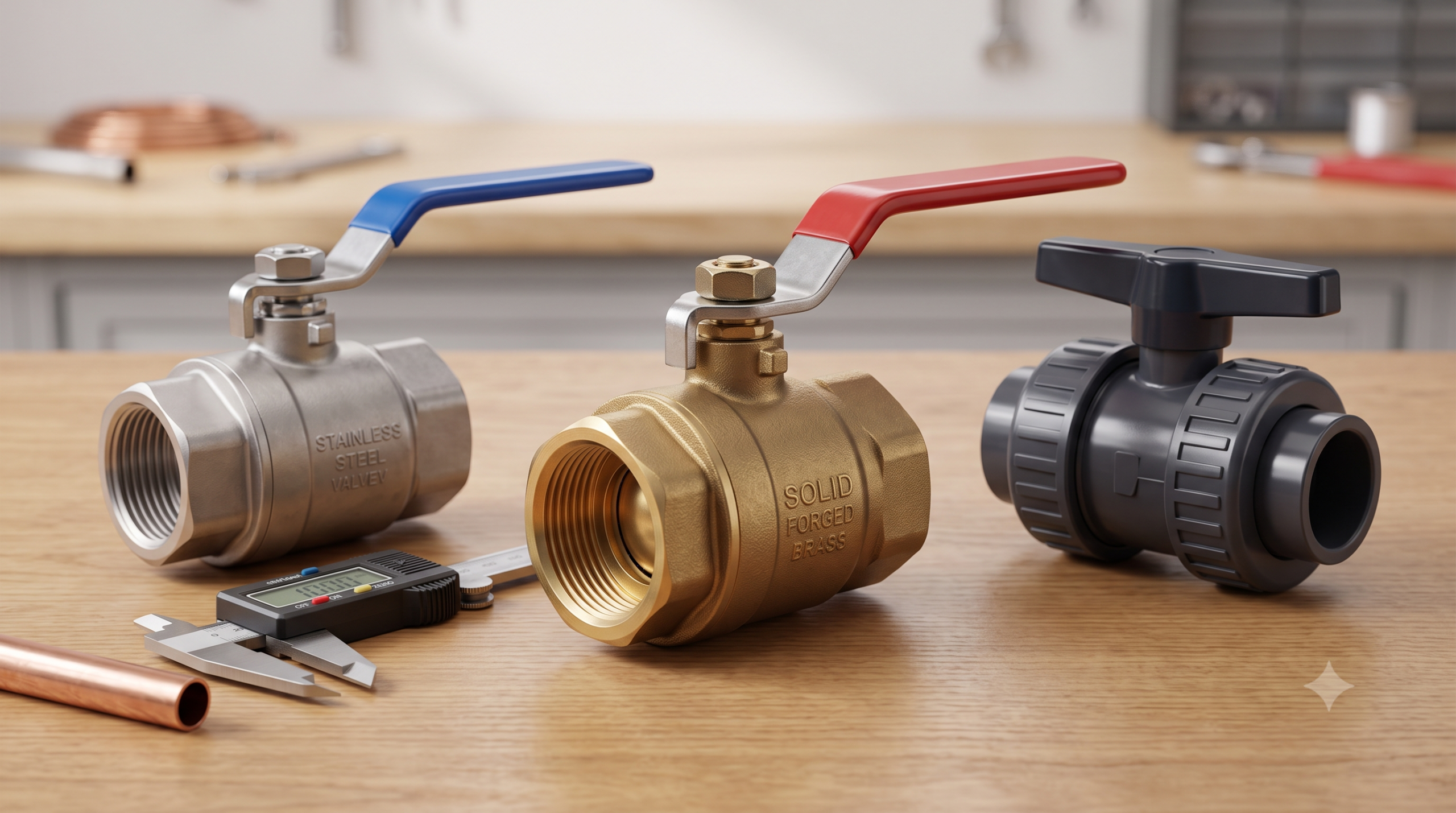
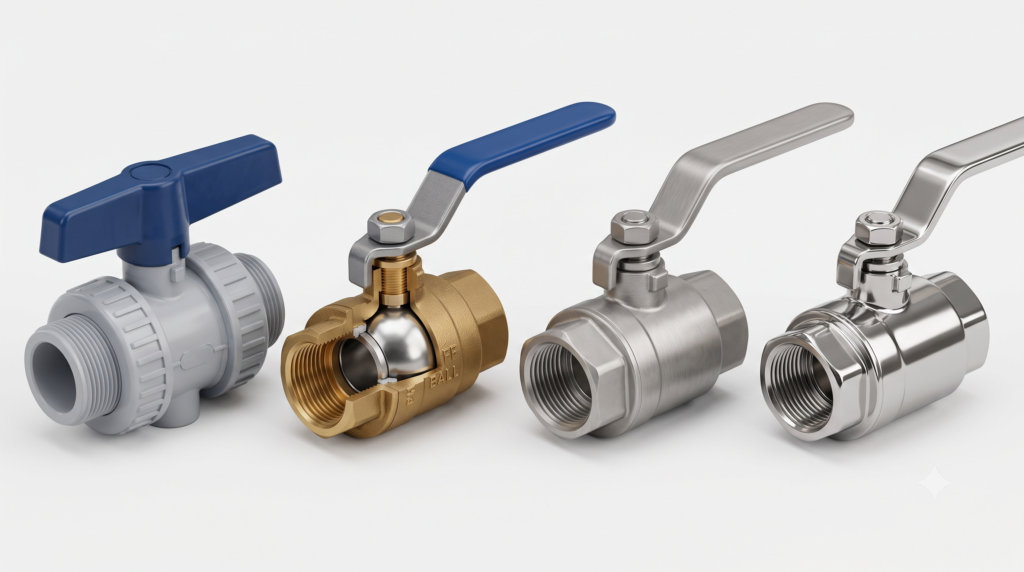
The material of a ball valve is one of the biggest factors affecting its durability, corrosion resistance, and suitability for different plumbing systems.
Each material has its own strengths, so choosing the right one depends on where and how the valve will be used.
Quick Material Guide
🏠 Most Homes
✔ Forged Brass
🌿 Cold Water & Irrigation
✔ PVC
✨ Premium Residential Plumbing
✔ SUS304 Stainless Steel
🌊 Coastal & Chemical Environments
✔ SUS316 Stainless Steel
💡 ToollQ Pro Tip
For most homeowners, a forged brass ball valve offers the best balance of durability, reliability, and value.
Choose stainless steel only when your environment requires additional corrosion resistance.
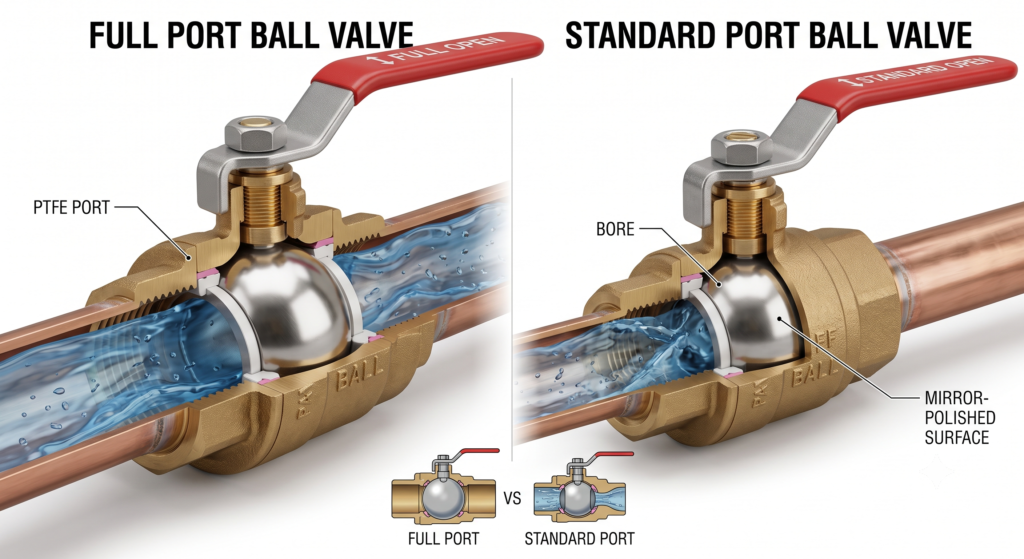
Choose Full Port or Standard Port
One important feature many homeowners overlook is the valve port size.
Choosing between a full port and a standard port ball valve can affect water flow, especially on main supply lines and high-flow applications.
Quick Comparison
🚰 Full Port
✔ Same opening size as the pipe
✔ Maximum water flow
✔ Best for main water supply and pumps
🏠 Standard Port
✔ Smaller internal opening
✔ More compact
✔ Suitable for most household plumbing
💡 ToollQ Pro Tip
For most kitchen and bathroom plumbing, a standard port ball valve works perfectly well.
Choose a full port valve when maximum water flow is important, such as on the main water supply or high-flow systems.
How to Identify a High-Quality Ball Valve
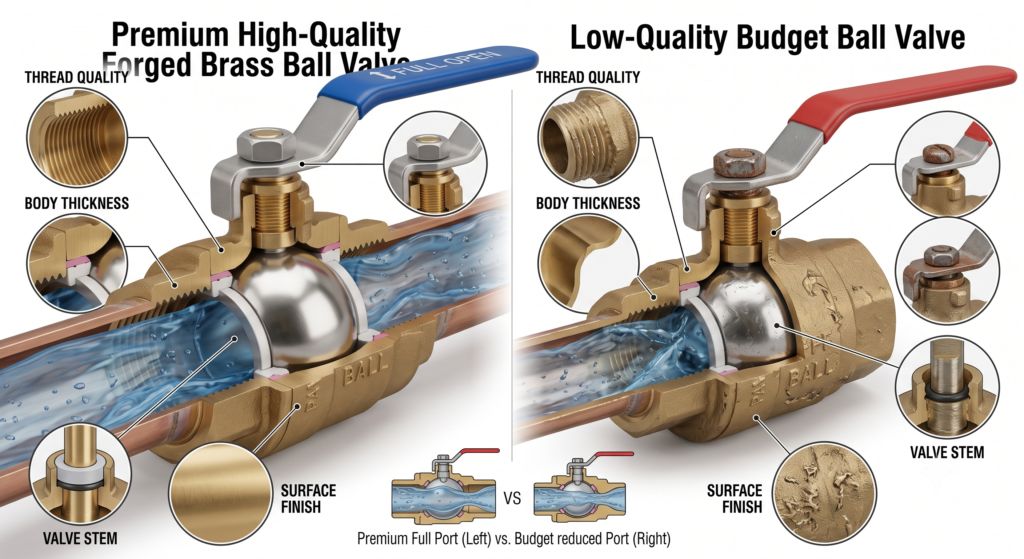
Many ball valves look almost identical from the outside.
However, the quality of the body, threads, handle, and internal components can make a huge difference in durability and long-term reliability.
Quick Inspection Checklist
✔ Thick and solid valve body
✔ Clean, well-machined threads
✔ Smooth quarter-turn handle
✔ Corrosion-resistant hardware
✔ Quality internal ball and seals
💡 ToollQ Pro Tip
Don’t judge a ball valve by its appearance alone.
A few minutes spent checking the build quality can save years of leaks, maintenance, and replacement costs.
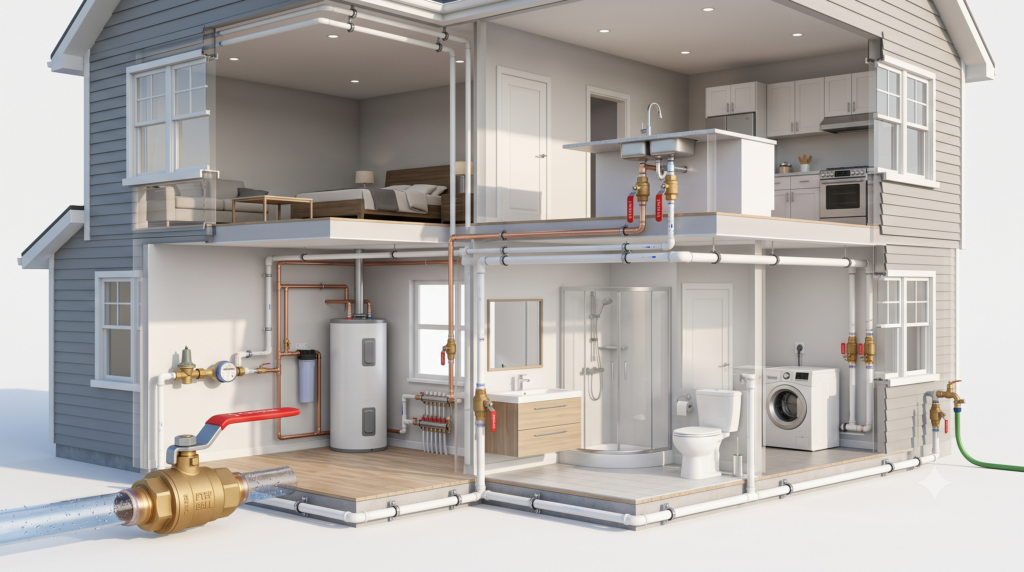
Choose the Right Ball Valve for Different Applications
Not every ball valve is designed for the same job.
Choosing the right valve for its installation location will improve durability, reliability, and make future maintenance much easier.
Quick Recommendations
🏠 Kitchen & Bathroom
✔ Forged Brass Ball Valve
🚰 Main Water Supply
✔ Full Port Brass Ball Valve
🌿 Irrigation & Cold Water
✔ PVC Ball Valve
✨ Premium Homes
✔ SUS304 Stainless Steel Ball Valve
🌊 Coastal Areas
✔ SUS316 Stainless Steel Ball Valve
Kitchen & Bathroom Plumbing
For most homes, a forged brass ball valve is the best choice for kitchen and bathroom plumbing.
It offers excellent durability, reliable sealing, and is easy to operate during maintenance or repairs.
Main Water Supply
A full port brass ball valve is usually the best option for the main water supply because it provides maximum water flow with minimal restriction.
Choose a high-quality valve since replacing it later can be costly.
Outdoor & Irrigation Systems
PVC ball valves work well for many cold-water irrigation systems.
For exposed plumbing that is frequently operated, a quality brass ball valve usually provides better long-term durability.
Hidden Installations
If the valve will be installed inside a wall, above a ceiling, or in another difficult-to-access location, always choose a premium-quality valve.
The cost of replacing a concealed valve is often far higher than the price difference between a budget and premium product.
💡 ToollQ Pro Tip
Always choose the ball valve based on where it will be installed—not just on its price or material.
Buy Once, Buy Right
A ball valve may seem like a small plumbing component, but it plays a critical role in protecting your home’s water system.
Choosing a high-quality valve from the beginning can help prevent leaks, reduce maintenance, and avoid costly repairs in the future.
Long-Term Value
✔ Fewer leaks
✔ Longer service life
✔ Lower maintenance costs
✔ Easier future repairs
✔ Better peace of mind
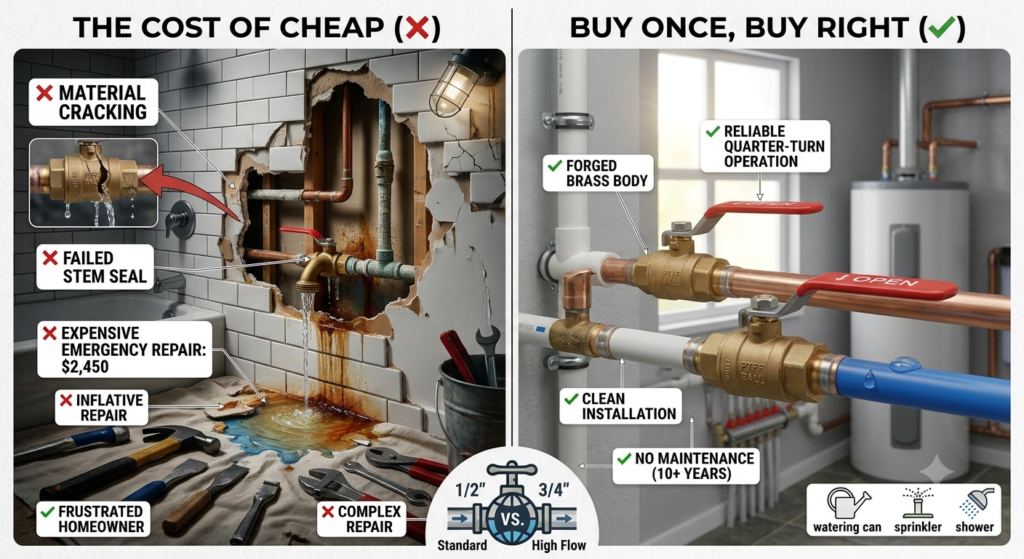
A premium ball valve usually costs only slightly more than a budget model, but the difference in quality can be significant.
If the valve is installed in a concealed or difficult-to-access location, investing in a better valve today can save a great deal of time and money later.
💡 ToollQ Pro Tip
The cheapest ball valve is rarely the most economical one.
Think about the total cost of ownership—not just the purchase price.
Common Buying Mistakes
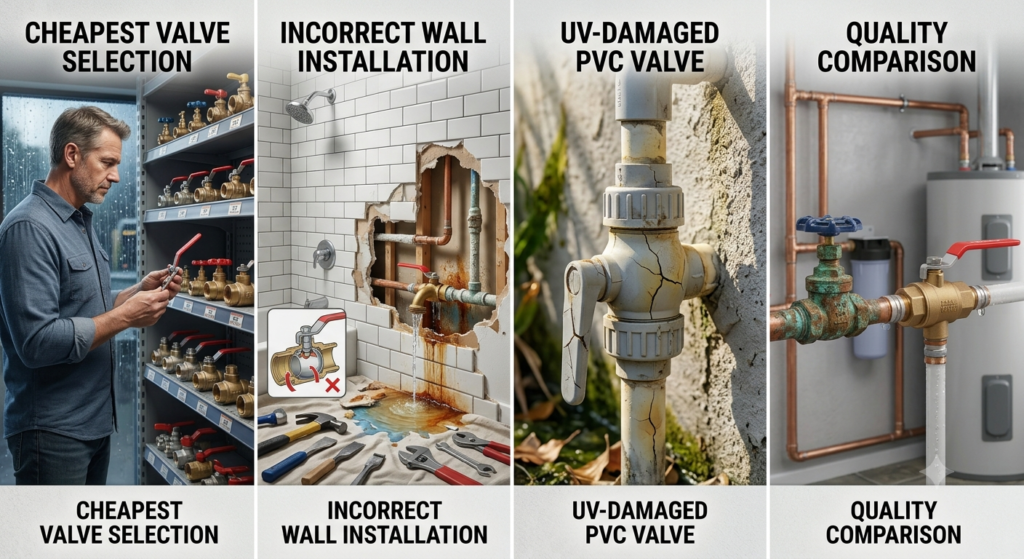
Choosing the Cheapest Ball Valve
Many homeowners compare only the purchase price.
However, a low-quality ball valve may develop leaks, become difficult to operate, or fail much sooner than a well-made valve.
💡 ToollQ Tip
Pay for quality once instead of paying for repairs later.
Ignoring the Installation Location
A ball valve installed inside a wall, above a ceiling, or in another difficult-to-access location should always be a high-quality product.
Replacing a concealed valve later can cost far more than buying a better valve in the first place.
💡 ToollQ Tip
The harder a valve is to replace, the more important quality becomes.
Choosing the Wrong Material
PVC, brass, SUS304, and SUS316 are designed for different plumbing environments.
Choosing the right material improves durability, performance, and long-term reliability.
💡 ToollQ Tip
Don’t buy the most expensive material.
Buy the material that’s best suited for your application.
Buying Without Checking Quality
Two ball valves may look almost identical on the outside.
Always inspect the valve body, thread quality, handle operation, and overall construction before buying.
💡 ToollQ Tip
A few minutes of inspection today can save years of maintenance problems.
Real-World Experience
After more than 15 years in the plumbing and hardware industry, I’ve seen many homeowners buy the wrong ball valve for the wrong application.
Here are three real situations that show why choosing the right valve from the beginning can save both time and money.
Story 1: A Cheap Ball Valve Behind the Wall
One homeowner chose the cheapest brass ball valve for a concealed bathroom plumbing installation.
A few years later, the valve started leaking. Because it was hidden behind the wall, repairing it required opening the wall, replacing the valve, and restoring the tiles.
The repair cost was many times higher than the small amount originally saved.
💡 ToollQ Lesson
If a valve will be hidden after installation, always choose a premium-quality ball valve.
Story 2: The Wrong Material for the Job
A customer installed a PVC ball valve outdoors because it was inexpensive.
After years of direct sunlight and weather exposure, the valve body became brittle and eventually cracked.
Replacing it with a forged brass ball valve solved the problem.
💡 ToollQ Lesson
Choose the material based on the installation environment—not just the price.
Story 3: Buying Quality the Second Time
Many customers return after using a low-quality ball valve that becomes stiff, difficult to turn, or starts leaking.
Most eventually choose a better-quality forged brass valve and tell us they wish they had bought it from the beginning.
Buying once is almost always cheaper than buying twice.
💡 ToollQ Lesson
A small investment in quality today can prevent expensive repairs tomorrow.
Frequently Asked Questions
Which ball valve material is best for most homes?
For most residential plumbing systems, a forged brass ball valve offers the best balance of durability, reliability, and value.
SUS304 stainless steel is also an excellent choice for premium installations, while PVC is suitable for many cold-water applications.
Should I choose a full port or a standard port ball valve?
A full port ball valve provides maximum water flow and is ideal for main water supply lines and high-flow applications.
A standard port ball valve is suitable for most kitchen, bathroom, and general household plumbing.
How long does a quality ball valve last?
A high-quality ball valve can last for many years when properly installed and used in the correct application.
Choosing the right material and avoiding low-quality products will help maximize its service life.
Can I use a ball valve to regulate water flow?
Ball valves are designed to be fully open or fully closed.
Leaving them partially open for long periods may increase wear on the internal components. For precise flow control, another type of valve is usually a better choice.
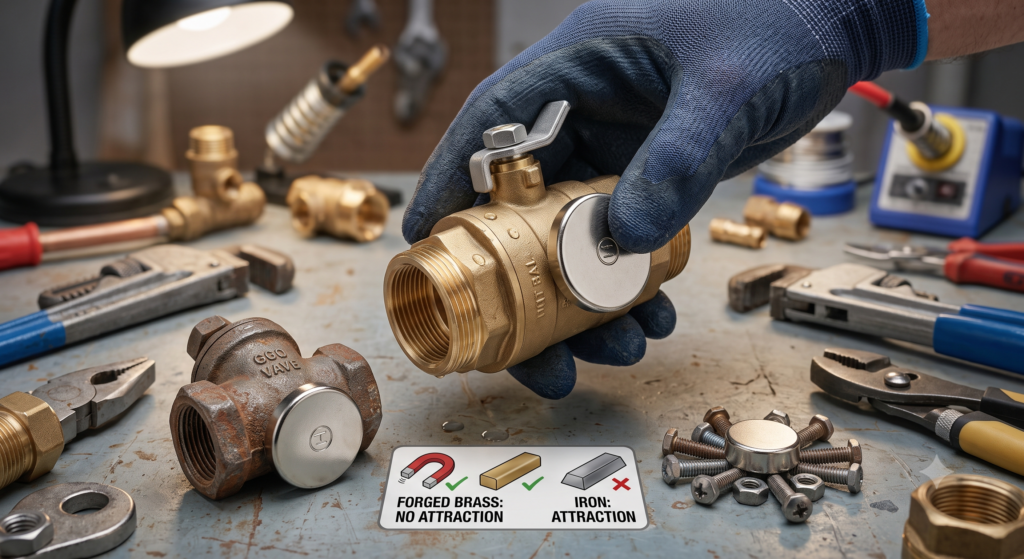
How can I tell if a brass ball valve is genuine?
A genuine brass ball valve should feel solid, have clean threads, and should not be attracted to a magnet.
Some low-cost valves use iron components with a brass-colored coating, so checking the build quality before buying is always recommended.
Final Recommendation
Choosing the right ball valve isn’t about buying the most expensive product.
It’s about selecting the right material, valve design, and quality for your specific plumbing application.
For most homes, a high-quality forged brass ball valve offers the best balance of durability, reliability, and long-term value.
If your plumbing system is exposed to highly corrosive environments, a SUS304 or SUS316 stainless steel ball valve may be the better choice.
Whether you’re installing a valve under a kitchen sink, on the main water supply, or inside a concealed wall, investing in a well-made ball valve today can help prevent leaks, reduce maintenance, and avoid expensive repairs in the future.
💡 ToollQ Final Advice
A ball valve is a small part of your plumbing system, but it protects one of the most important parts of your home—your water supply.
Buy once, buy right, and choose a valve that will serve you reliably for years.
Related Plumbing Guides
Want to learn more before choosing plumbing valves? These guides may help:
👉 Gate Valve vs Ball Valve: Which Is Better for Residential Plumbing?
👉 SUS304 vs SUS201 Stainless Steel: What’s the Difference?