PEX vs PVC: Which Pipe Is Better? (2026 Buying Guide)
Choosing between PEX and PVC pipes can be confusing, especially if you’re planning a plumbing project or home renovation. While both materials are widely used, they serve different purposes and perform differently depending on the application.
In this 2026 buying guide, ToollQ compares PEX and PVC pipes based on durability, flexibility, water temperature compatibility, installation, cost, and long-term performance, helping you choose the right pipe for your project.
Quick Answer
PEX is generally the better choice for indoor water supply because it is flexible, easy to install, and suitable for both hot and cold water. PVC remains an excellent option for drainage systems, irrigation, and cold-water applications due to its affordability and durability.
The best choice depends on where and how the pipe will be used.
Why You Can Trust ToollQ
At ToollQ, we don’t simply compare product specifications—we explain how plumbing materials perform in real-world applications.
Our buying guides combine practical industry knowledge with easy-to-understand comparisons, helping homeowners, DIY enthusiasts, and contractors choose the right products with confidence.
Whether you’re installing new plumbing or replacing old pipes, our goal is to help you avoid costly mistakes and make smarter buying decisions.
What Is PEX Pipe?
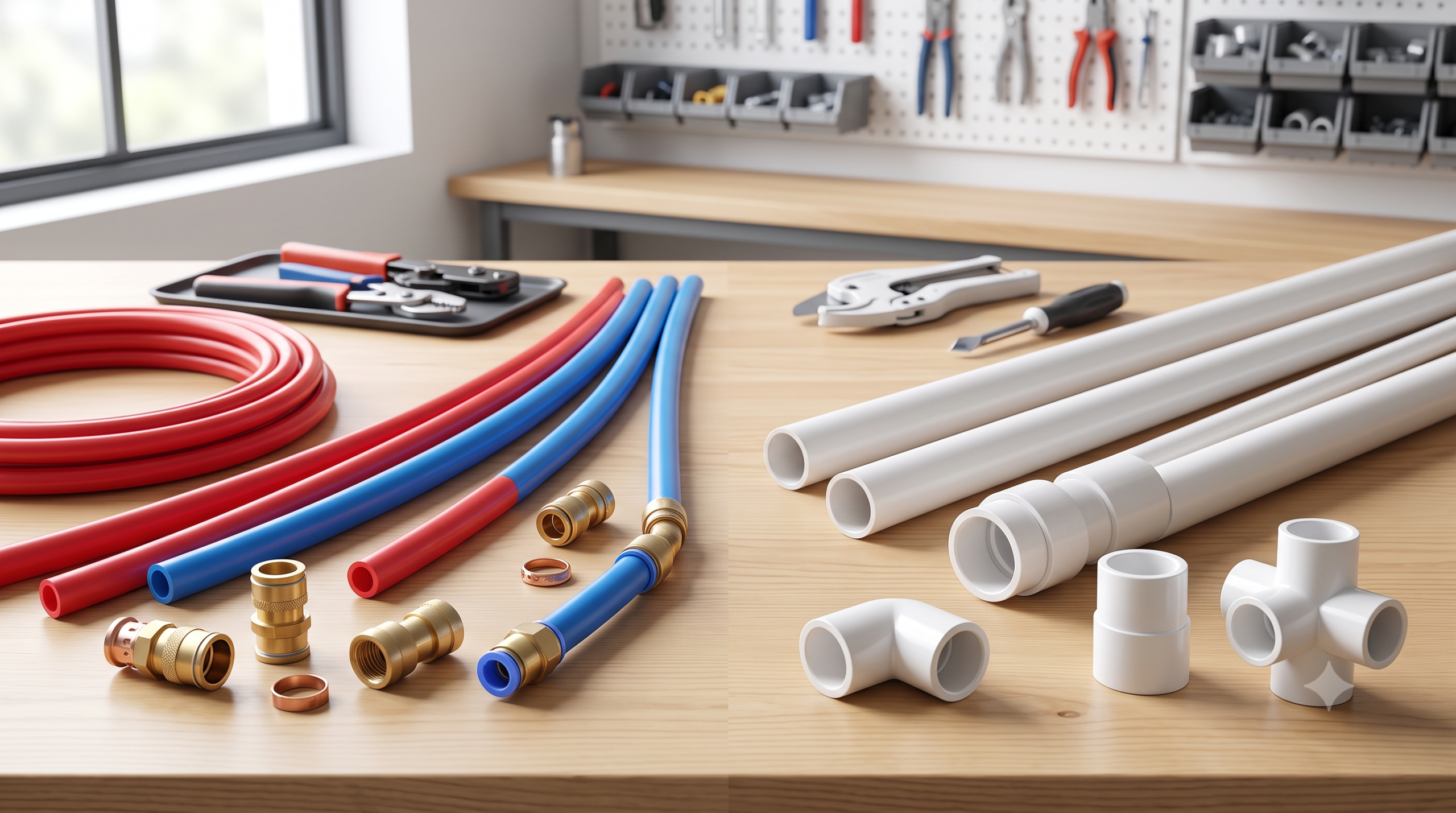
PEX (Cross-linked Polyethylene) is a flexible plastic pipe designed for hot and cold water supply systems. It is widely used in modern residential plumbing because it is easy to install, highly durable, and resistant to scale buildup and chlorine.
Unlike rigid pipes, PEX can bend around corners, reducing the need for extra fittings. Fewer connections mean fewer potential leak points, making installation faster and more reliable.
💡 ToollQ Tip: PEX is an excellent choice for indoor water supply systems, especially when flexibility, faster installation, and hot water performance are important.
Want to learn more about different plumbing pipe materials? Check out our complete guide on PEX vs CPVC to understand which option is better for hot water systems.
What Is PVC Pipe?
PVC (Polyvinyl Chloride) is a rigid plastic pipe commonly used for cold water supply, drainage, irrigation, and waste systems. It is lightweight, affordable, corrosion-resistant, and easy to install, making it one of the most widely used plumbing materials.
PVC has a smooth inner surface that helps improve water flow and reduce mineral buildup. However, standard PVC pipe is not designed for hot water applications because high temperatures can weaken the material over time.
💡 ToollQ Tip: PVC is a great choice for drainage and cold-water systems, but it should never be used for hot water plumbing.
For additional information about PVC piping materials, refer to the PVC Pipe Association.
PEX vs PVC: Side-by-Side Comparison
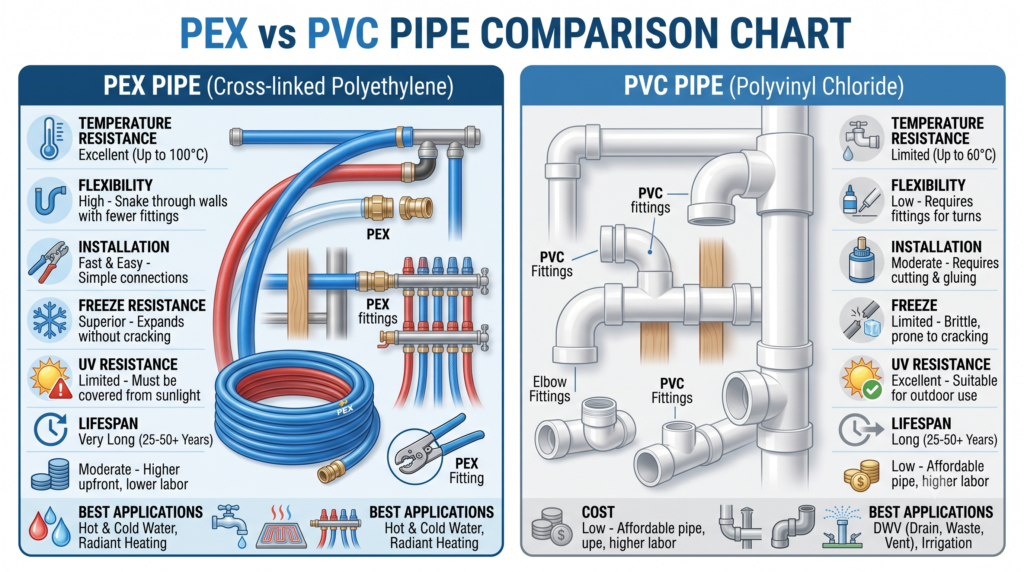
Both PEX and PVC are excellent plumbing materials, but they are designed for different purposes. Understanding their key differences will help you choose the right pipe for your plumbing project.
| Feature | PEX | PVC |
| Best Use | Hot & Cold Water Supply | Cold Water & Drainage |
| Temperature Resistance | ⭐️⭐️⭐️⭐️⭐️ | ⭐️⭐️ |
| Flexibility | ⭐️⭐️⭐️⭐️⭐️ | ⭐️ |
| Installation | Easy | Moderate |
| Freeze Resistance | Excellent | Poor |
| Corrosion Resistance | Excellent | Excellent |
| UV Resistance | Poor | Better (Avoid long-term sunlight) |
| Lifespan | 40-50 Years | 50+ Years |
| Cost | Higher | Lower |
⭐ ToollQ Recommendation: Choose PEX for indoor hot and cold water supply where flexibility and easier installation are important. Choose PVC for drainage, irrigation, and cold-water systems where affordability is the priority.
Temperature Resistance
Temperature is one of the biggest differences between PEX and PVC pipes.
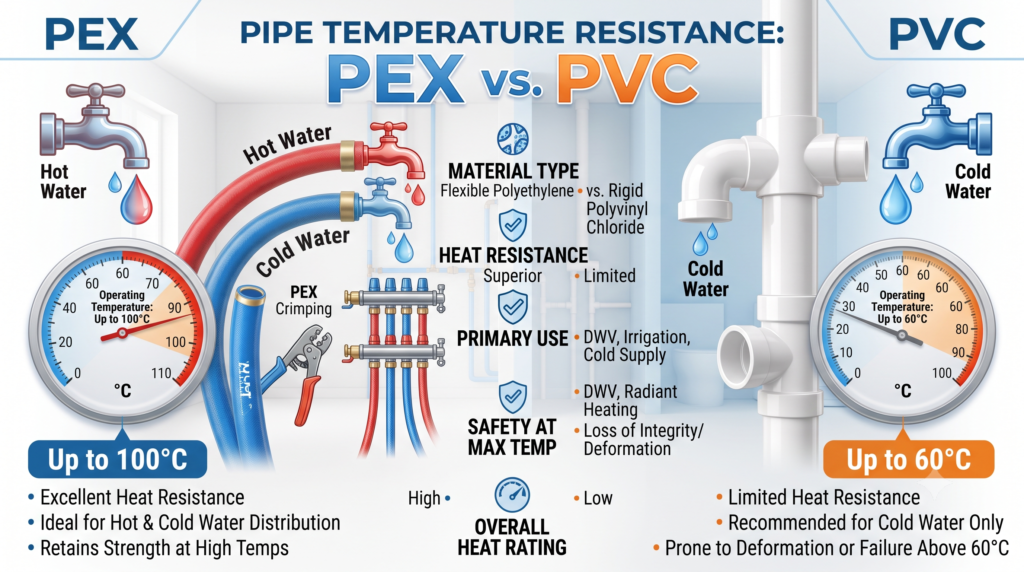
PEX is designed for both hot and cold water systems and can continuously handle temperatures up to 90–100°C (194–212°F). This makes it an excellent choice for hot water supply and radiant heating systems.
PVC performs well in cold-water applications but is generally limited to temperatures of around 60°C (140°F). Using standard PVC for hot water can cause the pipe to soften, deform, or fail over time.
💡 ToollQ Tip: If your plumbing system includes hot water, choose PEX. Standard PVC should only be used for cold-water supply or drainage systems.
For more information about PEX piping standards and applications, visit the Plastics Pipe Institute (PPI).
Flexibility & Installation
One of the biggest advantages of PEX is its flexibility. It can bend around corners without requiring as many fittings, making installation faster and reducing potential leak points.
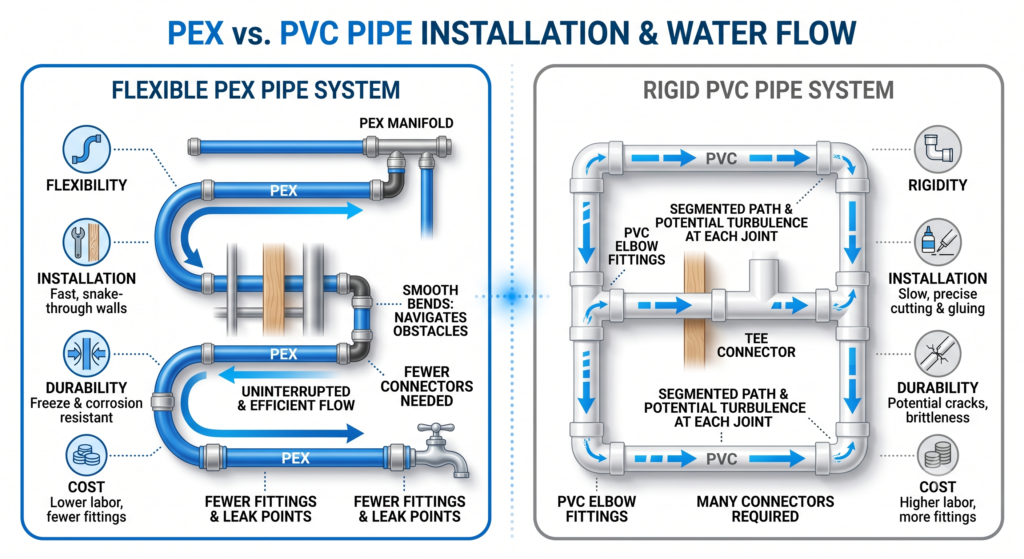
PVC is a rigid pipe that must be cut and joined with fittings whenever the direction changes. While it is still relatively easy to install, projects often require more elbows, couplings, and adhesive, which can increase installation time.
💡 ToollQ Tip: Fewer fittings mean fewer potential leak points. That’s one of the main reasons many plumbers prefer PEX for residential water supply systems.
Durability & Lifespan
Both PEX and PVC are durable plumbing materials that can last for decades when installed correctly.
PVC typically has a service life of 50 years or more and offers excellent resistance to corrosion and chemicals. However, prolonged exposure to direct sunlight and high temperatures can reduce its lifespan.
PEX generally lasts 40 to 50 years. It resists scale buildup, chlorine, and thermal expansion, making it a reliable choice for modern water supply systems. To maximize its lifespan, PEX should be protected from prolonged UV exposure.
💡 ToollQ Tip: Both PEX and PVC can provide decades of reliable service. The key is choosing the right pipe for the right application and installing it correctly.
Best Applications: When to Choose PEX or PVC
Choosing between PEX and PVC isn’t about which pipe is better—it’s about selecting the right material for the right application. Here’s when each option makes the most sense.
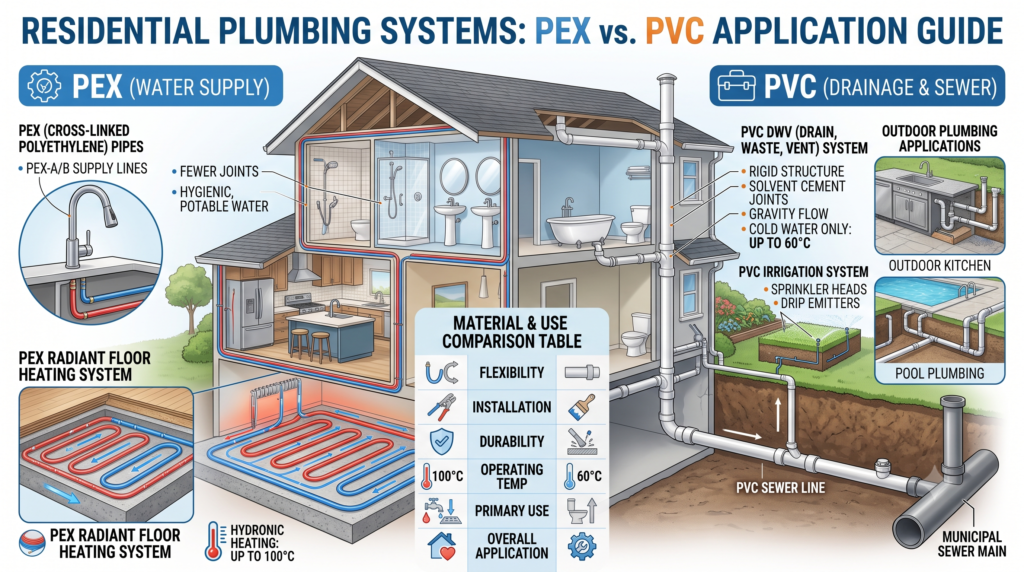
Choose PEX If You Need:
- Hot and cold water supply systems
- Home plumbing renovations
- Radiant floor heating
- Flexible installation around corners
- Fewer fittings and reduced leak points
- Better freeze resistance
Choose PVC If You Need:
- Drainage and waste systems
- Irrigation systems
- Cold water supply lines
- Underground plumbing
- A budget-friendly solution
- Straight pipe installations
⭐ ToollQ Recommendation: For most indoor residential water supply systems, PEX is the better choice because of its flexibility and hot-water performance. For drainage, irrigation, and cold-water applications, PVC remains one of the most reliable and cost-effective options.
Common Mistakes to Avoid
Choosing the wrong pipe can lead to unnecessary repairs, higher costs, and poor plumbing performance. Avoid these common mistakes before starting your project.
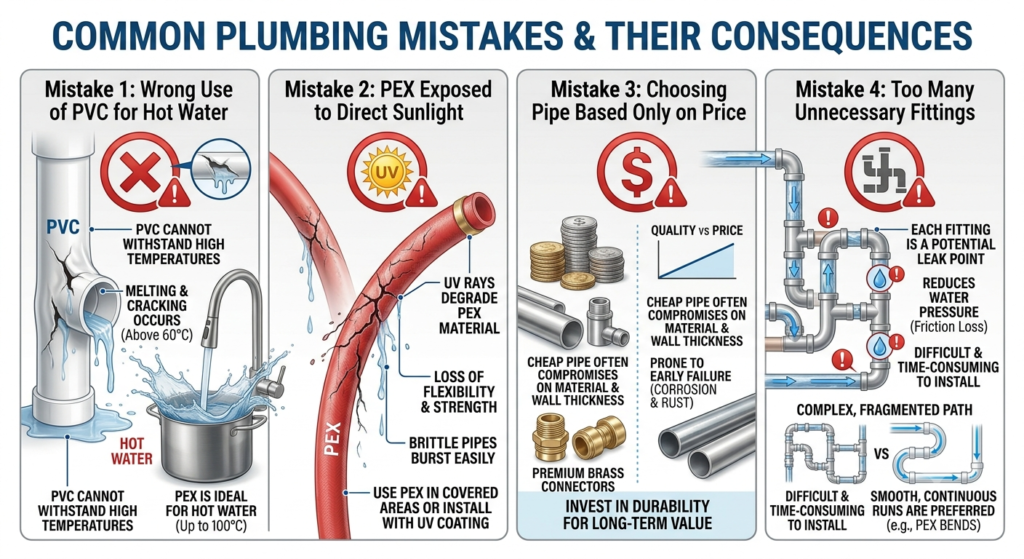
- Using PVC for hot water supply.
- Installing PEX where it will be exposed to direct sunlight for long periods.
- Choosing a pipe based only on price instead of the application.
- Using too many fittings when PEX can reduce connection points.
- Ignoring local plumbing codes and manufacturer recommendations.
💡 ToollQ Tip: The best plumbing system isn’t built with the most expensive pipe—it’s built with the right pipe for the right job.
ToollQ Buying Checklist
Before purchasing PEX or PVC pipes, use this quick checklist to make sure you’re choosing the right material for your plumbing project.
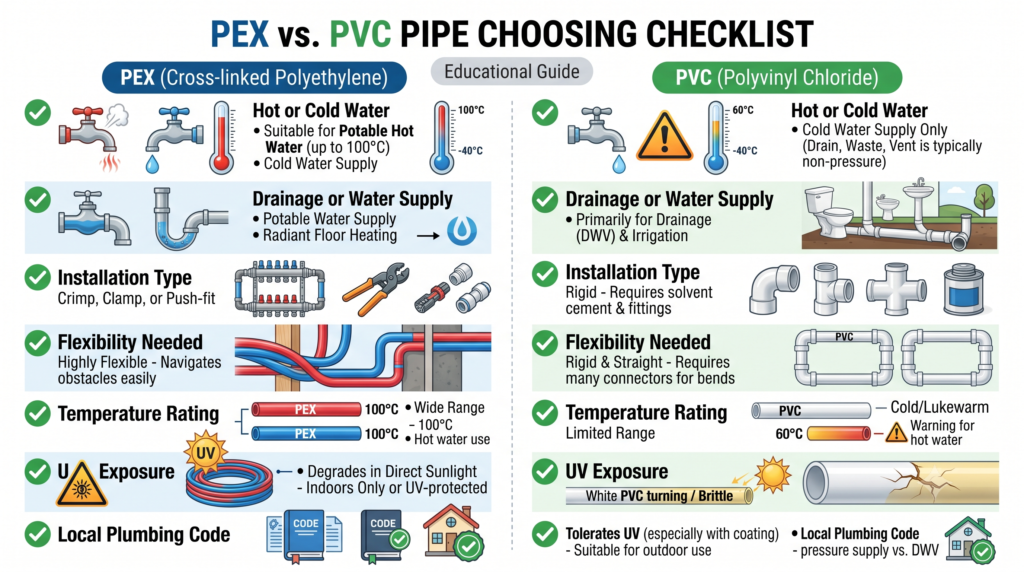
- ✅ Identify whether the pipe will carry hot or cold water.
- ✅ Check if the installation is for water supply, drainage, or irrigation.
- ✅ Consider whether flexibility is important for the installation.
- ✅ Ensure the pipe is suitable for the expected temperature and pressure.
- ✅ Avoid prolonged UV exposure, especially for PEX.
- ✅ Follow your local plumbing codes and manufacturer recommendations.
⭐ ToollQ Recommendation: Don’t choose a pipe based on price alone. The right material depends on how and where it will be used.
Choosing the right pipe is only part of a reliable plumbing system. Learn how different shut-off valves work in our Ball Valve vs Gate Valve comparison guide.
ToollQ Final Recommendation
Both PEX and PVC are excellent plumbing materials, but they are designed for different purposes.
Choose PEX if you need a flexible pipe for hot and cold water supply, home renovations, or radiant heating. Its flexibility, easy installation, and resistance to freezing make it a popular choice for modern residential plumbing.
Choose PVC if your project involves drainage, irrigation, or cold-water supply. It is affordable, durable, and performs exceptionally well in applications where hot water is not required.
The best pipe isn’t the most expensive one—it’s the one that’s designed for your specific plumbing application.
⭐ ToollQ Recommendation: If you’re still unsure, think about what the pipe will be used for, not just its price. Matching the material to the application is the best way to build a reliable plumbing system.
Frequently Asked Questions (FAQ)
Is PEX better than PVC?
It depends on the application. PEX is better for hot and cold water supply because it is flexible and heat-resistant. PVC is a better choice for drainage, irrigation, and cold-water systems due to its affordability and durability.
Can PVC be used for hot water?
No. Standard PVC pipe is not designed for continuous hot water use. High temperatures can soften the material and reduce its lifespan. For hot water systems, PEX or CPVC is a better choice.
Which pipe lasts longer, PEX or PVC?
Both materials are long-lasting when installed correctly. PVC can often last over 50 years, while PEX typically lasts 40–50 years. Proper installation and using the right pipe for the right application are more important than the material alone.
Can PEX freeze without bursting?
PEX is more flexible than PVC, allowing it to expand when water freezes. While this reduces the risk of bursting, no plumbing pipe is completely freeze-proof, so proper insulation is still recommended.
Is PEX more expensive than PVC?
Yes. PEX usually costs more than PVC. However, its flexibility can reduce installation time and the number of fittings required, which may lower overall installation costs.
Which pipe should homeowners choose?
For most indoor residential water supply systems, PEX is the preferred choice. For drainage, irrigation, and cold-water applications, PVC remains one of the most practical and cost-effective options.
You can also find plumbing standards and safety information through the International Association of Plumbing and Mechanical Officials (IAPMO).
Looking for more plumbing buying guides? Visit our Plumbing Solutions section for expert comparisons, installation tips, and product recommendations.