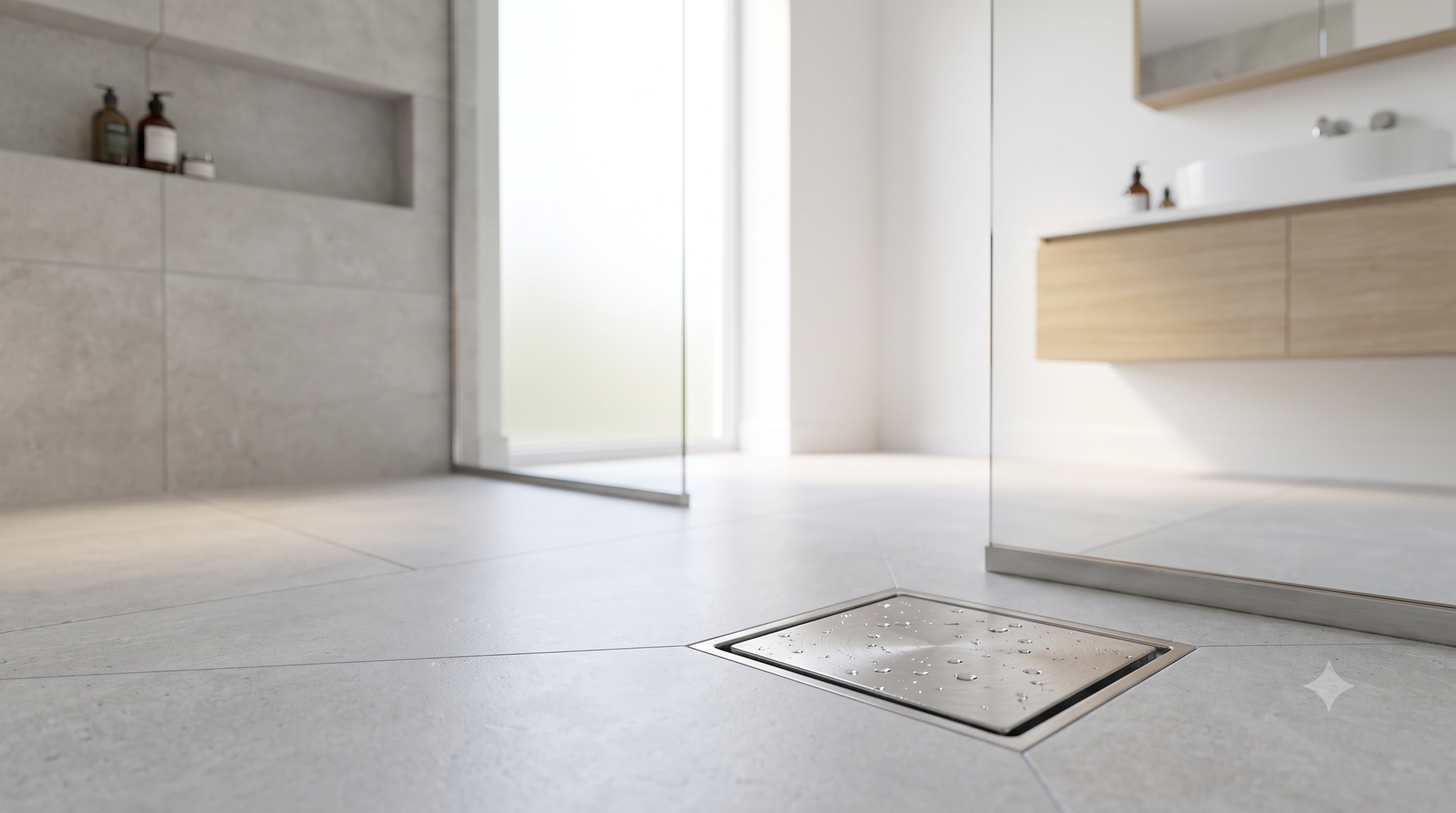
Best Floor Drain Buying Guide (2026): How to Choose the Right Floor Drain
A floor drain may look like a small plumbing fitting, but choosing the wrong one can lead to slow drainage, unpleasant odors, clogged pipes, and costly replacement work.
Many floor drains look similar from the outside, yet their material, drainage speed, anti-odor design, and maintenance requirements can be very different.
After more than 15 years in the plumbing industry, I’ve seen homeowners spend far more replacing the wrong floor drain than they would have spent choosing the right one from the beginning.
The best floor drain depends on where it will be installed, how much water it needs to handle, and whether odor and insect protection are important.
In this ToollQ Buying Guide, you’ll learn how to choose the right floor drain based on location, size, material, drainage performance, anti-odor design, and real-world experience.
At a Glance
Not sure which floor drain to choose?
Here’s a quick recommendation based on where you’ll install it.
| Installation Area | Recommended Floor Drain |
| 🚿Bathroom | SUS304 Mechanical Anti-Odor Floor Drain |
| 🍳Kitchen | Anti-Odor & Anti-Cockroach Floor Drain |
| 🧺Laundry Area | SUS304 Floor Drain |
| 🌿Balcony | SUS304 Floor Drain |
💡 ToollQ Expert Tip
Choose a floor drain based on where it will be installed—not just its appearance or price. Different areas of your home have different drainage and maintenance needs.
Why You Can Trust ToollQ
Choosing a floor drain isn’t just about selecting a nice design.
The right choice depends on where it will be installed, how much water it needs to handle, and whether you need odor and insect protection.
After more than 15 years in the plumbing industry, I’ve helped homeowners, contractors, and renovators choose floor drains for bathrooms, kitchens, balconies, and laundry areas.
This guide is based on real customer questions and practical experience—not just product specifications.
✅ Quick Answer
If you’re buying a floor drain for a bathroom, a 6-inch × 6-inch SUS304 mechanical anti-odor floor drain is the best choice for most homes.
For balconies and laundry areas, a 4-inch × 4-inch SUS304 floor drain is usually sufficient.
What Is a Floor Drain?
A floor drain is a plumbing fitting installed in areas where water needs to drain away safely, such as bathrooms, kitchens, balconies, and laundry rooms.
Its main purpose is to remove wastewater efficiently while helping reduce unpleasant odors, preventing insects from entering through the drainage system, and making everyday cleaning easier.
Although floor drains may look similar, they can differ significantly in material, drainage performance, anti-odor design, and ease of maintenance.
Many floor drains are made from stainless steel, but not all stainless steel offers the same durability.
👉 Read our guide:
SUS304 vs SUS201 Stainless Steel: What’s the Difference?
How to Choose the Right Floor Drain
The best floor drain isn’t determined by price alone.
Before buying, consider where it will be installed, how much water it needs to handle, and the features that matter most for that location.
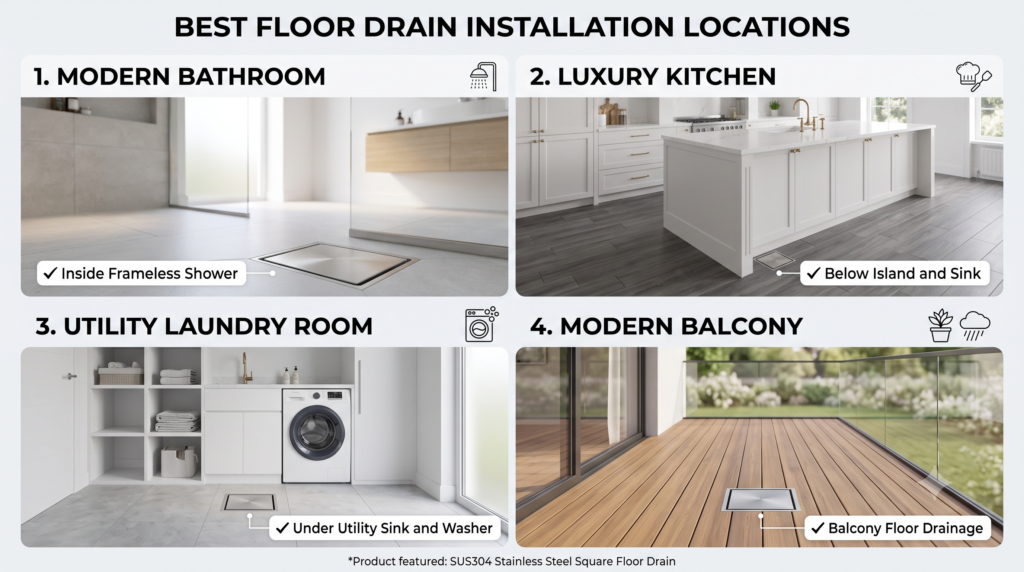
Choose the Right Installation Location
The installation location is the most important factor when choosing a floor drain.
Bathrooms, kitchens, balconies, and laundry areas all have different drainage needs, so the same floor drain isn’t always the best choice for every area.
📍 Quick Guide
🚿 Bathroom → Fast drainage + Anti-odor
🍳 Kitchen → Anti-odor + Anti-cockroach
🧺 Laundry Area → Reliable everyday drainage
🌿 Balcony → Weather-resistant and easy to maintain
💡 ToollQ Pro Tip
Choose the floor drain based on how the area is used—not simply on its appearance.A bathroom and a balcony may look similar, but they have very different drainage requirements.
Choose the Right Drain Size
Choosing the right floor drain size is just as important as choosing the right material.
A drain that’s too small may struggle to handle heavy water flow, while a larger drain can improve drainage in areas where water is used frequently.
📏 Recommended Sizes
🚿 Bathroom → 6″ × 6″
🍳 Kitchen → 6″ × 6″
🧺 Laundry Area → 4″ × 4″
🌿 Balcony → 4″ × 4″
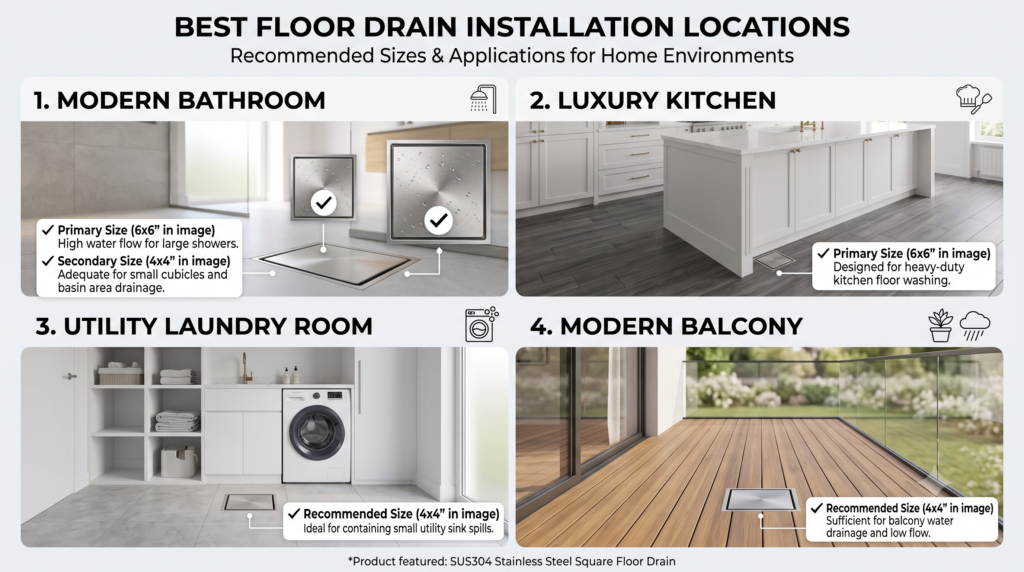
Bathrooms and kitchens usually handle larger volumes of water, so a 6-inch × 6-inch floor drain is often the better choice.
For balconies and laundry areas, a 4-inch × 4-inch floor drain is typically sufficient while helping reduce unnecessary costs.
💡 ToollQ Pro Tip
Bigger isn’t always better.
Choose the drain size based on the amount of water the area needs to handle, not simply on appearance or price.
Choose the Right Material
The material of a floor drain affects its durability, corrosion resistance, and long-term maintenance.
Since floor drains are constantly exposed to water, cleaning chemicals, and humidity, choosing the right material can help prevent rust and extend the product’s lifespan.
🔍 Material Comparison
⭐ SUS304 Stainless Steel
✔ Excellent corrosion resistance
✔ Long service life
✔ Best for bathrooms, kitchens, and outdoor areas
⚪ SUS201 Stainless Steel
✔ Lower cost
✔ Suitable for dry environments
✘ Less corrosion resistant
⚫ Iron
✔ Low purchase price
✘ Can rust over time
✘ Not recommended for wet areas
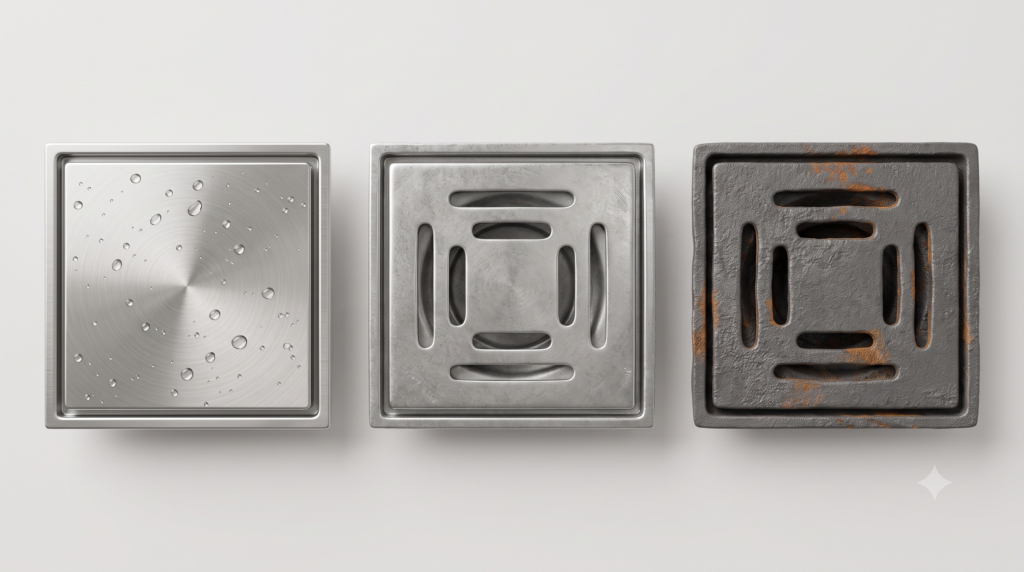
For most homeowners, a genuine SUS304 stainless steel floor drain offers the best balance of durability, corrosion resistance, and long-term value.
Although cheaper materials may reduce the initial cost, they often require earlier replacement in wet environments.
Want to understand why SUS304 is commonly recommended for plumbing products?
👉 Read our guide:
SUS304 vs SUS201 Stainless Steel: What’s the Difference?
💡 ToollQ Pro Tip
A floor drain is one of the few plumbing fittings that’s exposed to water every day.
Choosing a corrosion-resistant material today can help reduce maintenance and replacement costs in the future.
Choose the Right Anti-Odor System
Not all floor drains provide the same level of odor protection.
Choosing the right anti-odor system can help reduce unpleasant smells, discourage insects from entering through the drain, and improve everyday comfort.
🛡️ Which Anti-Odor System Is Right for You?
✔ Mechanical Anti-Odor
Best for most homes
Fast drainage
Low maintenance
✔ Water-Seal Trap
Effective odor protection
Requires regular water to maintain the seal
✔ Basic Floor Drain
Suitable for areas where odor protection is less important
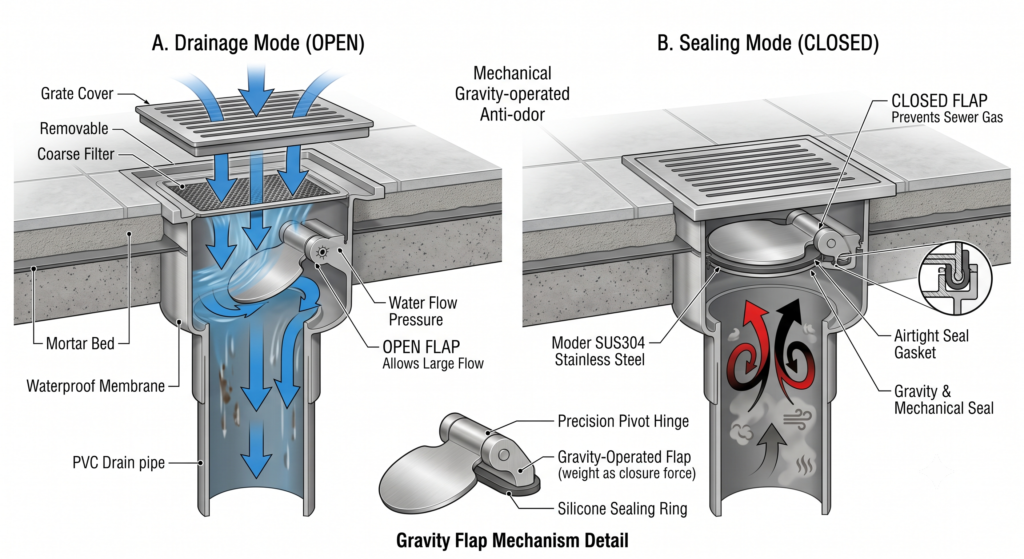
For most homeowners, a mechanical anti-odor floor drain offers the best balance between drainage performance, odor control, and everyday convenience.
However, if your home’s plumbing system already includes a properly designed floor trap, the floor drain provides an additional layer of protection rather than replacing the trap itself.
🛠 ToollQ Real-World Experience
Many customers think every bad smell comes from the floor drain.
In reality, the odor can also be caused by poor plumbing design, a dry floor trap, or lack of regular cleaning.
Choosing the right floor drain helps, but it works best as part of a properly installed drainage system.
💡 ToollQ Pro Tip
If odor control is important, don’t compare floor drains by appearance alone.
Look at how the anti-odor mechanism works and whether it’s suitable for your home’s drainage system.
Choose a Design That’s Easy to Maintain
A floor drain isn’t something you replace often, so choose a design that’s easy to clean and maintain.
Hair, soap residue, grease, and dirt can build up over time, making regular cleaning essential.
🧹 Easy Maintenance Checklist
✔ Removable cover for easy cleaning
✔ Simple internal structure
✔ Easy access to remove hair and debris
✔ Corrosion-resistant material
✔ Suitable for regular household cleaning products
Simple square floor drains are often easier to clean than more decorative designs.
For most homes, choosing a practical design can save time and reduce maintenance over the years.
🛠 ToollQ Real-World Experience
Many homeowners choose long linear floor drains because they look modern.
However, after years of use, hair, soap residue, and dirt often collect along the edges, making them more difficult to clean than a simple square floor drain.
💡 ToollQ Pro Tip
The best-looking floor drain isn’t always the easiest to live with.
Choose a design that’s practical to clean as well as attractive.
Common Buying Mistakes
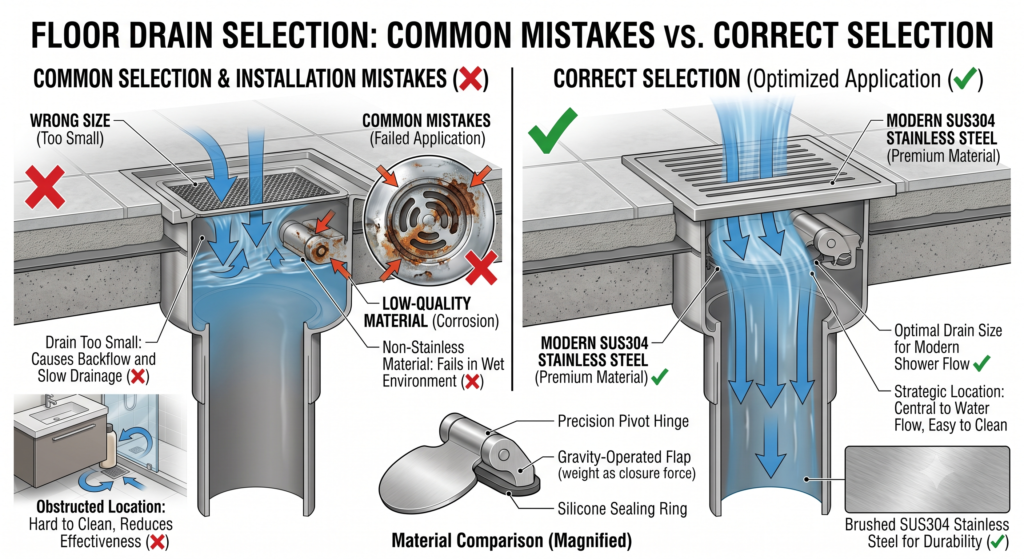
Choosing Based on Appearance Alone
A stylish floor drain doesn’t always offer the best drainage performance or odor protection.
For areas like bathrooms and kitchens, performance should always come before appearance.
💡 ToollQ Tip
Choose a floor drain that suits the way the area is used—not just one that matches the floor tiles.
Choosing the Wrong Drain Size
Many homeowners assume one drain size fits every area of the house.
In reality, bathrooms usually require faster drainage than balconies or laundry areas.
💡 ToollQ Tip
Choose the drain size based on water flow, not simply on appearance or cost.
Ignoring the Material
Floor drains are exposed to water, humidity, and cleaning chemicals every day.
Choosing a low-quality material may increase the risk of corrosion and shorten the product’s lifespan.
💡 ToollQ Tip
A genuine SUS304 stainless steel floor drain is usually the best long-term investment for wet areas.
Overlooking the Anti-Odor System
Some homeowners only notice unpleasant odors after moving into their home.
Choosing the right anti-odor system from the beginning can help reduce smells and discourage insects from entering through the drain.
💡 ToollQ Tip
Don’t compare anti-odor floor drains by appearance alone. Understand how the mechanism works.
Choosing a Design That’s Difficult to Clean
Some decorative floor drains look impressive when they’re new but become difficult to clean over time.
A practical design is often easier to maintain and provides better long-term convenience.
💡 ToollQ Tip
A floor drain that’s easy to clean is usually a better choice than one that’s only designed to look good.
Real-World Experience
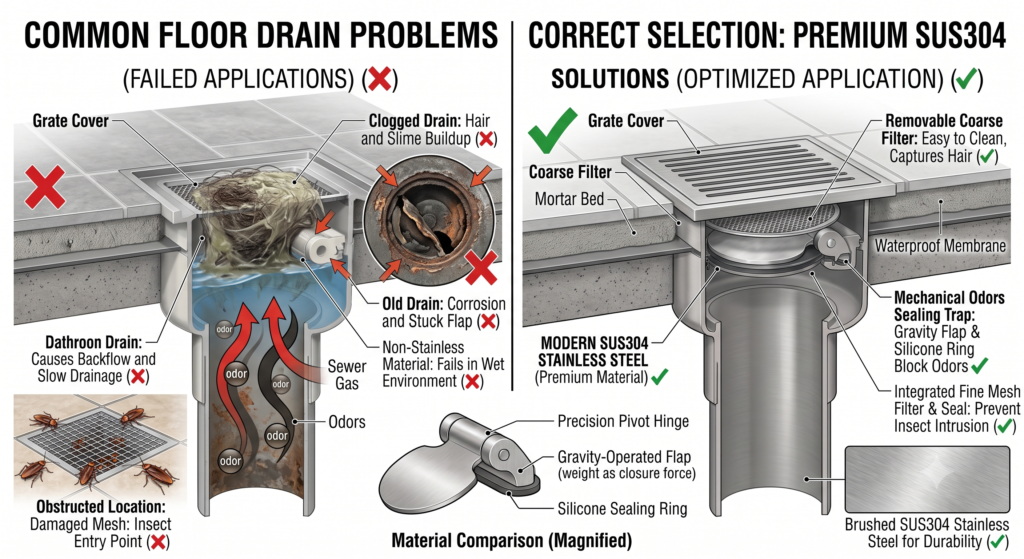
After more than 15 years in the plumbing industry, I’ve learned that most floor drain problems aren’t caused by poor installation.
They’re usually caused by choosing the wrong floor drain for the wrong application.
A Cheap Floor Drain Became More Expensive
One homeowner chose a low-cost PVC floor drain simply to save money.
After several years, the internal mechanism stopped working properly, allowing hair and debris to enter the drainage pipe more easily. Eventually, the drain clogged and had to be replaced.
💰 The Real Cost
Saving money on the product led to higher repair and replacement costs later.
The Bathroom That Always Smelled Bad
A homeowner complained that the bathroom always smelled unpleasant, even after regular cleaning.
After inspecting the drainage system, we recommended replacing the standard floor drain with a mechanical anti-odor model. The odor was greatly reduced after the replacement.
👃 The Lesson
Sometimes the problem isn’t cleaning more often—it’s choosing a floor drain that’s better suited to the application.
Cockroaches Entering Through the Kitchen Drain
One family kept finding cockroaches in the kitchen.
After checking the drainage system, we discovered they were entering through the floor drain. Replacing it with an anti-cockroach floor drain helped solve the problem.
🪳 The Lesson
A small difference in product design can make a big difference to everyday comfort.
💡 ToollQ Lesson
The best floor drain isn’t always the most expensive one.
It’s the one that’s designed for the right location, the right drainage needs, and long-term reliability.
Frequently Asked Questions
What is the best material for a floor drain?
For most homes, genuine SUS304 stainless steel is the best choice because it offers excellent corrosion resistance, durability, and long-term performance in wet environments.
What size floor drain should I choose?
For most bathrooms and kitchens, a 6-inch × 6-inch floor drain provides fast drainage. For balconies and laundry areas, a 4-inch × 4-inch floor drain is usually sufficient.
Do anti-odor floor drains really work?
Yes. A quality mechanical anti-odor floor drain helps reduce unpleasant odors and discourages insects from entering through the drainage system. Its performance also depends on a properly installed plumbing system.
How often should I clean a floor drain?
Check and clean your floor drain regularly to remove hair, soap residue, grease, and other debris. Regular maintenance helps keep water flowing smoothly and reduces unpleasant odors.
Is a more expensive floor drain always better?
Not necessarily. The best floor drain is the one that matches your installation location, drainage needs, and maintenance requirements—not simply the one with the highest price.
Final Recommendation
There isn’t one floor drain that’s perfect for every home.
The right choice depends on where it will be installed, how much water it needs to handle, and whether odor or insect protection is important.
For most bathrooms and kitchens, a 6-inch × 6-inch SUS304 mechanical anti-odor floor drain offers an excellent balance of drainage performance, durability, and easy maintenance.
For balconies and laundry areas, a 4-inch × 4-inch SUS304 floor drain is usually a practical and cost-effective choice.
At ToollQ, we believe the best floor drain isn’t the most expensive one—it’s the one that’s right for your home.
💡 ToollQ Final Tip
A floor drain is one of the few plumbing fittings you’ll rely on every day.
Choosing the right one now can help prevent odors, reduce maintenance, and avoid unnecessary replacement costs for years to come.
Related Guides
Planning a complete bathroom or home plumbing upgrade?
These ToollQ buying guides can help you choose compatible products and avoid common installation mistakes.
Best Flexible Hose Buying Guide
Learn how to choose the right hose length, material, and connector for long-term reliability.
Find out how to choose a reliable shut-off valve and avoid common plumbing problems.
SUS304 vs SUS201 Stainless Steel
Understand the differences between SUS304 and SUS201 before choosing stainless steel plumbing products.
Best Toilet Bidet Sprayer Buying Guide
Compare different bidet sprayer materials and learn how to choose the right model for your bathroom.
Looking for more expert plumbing advice?
Explore more ToollQ Buying Guides to make smarter purchasing decisions and choose products that truly fit your home.