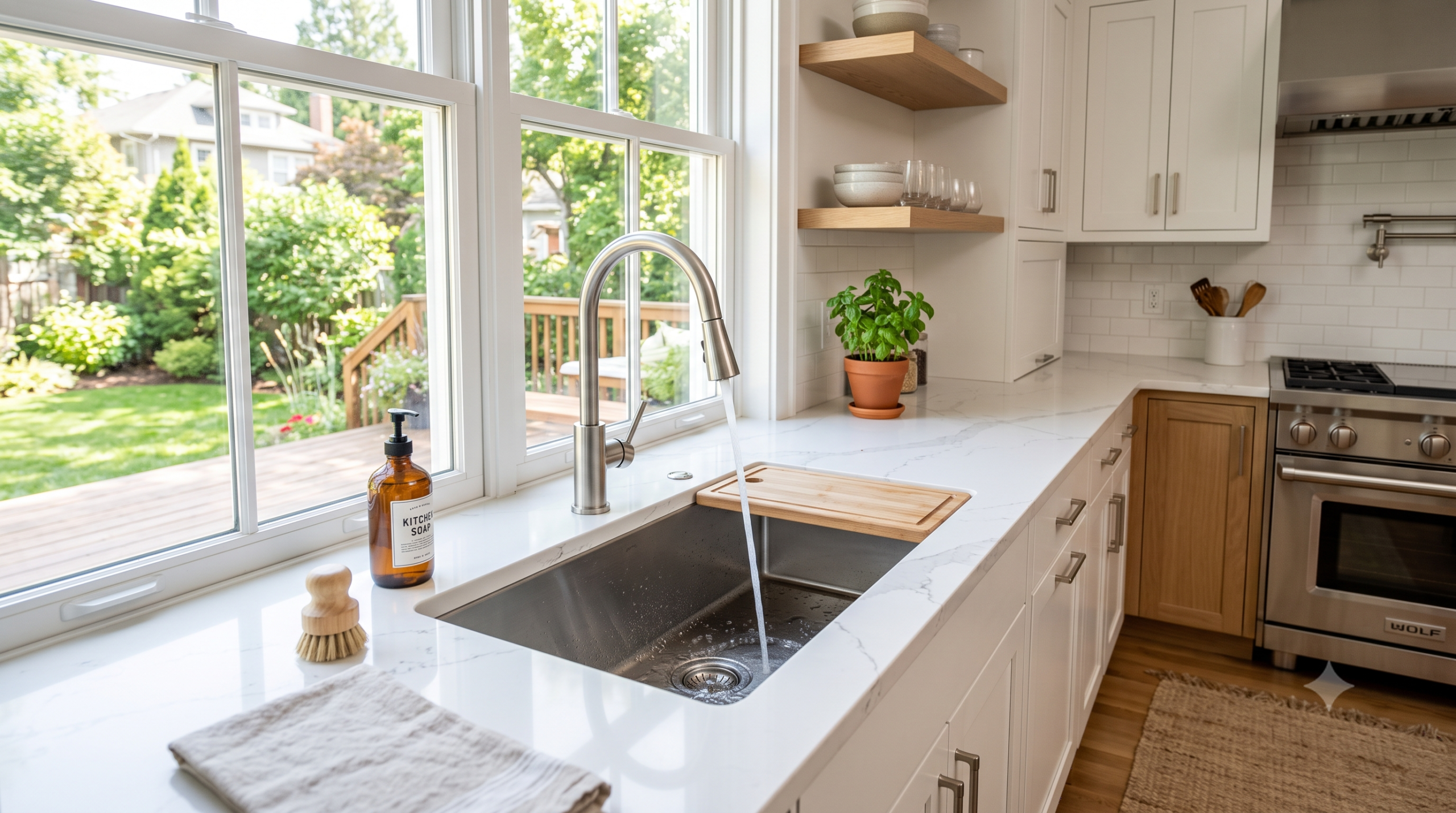
Best Kitchen Sink Buying Guide (2026): How to Choose the Right Kitchen Sink
Most Homeowners Ask the Wrong Question
Instead of asking,
“Which kitchen sink is the best?”
you should first ask:
“Which kitchen sink is best for my home and the way I cook?”
After helping customers choose plumbing products for more than 15 years, I’ve learned that the most expensive sink isn’t always the right one. The best kitchen sink depends on your budget, cooking habits, kitchen cabinet size, and long-term needs.
In this guide, I’ll show you exactly how to choose the right kitchen sink, compare the most common sink materials, and avoid the costly mistakes many homeowners make.
Why Trust ToollQ?
At ToollQ, we believe buying hardware shouldn’t be confusing.
This guide is based on more than 15 years of real experience helping customers choose plumbing products—not just manufacturer specifications or online research.
Every recommendation is designed to help homeowners buy the right product the first time, save money, avoid unnecessary replacements, and make smarter long-term decisions.
ToollQ Quick Answer
If you’re buying a kitchen sink for your own home, a SUS304 stainless steel sink is the best choice for most homeowners.
It offers excellent durability, corrosion resistance, easy maintenance, and excellent long-term value.
According to the American Iron and Steel Institute (AISI), stainless steel is widely valued for its corrosion resistance, strength, and long service life, making it one of the most reliable materials for kitchen applications.
For most families, we recommend:
- Large single bowl
- At least 1.0 mm thick
- Soundproof pads
- Anti-condensation coating
- Standard size
Table of Contents
- How to Choose the Right Kitchen Sink
- Kitchen Sink Materials
- Single vs Double Bowl
- Sink Thickness
- Top Mount vs Undermount
- Features Worth Paying For
- Common Buying Mistakes
- If This Were My Money
- FAQ
ToollQ Recommendation
Buy once. Buy right.
Replacing the wrong product usually costs more than choosing the right one from the start.
Before You Choose a Kitchen Sink, Ask Yourself These 5 Questions
At ToollQ, we don’t start by asking,
“Which kitchen sink do you want?”
Instead, we ask a few simple questions first.
After helping customers choose plumbing products for more than 15 years, we’ve found that the right kitchen sink depends on your lifestyle—not just the material or the price.
1. Is It for Your Own Home or a Rental Property?
2. How Often Do You Cook?
3. What’s Your Budget?
4. Who Uses the Kitchen?
5. Will It Be Easy to Replace in the Future?
How to Choose the Right Kitchen Sink
Choosing the right kitchen sink isn’t just about appearance.
The best sink depends on your cooking habits, kitchen layout, budget, and how long you plan to use it.
Let’s look at the most important factors before making your decision.
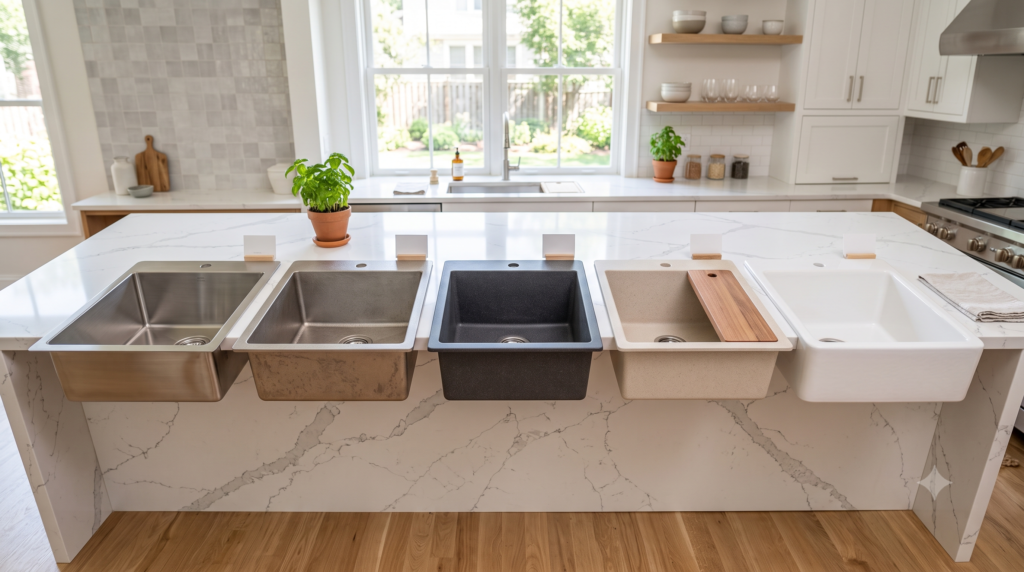
1. Choose the Right Kitchen Sink Material
The material affects durability, maintenance, appearance, and price.
Here are the most common options you’ll find on the market.
Kitchen Sink Material Comparison
| Material | Durability | Maintenance | Price | Best For |
| SUS304 Stainless Steel | ⭐️⭐️⭐️⭐️⭐️ | ⭐️⭐️⭐️⭐️⭐️ | 💰💰 | Most homeowners |
| Aluminium | ⭐️⭐️ | ⭐️⭐️⭐️ | 💰 | Rental properties & tight budgets |
| Granite | ⭐️⭐️⭐️⭐️ | ⭐️⭐️⭐️ | 💰💰💰 | Stylish modern kitchens |
| Quartz Composite | ⭐️⭐️⭐️⭐️ | ⭐️⭐️⭐️ | 💰💰💰 | Homeowners who prioritize design |
| Ceramic | ⭐️⭐️⭐️ | ⭐️⭐️⭐️⭐️⭐️ | 💰💰💰 | Farmhouse & traditional kitchens |
ToollQ Tip: For most homeowners, SUS304 stainless steel offers the best balance of durability, maintenance, and long-term value.
SUS304 Stainless Steel – The Best Choice for Most Homeowners
If customers ask me which kitchen sink I would recommend for most homes, my answer is usually SUS304 stainless steel.
It offers the best balance of durability, corrosion resistance, easy maintenance, and long-term value.
A good SUS304 sink is strong enough for everyday cooking and is less likely to rust when properly maintained.
If possible, choose a model with:
- Anti-scratch finish
- Soundproof pads
- Anti-condensation coating
- At least 1.0 mm thickness
These features make the sink quieter, reduce water condensation underneath, and improve long-term durability.
ToollQ Tip
Don’t judge a sink by appearance alone. Two sinks may look almost identical, but differences in stainless steel grade, thickness, and workmanship can significantly affect durability.
For products that come into contact with food and drinking water, choosing materials that meet recognized safety standards provides additional peace of mind.
Learn more about food-contact safety standards from NSF International.
Aluminium Kitchen Sink – Best for Tight Budgets
Aluminium sinks are one of the most affordable options.
They won’t rust and are suitable for homeowners who need a basic kitchen sink without spending too much.
However, they also have several disadvantages.
They are usually thinner, dent more easily, produce more noise when water hits the surface, and scratch more easily than stainless steel.
For rental properties or temporary use, aluminium can still be a practical choice.
For a long-term family home, I would usually recommend investing in a better-quality sink.
Granite Kitchen Sink – Stylish but Needs More Care
Granite sinks are popular because of their premium appearance.
They add a modern look to many kitchens and are available in different colours.
However, they’re not the best choice for everyone.
Although they are durable, heavy impacts may cause damage, and the surface can still scratch over time.
If appearance is your top priority, granite is worth considering.
If practicality is your priority, stainless steel is usually the safer option.
Quartz Kitchen Sink – Beautiful but Not Always Practical
Quartz composite sinks offer excellent colour options and a premium finish.
Many homeowners choose them to match modern kitchen designs.
However, there are a few things to consider.
Quartz sinks are less suitable for placing extremely hot cookware directly into the sink.
Dark-coloured models may also show water spots and scratches more easily.
If you choose a quartz sink, regular cleaning will help keep it looking its best.
Ceramic Kitchen Sink – Classic and Easy to Clean
Ceramic sinks have a timeless appearance and are easy to keep clean.
They are often chosen for farmhouse or traditional kitchens.
However, ceramic is more vulnerable to damage from heavy impacts.
Dropping heavy pots or pans may chip or crack the surface.
If you choose a ceramic sink, handle heavy cookware with extra care.
2. Choose the Right Bowl Configuration
Many homeowners ask whether they should buy a single bowl or a double bowl kitchen sink.
The truth is, there’s no one-size-fits-all answer.
It depends on how you use your kitchen.
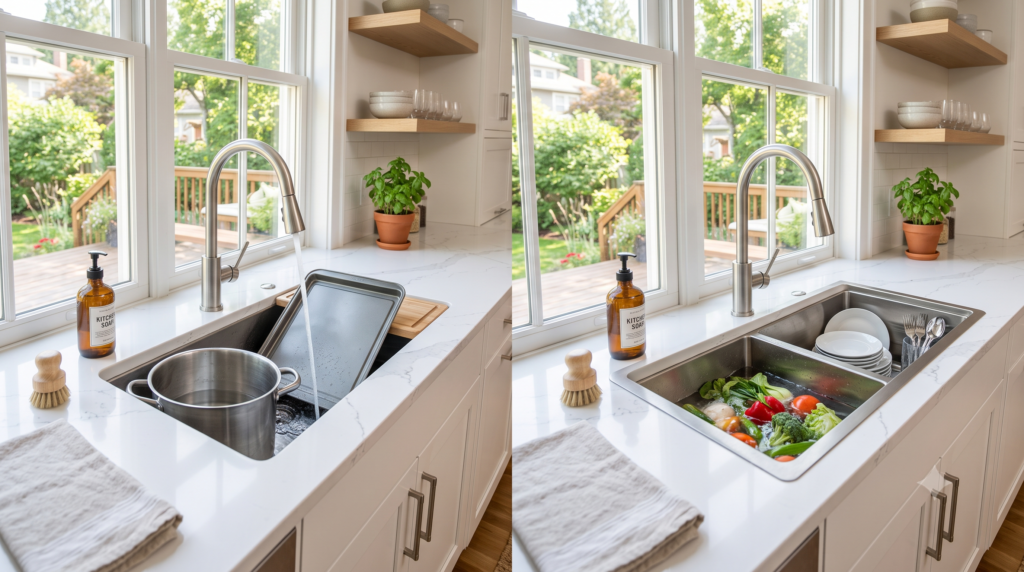
ToollQ Tip: If you frequently wash large pots, pans, or baking trays, a large single bowl sink is usually the more practical choice. If you prefer to wash and rinse separately or prepare food while cleaning dishes, a double bowl sink may better suit your daily routine.
Single Bowl Kitchen Sink
If you often wash large pots, frying pans, baking trays, or cutting boards, a large single bowl is usually the better choice.
The larger space makes everyday cleaning much easier.
Although both single and double bowl sinks are popular, I personally recommend a large single bowl for most families because it’s more practical for modern cooking.
Double Bowl Kitchen Sink
A double bowl sink is ideal if you like to separate tasks.
For example, you can wash dishes on one side while rinsing vegetables or preparing food on the other.
If you rarely wash large cookware, a double bowl can be a convenient option.
3. Don’t Ignore Sink Thickness
Many homeowners focus on appearance but overlook one of the most important factors—sink thickness.
This is where I see many buying mistakes.
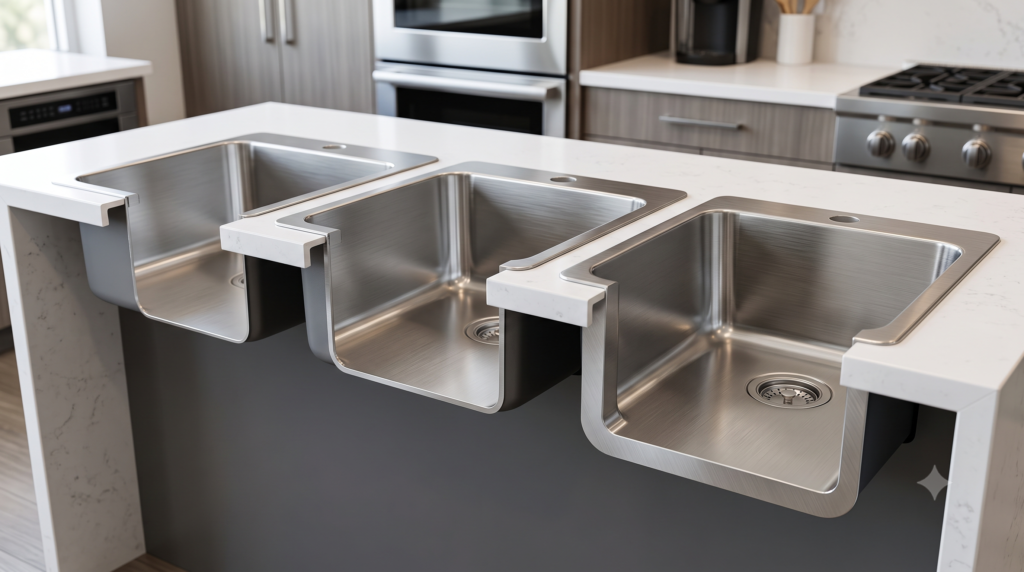
ToollQ Tip: Thickness is only part of the story. A well-made 1.0 mm SUS304 sink with excellent craftsmanship is often a better choice than a thicker sink made from lower-quality stainless steel.
I Recommend at Least 1.0 mm Thickness
For a kitchen sink, I recommend choosing at least 1.0 mm stainless steel whenever your budget allows.
A thicker sink usually feels more solid, produces less noise, and is less likely to dent during everyday use.
Some budget models use thinner stainless steel, which may reduce the purchase price but often sacrifices long-term durability.
ToollQ Experience
Replacing a built-in kitchen sink later can cost more in labor than spending a little more on a better sink today.
A kitchen sink isn’t like a small kitchen accessory that you can replace in a few minutes.
Removing an old built-in sink often involves cutting sealant, disconnecting plumbing, reinstalling the new sink, and sealing everything again.
In many cases, labor costs can exceed the price difference between a budget sink and a better-quality one.
That’s why I usually encourage homeowners to buy the right sink the first time instead of choosing the cheapest option available.
4. Top Mount vs Undermount Kitchen Sink
Another common question is whether to choose a top mount or undermount sink.
A well-designed kitchen should balance functionality, workflow, and long-term usability. Planning the right sink size and installation method can significantly improve everyday kitchen efficiency.
The National Kitchen & Bath Association (NKBA) provides professional kitchen planning guidelines used throughout the industry.
Both work well, but they offer different advantages.
Top Mount Sink
Top mount sinks are generally easier to install and replace.
They are also suitable for many existing kitchen cabinets.
If you’re replacing an old sink without changing your countertop, a top mount sink is often the simplest solution.
Undermount Sink
If you’re installing a new kitchen or renovating your countertop, I usually recommend an undermount sink.
It creates a cleaner appearance, makes it easier to wipe water directly into the sink, and gives the countertop a more modern look.
When installed correctly, an undermount sink is also strong enough for everyday use.
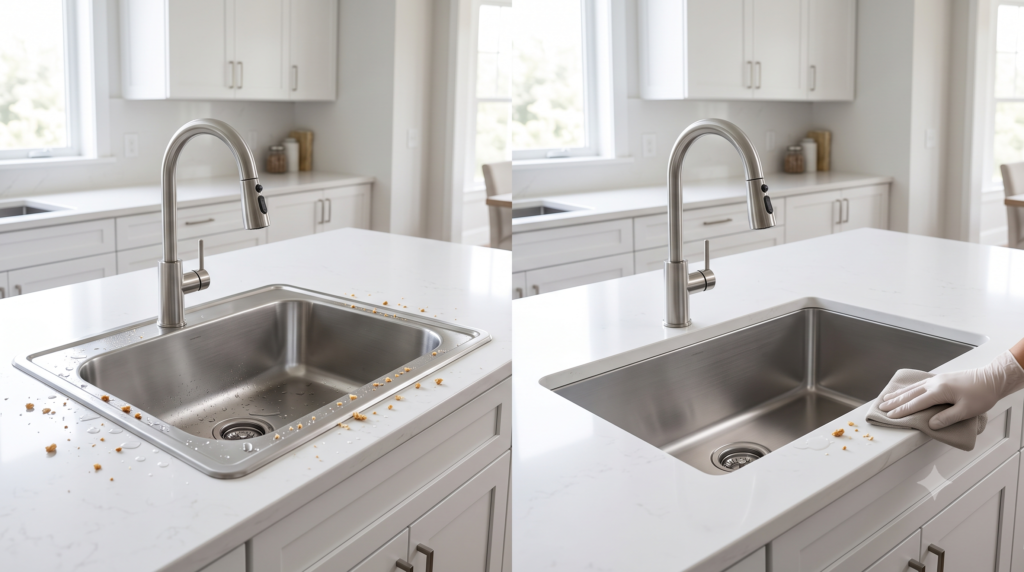
ToollQ Tip: If you’re installing a new quartz or granite countertop, an undermount sink is usually the better long-term choice because it offers a cleaner appearance and makes everyday countertop cleaning much easier.
5. Choose the Right Sink Size
One mistake I often see is homeowners buying a sink that’s too small because they focus only on price.
Whenever possible, choose the largest sink that your kitchen cabinet can comfortably support.
A larger sink makes washing large cookware much easier and usually provides better long-term satisfaction.
6. Features Worth Paying For
Not every kitchen sink is built the same.
Besides choosing the right material and size, there are several features that can make a big difference in everyday use.
Here are the features I usually recommend customers look for.
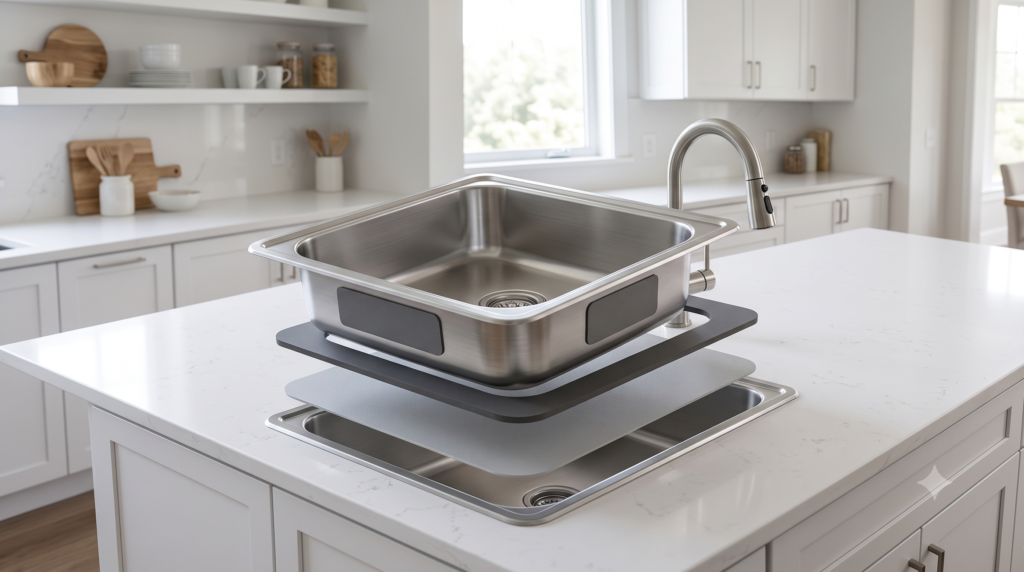
ToollQ Tip: Many premium features are hidden underneath the sink, so you won’t notice them in a showroom. Always check the product specifications or inspect the underside before buying.
Anti-Condensation Coating
Many people don’t notice this feature until it’s missing.
Cold water running through the sink can create condensation underneath, especially in humid environments.
Over time, excess moisture may affect the inside of the kitchen cabinet.
An anti-condensation coating helps reduce moisture build-up and protects your cabinet from unnecessary damage.
Soundproof Pads
Nobody likes a noisy kitchen sink.
A quality sink with soundproof pads helps reduce the loud metallic noise caused by running water and dropping dishes.
It’s a small feature that makes the kitchen feel much quieter every day.
Rear Drain Design
Some premium sinks place the drain closer to the back instead of the center.
This creates more usable space inside the sink and allows water to drain efficiently while giving you extra room underneath the cabinet for storage or a garbage disposal system.
Rounded Corners
Sharp corners may look modern, but they can be harder to clean.
I usually recommend sinks with slightly rounded corners because dirt and grease are less likely to collect, making everyday cleaning much easier.
Handmade Kitchen Sink
Handmade sinks have become increasingly popular because of their modern appearance and straight edges.

ToollQ Tip: A handmade sink isn’t automatically better. Before buying, inspect the welding seams, corner finishing, brushed surface consistency, and overall craftsmanship. These details often determine how well the sink will perform and look over the years.
A well-made handmade sink can be an excellent choice, but quality varies between manufacturers.
Before buying one, I always recommend checking:
- Welding quality
- Corner finishing
- Surface finishing
- Overall workmanship
A beautiful sink isn’t necessarily a well-made sink.
Good craftsmanship is just as important as appearance.
ToollQ Tip
Always inspect the welding and finishing before buying. Good craftsmanship is just as important as the material itself.
Nano-Coated Kitchen Sink
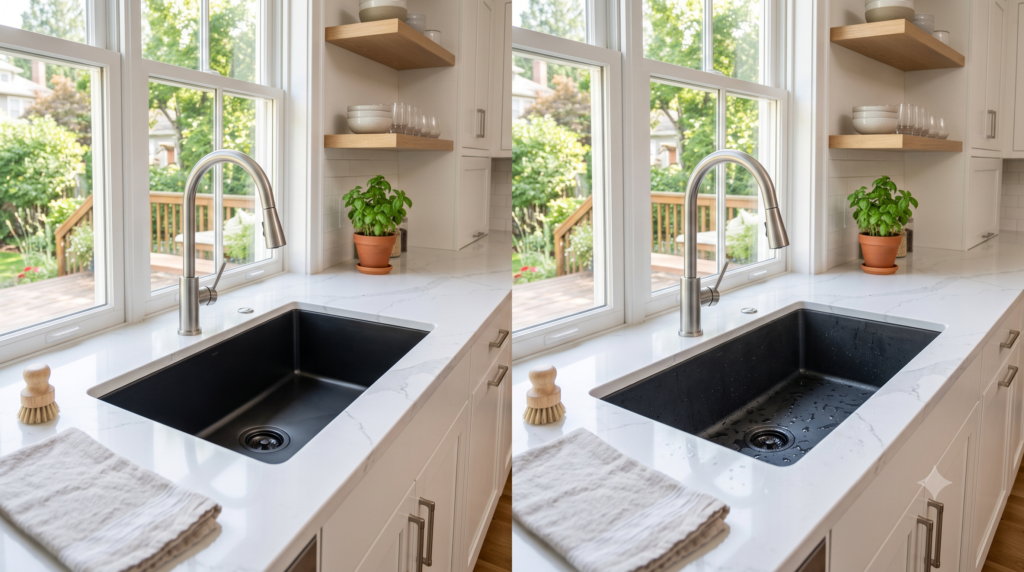
ToollQ Tip: A nano-coated sink doesn’t prevent water spots—it simply gives the sink a premium matte appearance. If you choose a black finish, be prepared to wipe it dry more often to maintain its showroom look.
Nano-coated sinks have become increasingly popular, especially black models.
They offer a modern appearance and are generally easier to clean.
However, there is one thing many buyers don’t realise.
Dark-coloured nano sinks tend to show water spots, soap residue, and scratches more easily than lighter colours.
If you prefer a black sink, be prepared to wipe it down more often to keep it looking clean.
If easy maintenance is your priority, a lighter-coloured finish may be a better choice.
ToollQ Tip
Love the look of black sinks? Just remember—they usually need more frequent cleaning to keep them looking their best.
Common Kitchen Sink Buying Mistakes
After helping customers choose kitchen sinks for many years, I’ve noticed the same mistakes happen again and again.
Avoiding these mistakes can save you money and prevent unnecessary frustration later.

ToollQ Tip: Before making your final decision, compare more than the price. Check the stainless steel grade, thickness, workmanship, bowl size, mounting style, and premium features to choose a sink that will serve your kitchen for years.
Buying Based Only on Appearance
A beautiful sink isn’t always the best sink.
Always consider durability, maintenance, and long-term practicality—not just how it looks in the showroom.
Choosing a Sink That’s Too Thin
A thinner sink may cost less initially, but it is usually noisier, dents more easily, and may not last as long.
Whenever possible, choose at least 1.0 mm stainless steel for better durability.
Buying an Uncommon Size
Custom sizes may look attractive today, but replacing them years later can become expensive and inconvenient.
Standard sizes give you more replacement options in the future.
If This Were My Money
If I were choosing a kitchen sink for my own home today, this is what I would buy.
I wouldn’t choose the most expensive sink.
I would choose the one that gives me the best balance of durability, practicality, and long-term value.
My ideal kitchen sink would have:
- SUS304 stainless steel
- At least 1.0 mm thickness
- A large single bowl
- An undermount installation
- Soundproof pads
- Anti-condensation coating
- A standard replacement size
This combination offers everything most homeowners need without paying for features they may never use.
ToollQ Final Recommendation
Buy once. Buy right.
The best kitchen sink isn’t the most expensive one.
It’s the one that fits your home, your lifestyle, and will still make you happy ten years from now.
Quick Kitchen Sink Buying Checklist
Before you buy, make sure you can answer “Yes” to most of these questions.
✅ Is it made from SUS304 stainless steel?
✅ Is the thickness 1.0 mm or more?
✅ Is the sink size suitable for your cabinet?
✅ Does it have soundproof pads?
✅ Does it have anti-condensation coating?
✅ Is it a standard size for easier replacement?
✅ Is the workmanship clean and well finished?
✅ Is it suitable for the way you cook every day?
If you can tick most of these boxes, you’re probably choosing a kitchen sink that will serve you well for many years.
Who Should Choose This Type of Kitchen Sink?
Choose SUS304 Stainless Steel If You…
- Cook almost every day
- Want the best long-term value
- Prefer low maintenance
- Plan to stay in your home for many years
Choose Aluminium If You…
- Have a limited budget
- Need a sink for a rental property
- Want a basic replacement
Choose Quartz or Granite If You…
- Care more about appearance
- Want to match a designer kitchen
- Don’t mind spending more time on maintenance
Frequently Asked Questions
What is the best material for a kitchen sink?
For most homeowners, SUS304 stainless steel offers the best balance of durability, corrosion resistance, maintenance, and value.
Is a single bowl or double bowl sink better?
A large single bowl is usually better for washing large pots and pans, while a double bowl is useful if you like separating food preparation and dishwashing tasks.
How thick should a kitchen sink be?
I recommend choosing at least 1.0 mm stainless steel whenever possible.
Thicker sinks generally feel more solid, produce less noise, and are less likely to dent.
Are handmade kitchen sinks worth buying?
Yes—provided the workmanship is good.
Always inspect the welding, corner finishing, and overall build quality before buying.
Are black nano sinks difficult to maintain?
They can be.
Black nano-coated sinks often show water spots and soap residue more easily than lighter finishes, so they usually require more frequent cleaning.
Should I choose a top mount or undermount sink?
If you’re renovating your kitchen, I generally recommend an undermount sink because it creates a cleaner look and makes countertop cleaning easier.
If you’re replacing an existing sink without changing the countertop, a top mount sink is often the simpler option.
Final Thoughts
Choosing the right kitchen sink isn’t about buying the most expensive model.
It’s about choosing the one that fits your home, your cooking habits, and your budget.
After helping customers choose plumbing products for more than 15 years, I’ve learned that homeowners are happiest when they focus on quality, practicality, and long-term value instead of marketing features alone.
Take your time, compare your options carefully, and choose a sink you’ll still enjoy using years from now.
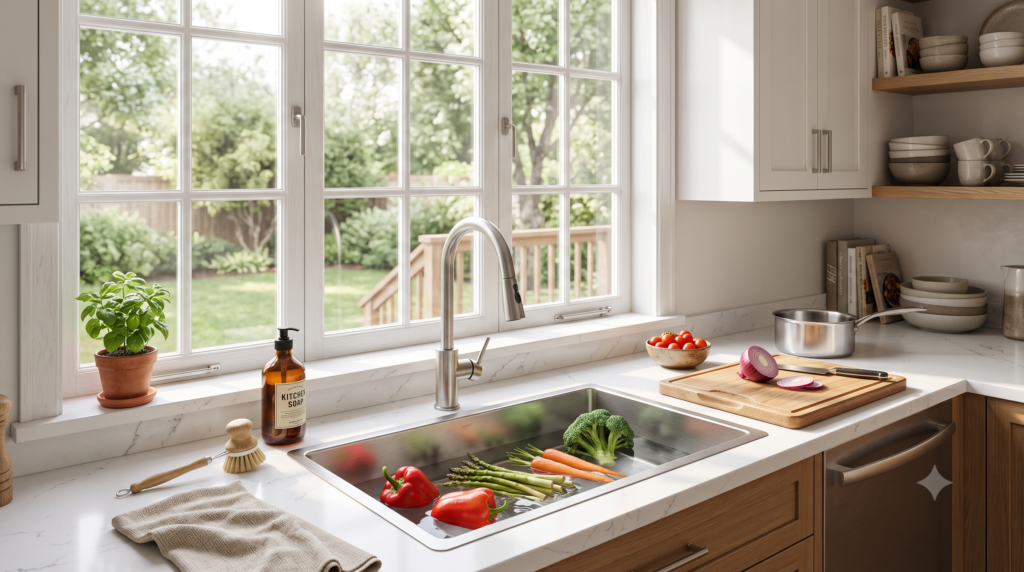
ToollQ Tip: Choose a kitchen sink you’ll still enjoy using every day five or ten years from now. A practical, well-built sink often delivers better long-term value than simply choosing the most expensive model.
The right kitchen sink isn’t the one with the highest price tag.
It’s the one you’ll still be happy using every single day, years from now.
— ToollQ
Looking for the perfect faucet to match your new sink? Read our Best Kitchen Faucet Buying Guide before making your final decision.
Explore more plumbing buying guides in our Plumbing Solutions category.