Best Foot Valve Buying Guide (2026): How to Choose the Right Size and Material
A Foot Valve may be a small part of a well-water system, but a failed valve can stop a Jet Pump from drawing water completely.
When the valve no longer seals, water drains back into the well. The suction pipe loses its water column, the pump loses prime, and the home may suddenly have no water.
This guide explains how to choose the right Foot Valve size, material, strainer, and construction without replacing a working water pump unnecessarily.
Quick Answer
For a typical residential shallow-well Jet Pump:
Choose a quality Brass Foot Valve with the same nominal size as the suction pipe.
For a tank, storage pond, or light-duty corrosive environment:
A compatible PVC Foot Valve may be suitable if its pressure rating, thread, and water compatibility match the system.
Most important quality checks:
Seal quality, spring quality, valve-body construction, and strainer strength.
Important:
A larger Foot Valve cannot solve a water level that is beyond the pump’s suction capability.
Why You Can Trust ToollQ
This guide is based on 15 years of practical experience with plumbing hardware, valves, pipe fittings, Jet Pumps, pressure tanks, and residential water-supply systems.
ToollQ Field Insight
When a Jet Pump runs but cannot draw water, do not immediately assume the pump is damaged. A leaking Foot Valve or an air leak in the suction pipe can produce the same symptoms.
Before You Buy a Foot Valve
Confirm these six details before choosing a replacement.
- Suction-pipe size: Check the actual pipe size and thread.
- Pump inlet size: Review the pump manual before reducing any pipe size.
- Water source: Shallow well, storage tank, pond, or another source.
- Actual pumping water level: Do not rely only on the total well depth.
- Water condition: Check for sand, rust, dirt, or other debris.
- Valve compatibility: Confirm the material, pressure rating, seal, and installation position.
In ToollQ’s customer experience, ¾-inch (20 mm) and 1-inch (25 mm) Foot Valves are common. However, some American residential Jet Pumps use a 1¼-inch (32 mm) suction connection. Never assume the size from appearance alone.
How Does a Foot Valve Work?
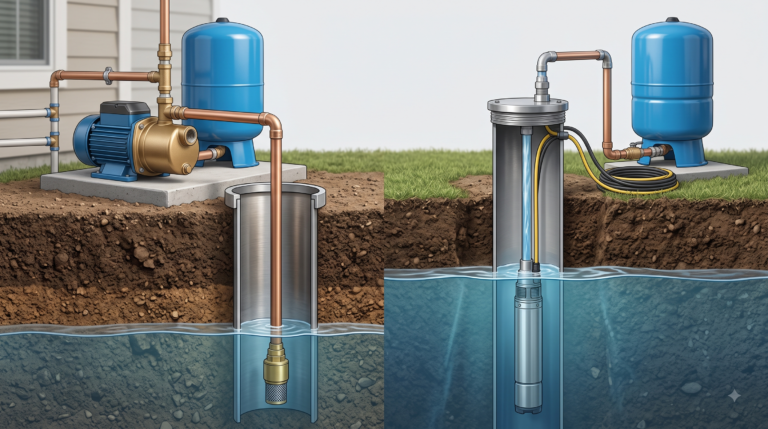
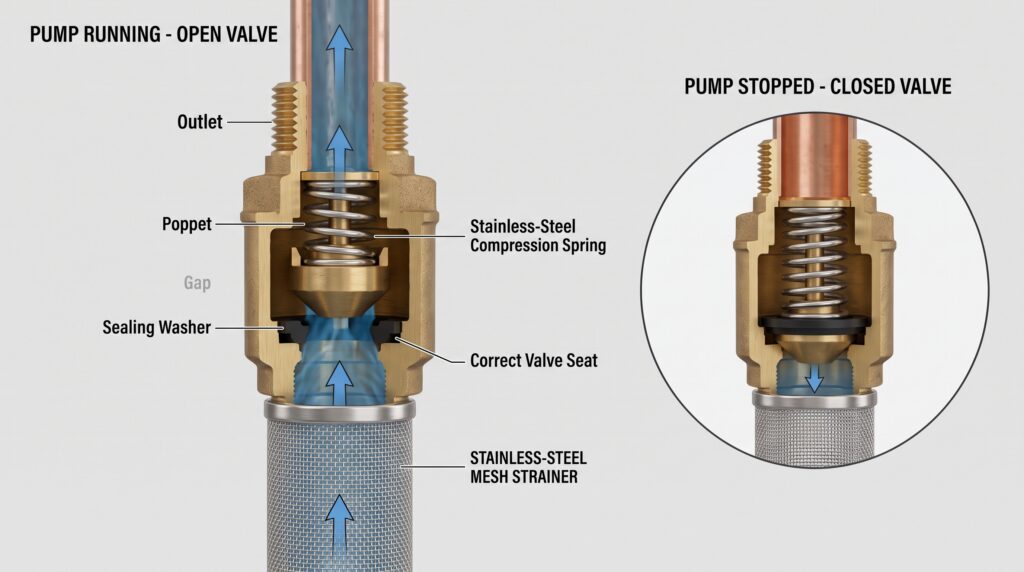
A Foot Valve is a one-way valve with a strainer. It is installed at the submerged end of a pump’s suction pipe.
- When the pump starts, suction opens the valve and draws water through the strainer.
- When the pump stops, the spring and seal close the valve.
- The closed valve prevents water from draining back into the well or tank.
- The strainer helps stop larger sand particles and debris from entering the pump.
Foot Valve vs Check Valve
A Foot Valve includes a strainer and is designed for the submerged end of a suction pipe. A standard Check Valve may control reverse flow, but it does not automatically provide the same debris protection.
Brass vs PVC Foot Valves
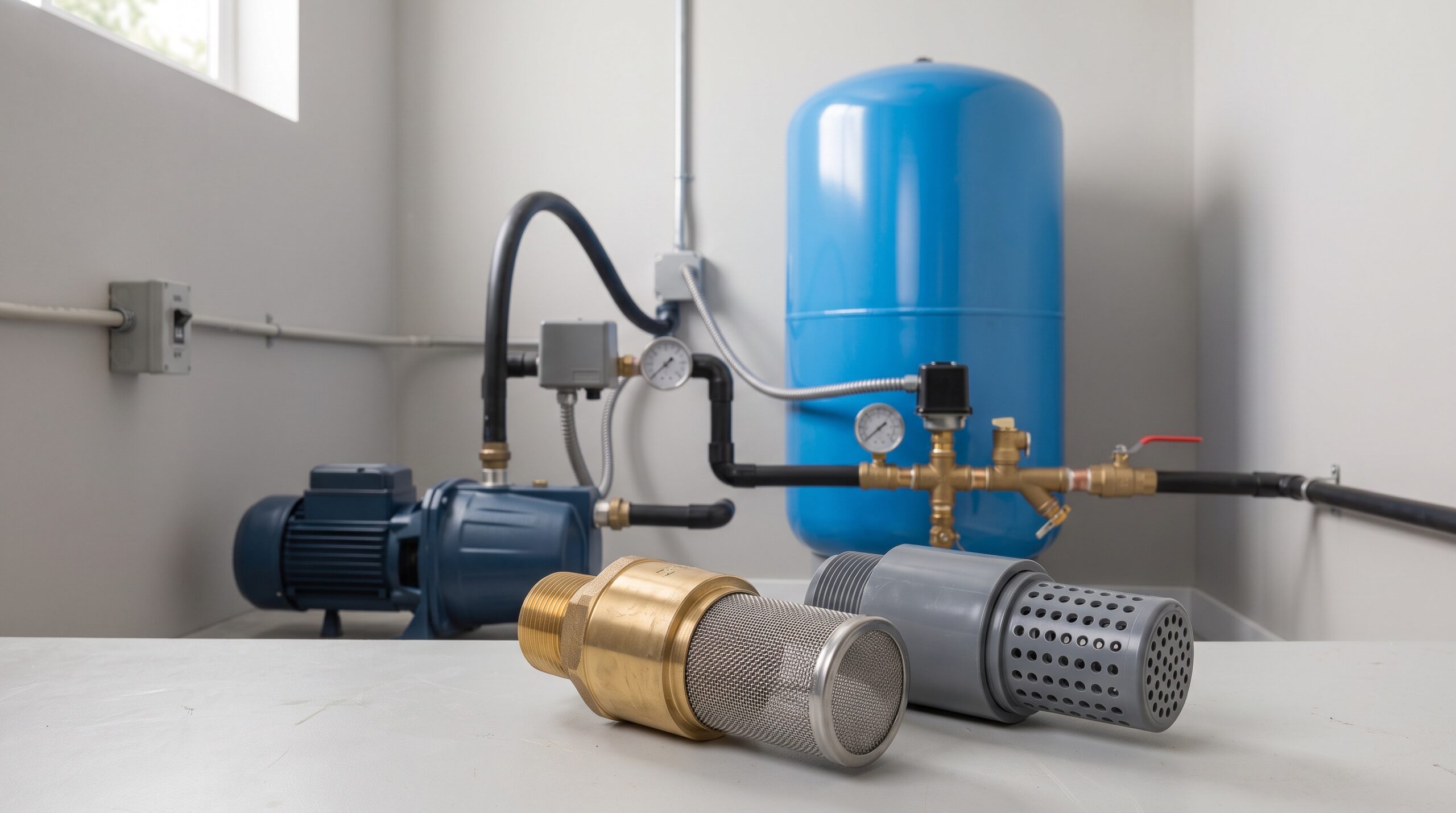
Material matters, but it should not be the only reason for choosing a valve. Size, seal quality, spring quality, strainer strength, and system compatibility are equally important.
Brass Foot Valve
Best for:
Residential shallow wells and Jet Pump suction lines.
- Strong and durable construction
- Suitable for frequent residential use
- Commonly available in plumbing stores
- Usually costs more than PVC
PVC Foot Valve
Best for:
Storage tanks, ponds, and compatible light-duty applications.
- Lightweight and corrosion resistant
- Usually more affordable
- Easy to handle during installation
- Must match the system’s pressure, water, and temperature requirements
ToollQ Pro Tip
Do not choose by body material alone. A brass valve with a weak spring or poor seal may fail sooner than a well-made valve designed for the actual application.
How to Choose the Right Foot Valve
1. Match the Suction-Pipe Size
The Foot Valve should normally match the nominal size of the suction pipe. Installing a smaller valve can increase suction restriction and reduce pump performance.
Simple sizing rule
Match the Foot Valve to the suction pipe, then confirm that the complete suction line also meets the pump manufacturer’s minimum pipe-size requirement.
2. Inspect the Seal
The seal must close tightly enough to hold the water column after the pump stops. A hardened, damaged, or poorly fitted seal can allow water to drain back into the source.
3. Check the Spring
The spring should move smoothly and close the valve reliably. Avoid products with weak, rough, damaged, or easily corroded springs.
4. Examine the Valve Body
Look for solid construction, accurate threads, and a body without cracks, thin sections, or visible manufacturing defects.
5. Check the Strainer
The strainer should be strong enough to resist damage and have enough open area for water to enter without excessive restriction.
A strainer that is too fine may clog quickly in dirty water. A broken or overly open strainer may allow sand and debris to reach the pump.
6. Confirm the Water Level and Pump Type
Do not confuse total well depth with the actual water level while pumping. The pump must be able to lift water from the pumping water level under real operating conditions.
For example, some Pentair shallow-well Jet Pumps are rated for a depth to water of 25 ft (7.6 m) or less and require a Check Valve or Foot Valve. This is a product example—not a universal limit for every pump. Always follow the specifications for your exact model.
View Pentair’s shallow-well Jet Pump specifications →
Foot Valve Installation Checklist
- Switch off the pump before working on the suction system.
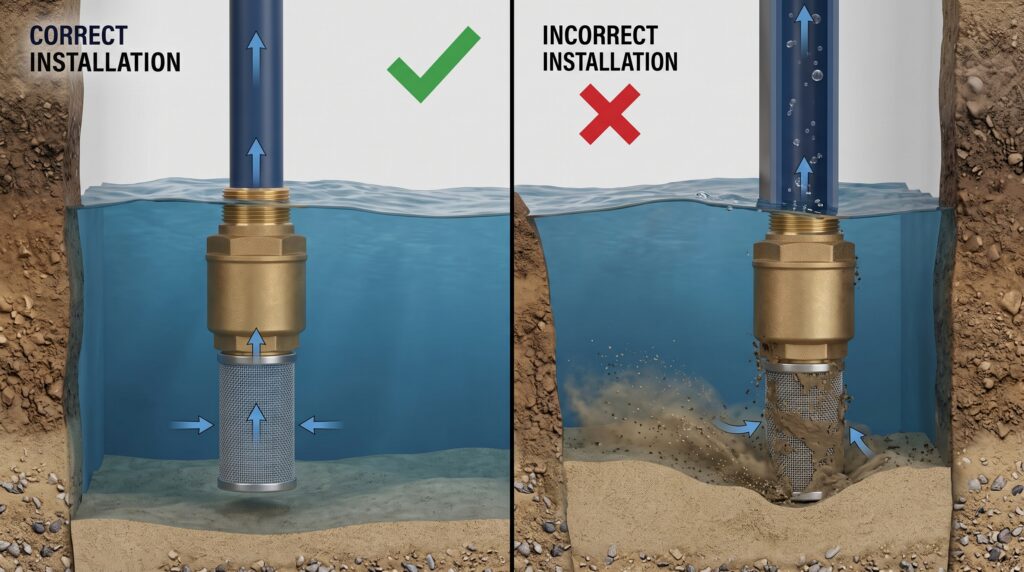
- Install the Foot Valve at the submerged end of the suction pipe.
- Keep the complete valve and strainer below the lowest expected water level.
- Do not place the valve directly on the well or tank bottom.
- Leave enough clearance to reduce sand and sediment intake.
- Confirm that water enters through the strainer and flows toward the pump.
- Install the valve vertically unless its manufacturer allows another position.
- Keep the suction pipe at the correct size.
- Seal every suction-pipe joint so it cannot draw air.
- Fill and prime the Jet Pump before its first start.
- Test whether the system can hold prime and build pressure.
Do not run a Jet Pump dry while testing. Dry running can damage the mechanical seal, impeller, and motor.
Common Buying Mistakes and Hidden Costs
Common Mistakes
- Choosing only by price
- Buying the wrong thread or size
- Using a smaller valve than the suction pipe
- Installing the valve too close to the bottom
- Ignoring suction-pipe air leaks
- Running the pump dry during testing
Hidden Costs
- Repeatedly losing pump prime
- Mechanical-seal or impeller damage
- Pump overheating or motor failure
- Sand entering and damaging the pump
- Repeated labor to remove the suction pipe
- Replacing a good Jet Pump by mistake
Real Customer Experience
System:
Shallow well → Foot Valve → Jet Pump and pressure tank → Whole house
Symptoms:
The Jet Pump ran but could not draw water. After priming, it quickly lost prime again, could not build pressure, and left the whole house without water.
Inspection:
The water inside the pump had drained away. The suction pipe and fittings did not show an air leak, so the suction pipe was removed for inspection.
Cause:
The Foot Valve body was corroded, the seal had deteriorated, and debris prevented the valve from closing completely.
Solution:
The complete Foot Valve was replaced. The existing Jet Pump could then hold prime, build pressure, and restore normal water supply.
Lesson from This Case
Repeated priming is not a repair. If the water keeps draining back, inspect the Foot Valve and the complete suction line before replacing the pump.
Clean or Replace the Foot Valve?
Clean and Test First
- Debris is preventing the valve from closing
- The strainer is clogged but not damaged
- The body has no serious corrosion or cracks
- The valve seals fully after cleaning
Replace the Complete Valve
- The body is corroded, cracked, or leaking
- The seal is hardened, deformed, or damaged
- The spring is rusted, broken, or weak
- The strainer is broken
- The valve still leaks after cleaning
- Several parts have failed together
ToollQ’s Choice
For a residential shallow well with a Jet Pump:
Choose a Brass Foot Valve that matches the suction-pipe size and has a reliable seal, strong spring, solid body, and durable strainer.
For a storage tank, pond, or compatible light-duty system:
A quality PVC Foot Valve can be a practical option when its pressure rating, thread, water compatibility, and installation conditions are suitable.
Do not buy by price alone. Replacing a cheap Foot Valve repeatedly can cost more than buying a reliable valve the first time.
Frequently Asked Questions
What size Foot Valve should I buy?
Match the Foot Valve to the suction-pipe size, then confirm that the pipe also meets the pump manufacturer’s minimum suction-size requirement. Do not reduce the suction line without checking the pump manual.
Is a Brass Foot Valve better than PVC?
Brass is usually the stronger choice for residential shallow wells and frequently used Jet Pump systems. PVC can be suitable for compatible tanks, ponds, and light-duty applications. The correct choice depends on pressure, water condition, thread, and installation environment.
Can a bad Foot Valve cause a Jet Pump to lose prime?
Yes. If the valve cannot seal, water drains back into the well or tank after the pump stops. The suction pipe loses its water column, and the pump may need to be primed again.
Why does my pump still lose prime after replacing the Foot Valve?
Check the suction-pipe joints, cracked pipe, pump mechanical seal, water level, priming procedure, and installation direction. Replacing the Foot Valve will not repair an air leak elsewhere in the suction system.
Should a Foot Valve touch the bottom of the well?
No. Keep it fully submerged but above the bottom so it is less likely to draw sand, sediment, and debris. Follow the pump or valve manufacturer’s recommended clearance.
Can a larger Foot Valve solve a deep-water problem?
No. A larger valve cannot overcome a water level beyond the pump’s suction capability. Confirm the pumping water level, required lift, pump type, and manufacturer’s performance data.
Related Guides
Why Does My Jet Pump Keep Losing Prime?
Diagnose Foot Valve failure, suction-pipe air leaks, water-level problems, and pump-seal issues.
Jet Pump vs Submersible Pump
Compare priming, water depth, installation, noise, and maintenance.
Best Check Valve Buying Guide
Learn how Check Valves protect residential plumbing and pump systems from reverse flow.
Explore All ToollQ Pump Guides
Browse pump buying, sizing, and troubleshooting information.
Final Recommendation
For most residential shallow-well Jet Pump systems, choose a well-made Brass Foot Valve with the same nominal size as the suction pipe.
Check the seal, spring, valve body, strainer, thread, and manufacturer’s specifications before buying. Install it fully submerged, above the bottom, and seal every suction-pipe connection against air leaks.
If the Jet Pump still cannot hold prime after the valve is replaced, inspect the complete suction line and actual water level before replacing the pump.
ToollQ Final Advice
A Foot Valve should be selected as part of the complete suction system—not as an isolated fitting. The correct size, reliable sealing, and proper installation matter more than simply choosing the lowest price.