Best Outdoor Water Tap Buying Guide (2026): How to Choose the Right Outdoor Faucet
An outdoor water tap may look simple, but choosing the wrong one can lead to leaks, broken handles, poor water flow, and costly repairs.
Many outdoor faucets look similar, but their material, valve design, durability, and weather resistance can vary significantly.
After more than 15 years in the plumbing and hardware industry, I’ve helped homeowners choose outdoor faucets for gardens, patios, car washing areas, and exterior walls.
The best outdoor faucet isn’t always the most expensive one. It depends on how often you’ll use it, where it will be installed, and the weather conditions it will face.
In this ToollQ Buying Guide, you’ll learn how to choose the right outdoor water tap based on material, size, valve type, and real-world experience—so you can buy with confidence.
At a Glance
Not sure which outdoor water tap is right for your home?
Here’s a quick recommendation based on how you’ll use it.
| Best For | Recommended Outdoor Faucet |
| 🚗Washing Cars | Heavy-Duty Brass 3/4“ Outdoor Faucet |
| 🌿Watering Gardens | Heavy-Duty Brass 3/4“ Outdoor Faucet |
| 🏠General Household Use | Full Brass 1/2“ Outdoor Faucet |
| 💰Budget Installations | PVC Outdoor Faucet (Light Use Only) |
| 🛠️Long-Term Durability | Full Brass Outdoor Faucet |
💡 ToollQ Quick Tip
If you’re buying only one outdoor faucet for your home, a full brass model is the best choice for most homeowners because it offers excellent durability, weather resistance, and long-term value.
Why You Can Trust ToollQ
Choosing an outdoor water tap isn’t just about picking a material or a price.
The right choice depends on how you’ll use it, how often it will be exposed to the weather, and how long you expect it to last.
After more than 15 years in the plumbing and hardware industry, I’ve helped homeowners, contractors, and businesses choose outdoor faucets for homes, gardens, commercial buildings, and renovation projects.
This guide is based on real customer questions and practical experience—not just product specifications.
✅ Quick Answer
For most homeowners, a full brass outdoor faucet offers the best balance of durability, weather resistance, and long-term value.
If you frequently wash cars or water large gardens, a heavy-duty 3/4-inch brass faucet is usually the better choice.
💡 ToollQ Pro Tip
The best outdoor faucet isn’t determined by price alone.
Choose one that matches how you’ll actually use it—not just how it looks on the shelf.
What Is an Outdoor Water Tap?
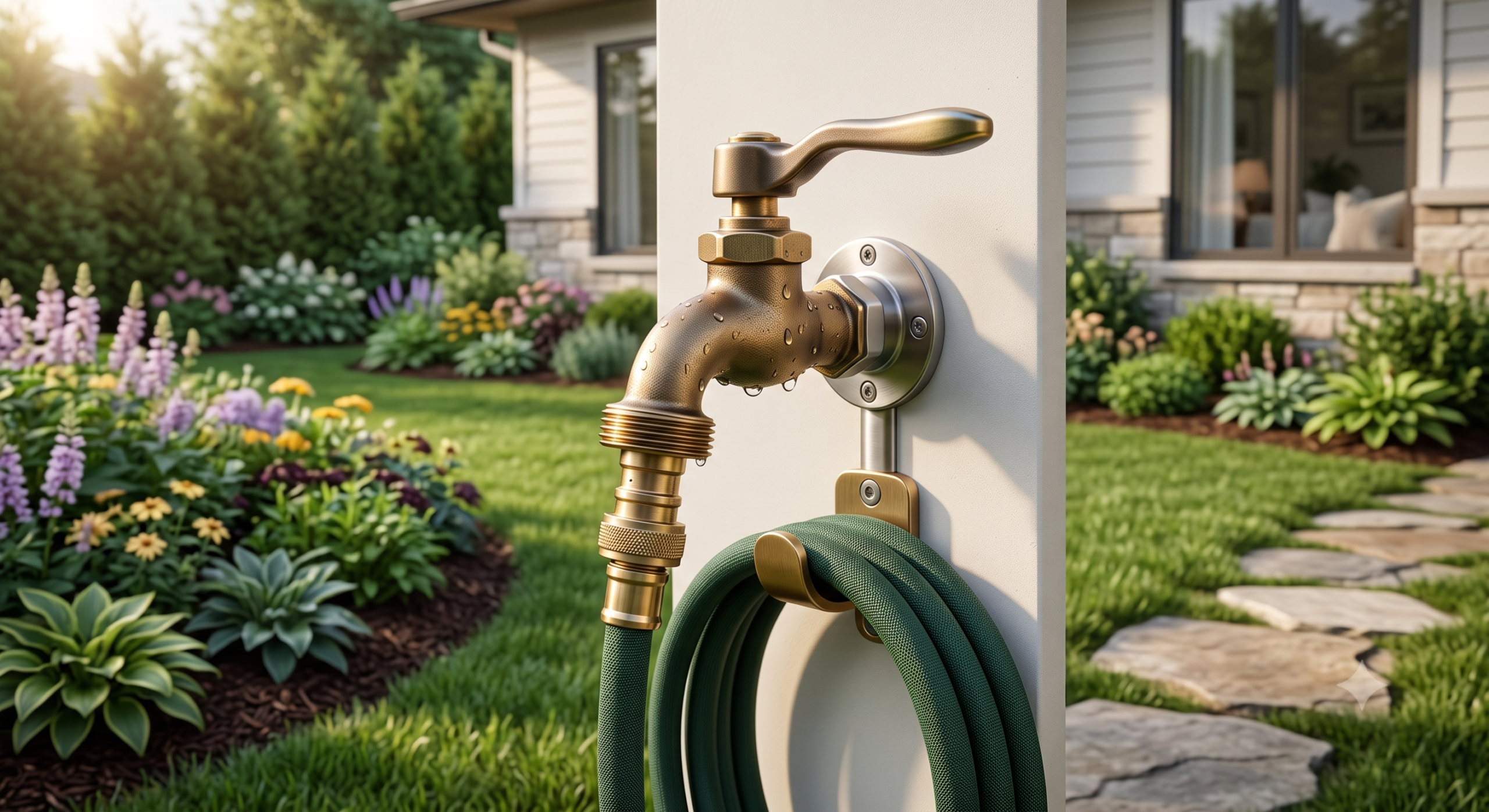
An outdoor water tap, also known as an outdoor faucet or garden tap, is a plumbing fixture installed outside a building to provide convenient access to water.
It’s commonly used for watering gardens, washing cars, cleaning patios, filling buckets, and other outdoor household tasks.
Although outdoor faucets may look similar, they can differ significantly in material, durability, water flow, and valve design. Choosing the right one can help prevent leaks, reduce maintenance, and provide years of reliable performance.
Want to understand why brass and stainless steel perform differently?
👉 Read our guide:
Brass vs Stainless Steel Faucets: Which Material Is Better?
🏡 Common Outdoor Uses
🚗 Washing cars
🌿 Watering gardens
🧹 Cleaning patios and driveways
🪣 Filling buckets
🚿 General outdoor household cleaning
How to Choose the Right Outdoor Water Tap
Choose the Right Material
The material is the single most important factor when choosing an outdoor water tap.
Because outdoor faucets are exposed to sunlight, rain, humidity, and temperature changes every day, the right material can make a huge difference in durability and long-term performance.
🔍 Material Comparison
🥇 Full Brass
✔ Excellent durability
✔ Handles sun and rain well
✔ Best long-term value
🥈 SUS304 Stainless Steel
✔ Excellent corrosion resistance
✔ Modern appearance
✔ May show water spots outdoors
🥉 PVC
✔ Low cost
✔ Won’t rust
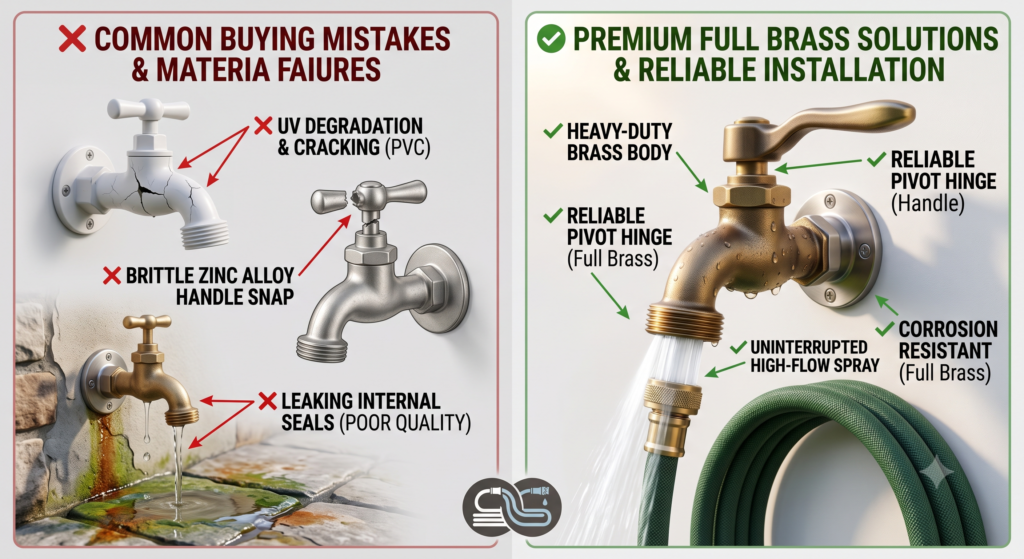
✘ Can become brittle after years of UV exposure
⚠ Zinc Alloy
✔ Low purchase price
✘ Can become brittle over time
✘ Higher risk of broken handles
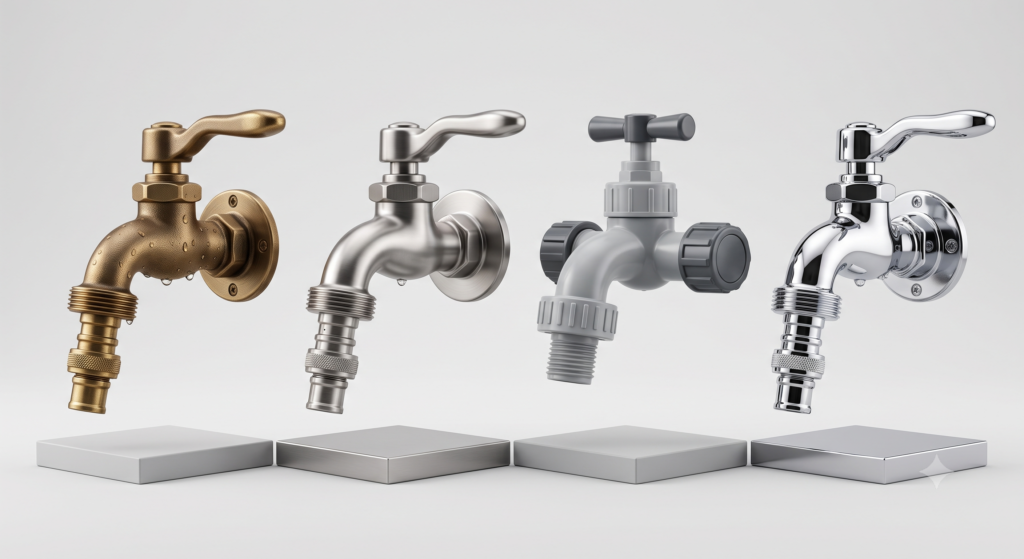
For most homeowners, I recommend a full brass outdoor faucet because it offers the best combination of durability, weather resistance, and long-term reliability.
Although stainless steel performs well against corrosion, brass usually requires less maintenance in outdoor environments.
Want to learn more about brass and stainless steel?
👉 Read our guide:
Brass vs Stainless Steel Faucets: Which Material Is Better?
💡 ToollQ Pro Tip
Many homeowners choose PVC because they’re worried about rust.
In my experience, they often return a few years later to replace it with a brass faucet after UV exposure causes cracks or leaks.
Heavy-Duty Brass vs Light-Duty Brass
Not all brass outdoor faucets are made the same.
The amount of brass used, the wall thickness, and the internal waterway all affect durability, water flow, and long-term performance.
⚖️ Heavy-Duty vs Light-Duty Brass
🏋️ Heavy-Duty Brass
✔ Thicker brass body
✔ Larger internal waterway
✔ Stronger water flow
✔ Built for frequent use
🏠 Light-Duty Brass
✔ Lighter weight
✔ Suitable for occasional use
✔ Lower cost
✔ Good for basic household tasks
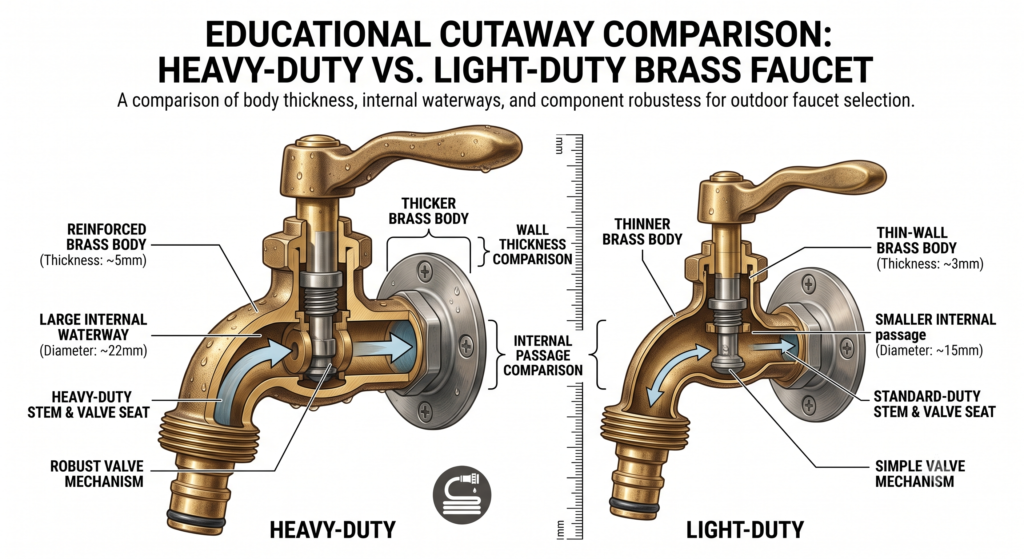
If you regularly wash cars, water large gardens, or clean outdoor areas, a heavy-duty brass faucet is usually worth the extra investment.
For occasional household use, a light-duty brass faucet can still provide reliable performance while keeping costs lower.
💡 ToollQ Pro Tip
Don’t judge a brass faucet by its appearance alone.
Two brass faucets may look almost identical, but the heavier model often contains more brass and has a larger internal waterway for better durability and water flow.
Choose the Right Size (1/2″ vs 3/4″)
Choosing the right faucet size affects water flow, convenience, and overall performance.
For most homes, the decision comes down to how much water you need and how you’ll use the outdoor faucet.
📏 Which Size Should You Choose?
1/2″ Outdoor Faucet
✔ Washing small items
✔ Filling buckets
✔ Light household use
✔ Lower water demand
3/4″ Outdoor Faucet
✔ Washing cars
✔ Watering large gardens
✔ Cleaning driveways
✔ Higher water flow
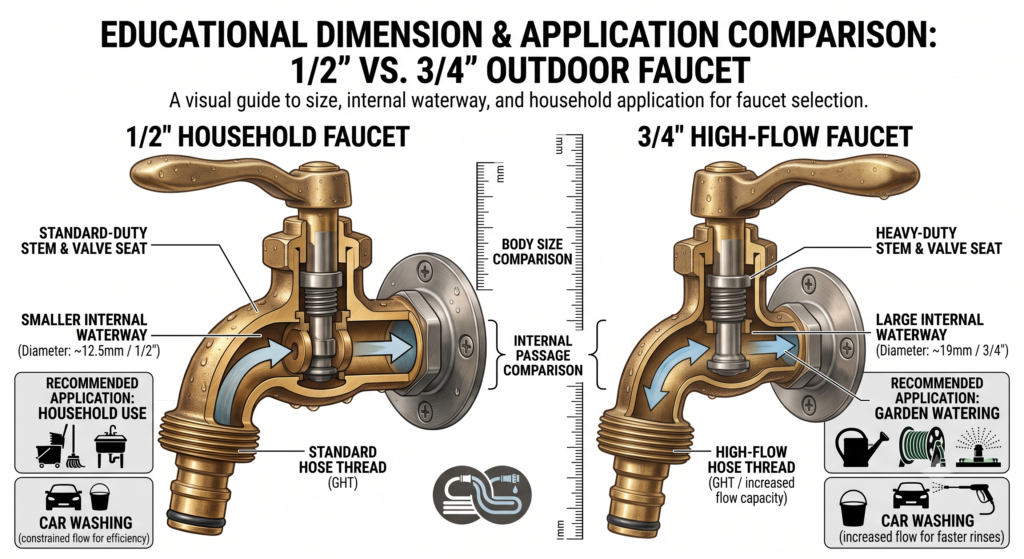
A 1/2-inch outdoor faucet is sufficient for most everyday household tasks.
However, if you regularly wash vehicles, clean large outdoor areas, or water a large garden, a 3/4-inch faucet provides higher water flow and makes these jobs faster and easier.
💡 ToollQ Pro Tip
Choose the faucet size based on how much water you actually need.
For most homeowners, a 1/2-inch faucet is enough, while a 3/4-inch faucet is ideal for frequent heavy-duty outdoor use.
Choose the Right Valve Type
The valve type affects how easily you can operate the faucet and how well it performs over years of regular use.
Choosing the right design depends on how often you use the faucet and whether you need quick operation or precise water flow control.
🔧 Valve Type Comparison
⚡ Ball Valve (Union Tap)
✔ Quick quarter-turn operation
✔ Ideal for frequent use
✔ Durable for everyday on-and-off operation
💧 Traditional Twist Tap
✔ Better water flow adjustment
✔ Suitable for watering plants
✔ Familiar design for most homeowners
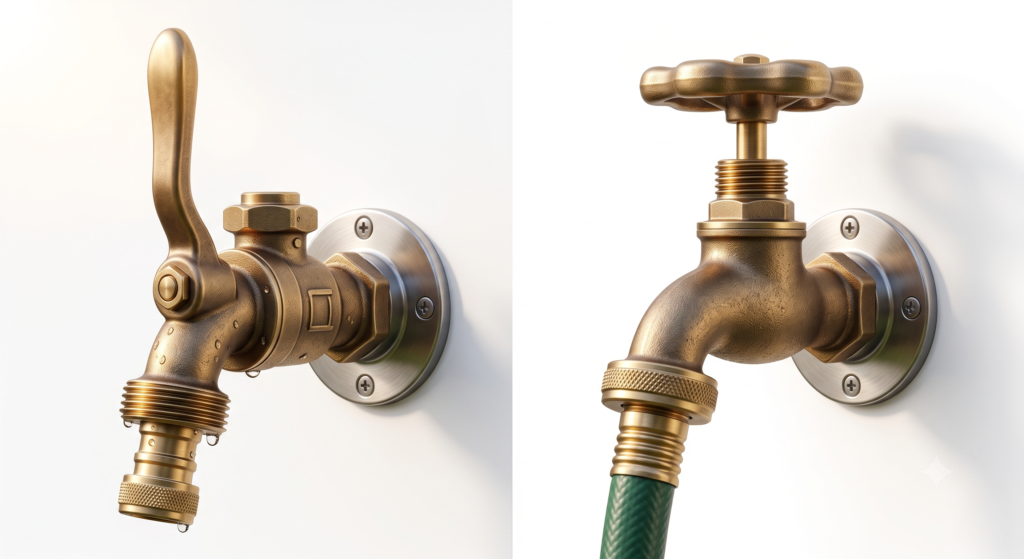
If you regularly wash cars or clean outdoor areas, a ball valve is usually the more convenient choice because it opens and closes quickly.
If you often water plants or need to control the water flow, a traditional twist tap offers more precise adjustment.
💡 ToollQ Pro Tip
There isn’t one valve type that’s best for everyone.
Choose the one that matches how you’ll use your outdoor water tap every day.
Choose the Right Installation Location
Where you install your outdoor water tap is just as important as the faucet itself.
Different locations expose the faucet to different levels of sunlight, rain, dirt, and daily use, which can affect its performance and lifespan.
🏡 Recommended Faucet by Location
🚗 Car Washing Area
Heavy-duty brass faucet
🌿 Garden
Brass faucet with good weather resistance
🧹 Patio or Driveway
3/4″ brass faucet for stronger water flow
🏠 General Household Use
Standard 1/2″ full brass faucet
For locations that receive direct sunlight and frequent use, investing in a durable brass faucet is usually worthwhile.
For lighter household use in protected areas, a standard full brass faucet is often more than sufficient.
💡 ToollQ Pro Tip
Don’t choose an outdoor faucet based only on where you buy it.
Choose it based on where you’ll install it and how you’ll use it over the next several years.
Common Buying Mistakes
Choosing the Cheapest Faucet
Many homeowners focus only on the purchase price.
A cheaper outdoor faucet may save money today, but replacing a leaking or broken faucet later can cost much more.
💡 ToollQ Tip
Buy once, buy right.
The cheapest faucet is rarely the cheapest solution in the long run.
Choosing the Wrong Material
Different materials perform very differently outdoors.
PVC and zinc alloy may cost less initially, but prolonged exposure to sunlight, rain, and changing weather conditions can shorten their lifespan.
💡 ToollQ Tip
Choose a material that’s designed for outdoor conditions—not just one with the lowest price.
Buying the Wrong Size
Some homeowners assume a larger faucet is always better.
In reality, the right size depends on how much water you need and how you plan to use the faucet.
💡 ToollQ Tip
Match the faucet size to your daily needs instead of choosing the biggest option available.
Ignoring the Valve Type
The valve design affects both convenience and everyday use.
Choosing the wrong valve type can make simple outdoor tasks less comfortable than they need to be.
💡 ToollQ Tip
Think about how you’ll use the faucet every day before choosing the valve type.
Ignoring Long-Term Durability
An outdoor faucet is exposed to weather throughout the year.
Choosing a durable model from the beginning usually reduces maintenance, repairs, and replacement costs over time.
💡 ToollQ Tip
Don’t compare outdoor faucets based only on today’s price.
Consider how they’ll perform after years of outdoor use.
Real-World Experience
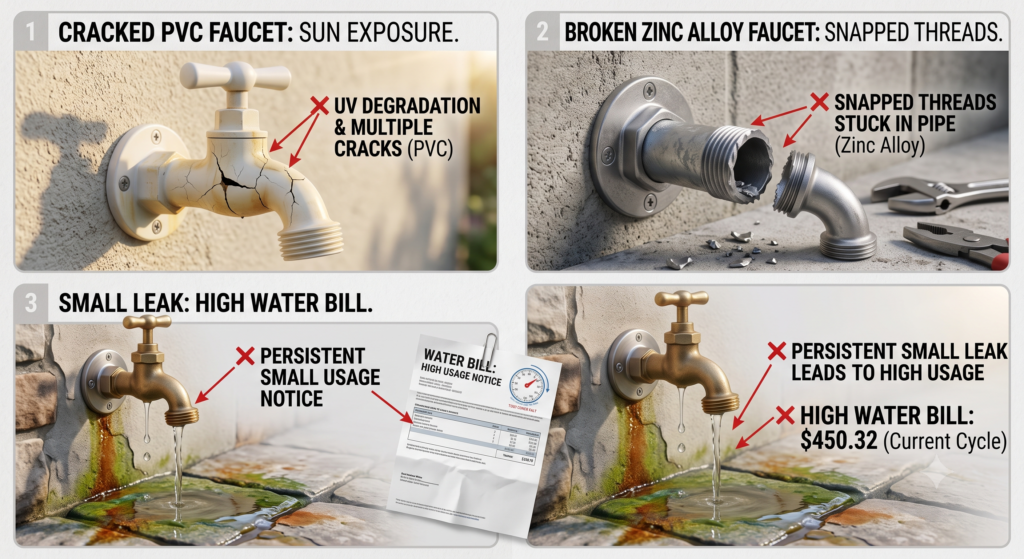
After more than 15 years in the plumbing and hardware industry, I’ve learned that most outdoor faucet problems aren’t caused by installation.
They’re usually caused by choosing the wrong material, the wrong design, or the wrong faucet for the job.
PVC Seemed Like a Smart Choice
One homeowner chose a PVC outdoor faucet because they believed it would never rust.
For the first few years, it worked well. However, after years of exposure to sunlight and changing weather, the faucet body became brittle and eventually started leaking.
💰 The Lesson
Choosing a product based only on “it won’t rust” can overlook other factors such as UV resistance and long-term durability.
A Broken Handle Became an Expensive Repair
A homeowner installed a low-cost zinc alloy faucet because it was only used occasionally.
Years later, the handle snapped during normal use. When they tried to remove the old faucet, the threaded section broke off inside the pipe, turning a simple replacement into a plumbing repair.
🔧 The Lesson
Saving a little on the faucet can sometimes lead to much higher repair costs later.
A Small Leak Led to a Bigger Water Bill
One customer rarely checked the outdoor faucet because it was installed at the side of the house.
A slow leak continued unnoticed until an unusually high water bill revealed the problem.
💧 The Lesson
Checking outdoor faucets regularly can help prevent water waste and unexpected repair costs.
💡 ToollQ Lesson
The best outdoor faucet isn’t always the most expensive one.
It’s the one that matches your environment, your usage, and provides reliable performance for years to come.
Frequently Asked Questions
What is the best material for an outdoor water tap?
For most homeowners, a full brass outdoor water tap offers the best balance of durability, weather resistance, and long-term value. It’s well suited for outdoor environments exposed to sun and rain.
Should I choose a 1/2-inch or a 3/4-inch outdoor faucet?
A 1/2-inch faucet is suitable for everyday household use. If you frequently wash cars, water large gardens, or clean outdoor areas, a 3/4-inch faucet usually provides better water flow.
Is brass better than PVC for outdoor use?
For long-term outdoor use, brass is generally the better choice because it withstands weather and frequent use more effectively. PVC can be suitable for light-duty or budget installations but may become brittle after prolonged UV exposure.
Which valve type is better for everyday use?
Ball valves are convenient for frequent on-and-off use, while traditional twist taps are better if you often need to adjust the water flow. The best choice depends on how you use the faucet.
How long should a quality outdoor water tap last?
A quality outdoor water tap can last for many years when properly installed and used. The actual lifespan depends on the material, usage frequency, weather conditions, and regular maintenance.
How can I make my outdoor faucet last longer?
Inspect it regularly for leaks, avoid excessive force when operating the handle, and replace worn washers or seals when needed. Choosing a durable material from the beginning also helps extend its service life.
Final Recommendation
The best outdoor water tap isn’t simply the most expensive one.
It’s the one that matches your installation location, daily usage, and long-term durability requirements.
For most homeowners, a full brass outdoor water tap offers the best balance of weather resistance, durability, and long-term value.
If you frequently wash cars, water large gardens, or clean outdoor areas, a heavy-duty 3/4-inch brass faucet is usually the better investment.
Choosing the right outdoor faucet today can help prevent leaks, reduce maintenance, and avoid unnecessary replacement costs for years to come.
💡 ToollQ Final Tip
At ToollQ, we believe the best outdoor water tap isn’t the one with the highest price—it’s the one that’s built for the way you use it.
Related Guides
Planning to upgrade your outdoor plumbing system?
These ToollQ buying guides can help you choose durable products and avoid common plumbing mistakes.
🔗 Guide 1
Learn how to choose a reliable angle valve for better water control and long-term performance.
🔗 Guide 2
Brass vs Stainless Steel Faucets: Which Material Is Better?
Compare the advantages and disadvantages of brass and stainless steel before making your purchase.
🔗 Guide 3
SUS304 vs SUS201 Stainless Steel
Understand the key differences between SUS304 and SUS201 to choose the right stainless steel products.
🔗 Guide 4
Learn how to choose the right floor drain based on material, drain size, and anti-odor performance.
Looking for more expert plumbing advice?
Explore more ToollQ Buying Guides to make smarter purchasing decisions and choose products that truly fit your home.