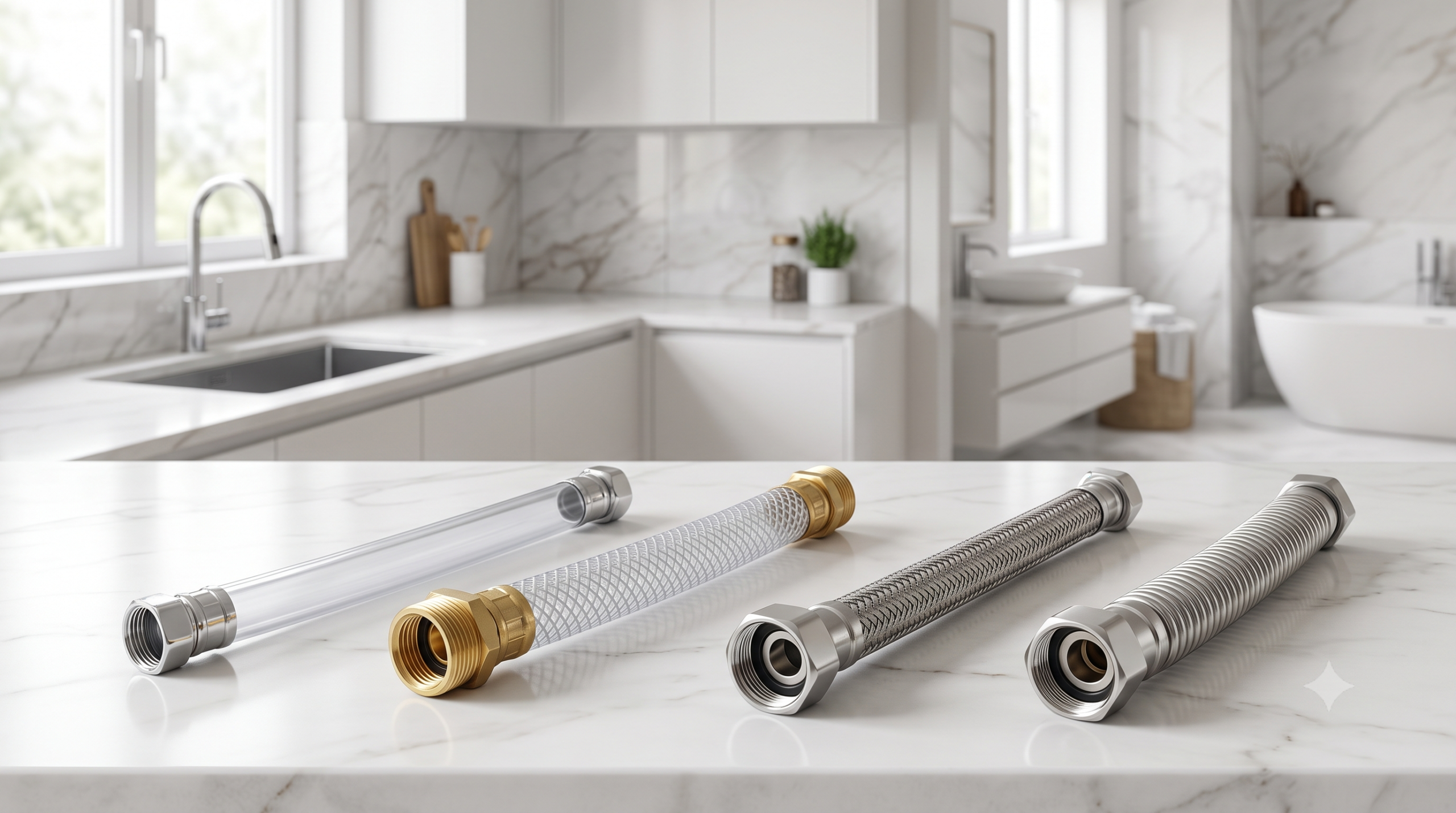
Best Flexible Hose Buying Guide (2026): How to Choose the Right Size, Material & Length
A flexible hose may be one of the smallest parts of your plumbing system, but choosing the wrong one can lead to leaks, poor water flow, or costly water damage.
The right flexible hose depends on where it will be installed, the water temperature, the required length, and the connection size—not simply the price.
After more than 15 years in the plumbing and hardware industry, I’ve found that many homeowners focus only on the hose material while overlooking equally important factors such as length, application, and connector quality.
In this guide, you’ll learn how to choose the right flexible hose based on real plumbing experience, helping you avoid common mistakes and build a safer, more reliable plumbing system.
Quick Answer
The best flexible hose depends on where it will be installed, the water temperature, and how often it will be used.
For most kitchens and bathrooms, a reinforced PVC hose with brass or stainless steel connectors offers the best balance of durability, reliability, and value. For hot water systems or demanding applications, a full SUS304 stainless steel flexible hose is often the better long-term choice.
✔ Toilet & Bidet → Standard PVC Hose
✔ Kitchen & Bathroom → Reinforced PVC with Brass or Stainless Steel Connectors
✔ Water Heater → Full SUS304 Stainless Steel Hose
✔ Outdoor → SUS304 Stainless Steel Braided or Corrugated Hose
Before buying, always check the hose material, length, connection size, and installation location to ensure the best fit for your plumbing system.
Why You Can Trust ToollQ
At ToollQ, we don’t recommend a flexible hose based on price or appearance alone.
We first ask where the hose will be installed because different applications require different materials, lengths, and connection types.
Our recommendations are based on more than 15 years of real plumbing and hardware industry experience, helping homeowners choose the right flexible hose instead of simply buying the most expensive option.
Before making a recommendation, we always ask a few simple questions:
✔ Where will the flexible hose be installed?
✔ Is it for cold water or hot water?
✔ What hose length is needed?
✔ What is the connection size?
These simple questions help us recommend the right flexible hose for your specific installation instead of giving the same answer to everyone.
The ToollQ Buying Method
Choosing the right flexible hose isn’t about buying the most expensive product. It’s about choosing the right hose for the right application.
We first identify where the hose will be installed, then check the material, hose length, connection size, and water temperature before making a recommendation.
Our buying process follows these five simple steps:
✔ Installation location
✔ Hose material
✔ Hose length
✔ Connection size
✔ Water temperature
Following these five steps helps you choose the right flexible hose, prevent leaks, and improve the long-term reliability of your plumbing system.
🛠 ToollQ Real-World Experience
One of the biggest mistakes homeowners make is focusing only on the hose material. In reality, the installation location, hose length, and connection size are just as important for a safe and reliable installation.
💡 ToollQ Expert Tip
Don’t ask which flexible hose is the best.Start by asking where it will be installed and what it needs to do.
Choose the Right Application
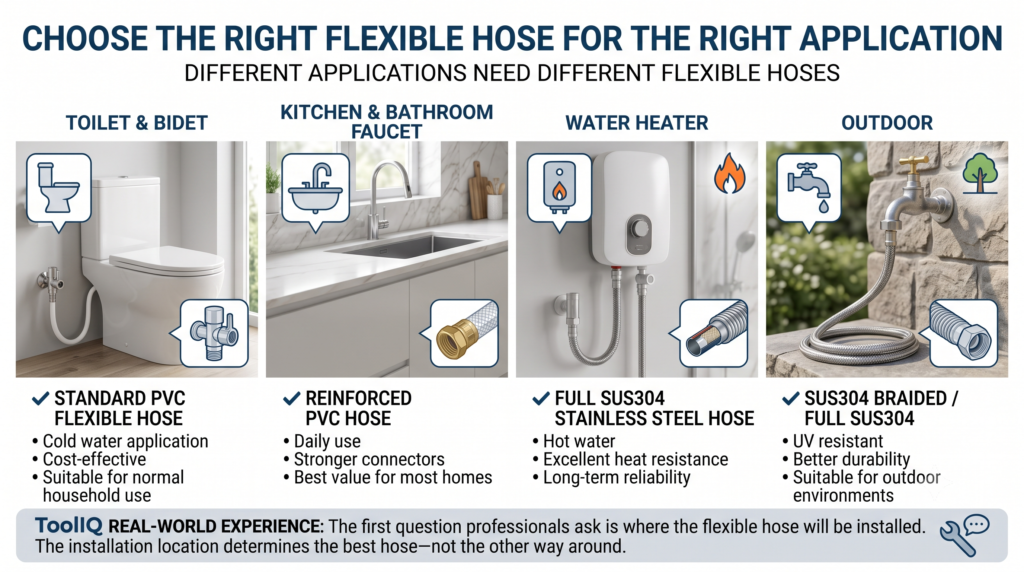
The first step in choosing a flexible hose is understanding where it will be installed.
Different plumbing fixtures have different requirements for water temperature, durability, and hose construction.
Toilet & Bidet
For toilets and bidet sprayers, a quality standard PVC flexible hose is usually sufficient because these applications typically use cold water and operate under normal household pressure.
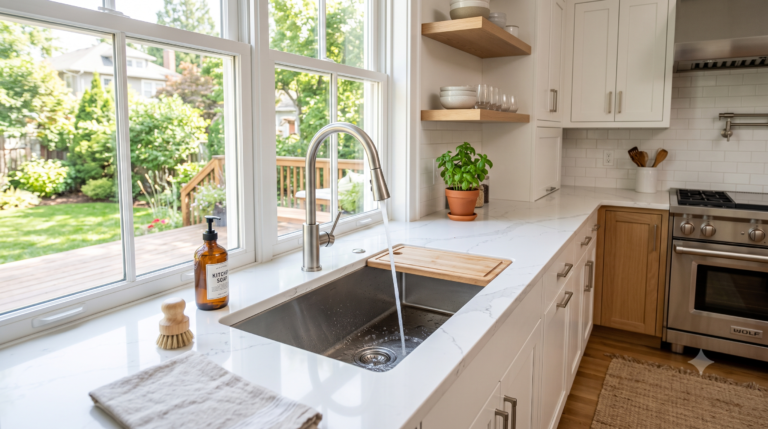
Kitchen & Bathroom Faucets
Kitchen and bathroom faucets are used every day, so we usually recommend a reinforced PVC hose with brass or stainless steel connectors for better durability and long-term reliability.
Water Heater
For water heaters and other hot water applications, a full SUS304 stainless steel flexible hose is the preferred choice because it is designed to handle higher temperatures and demanding conditions.
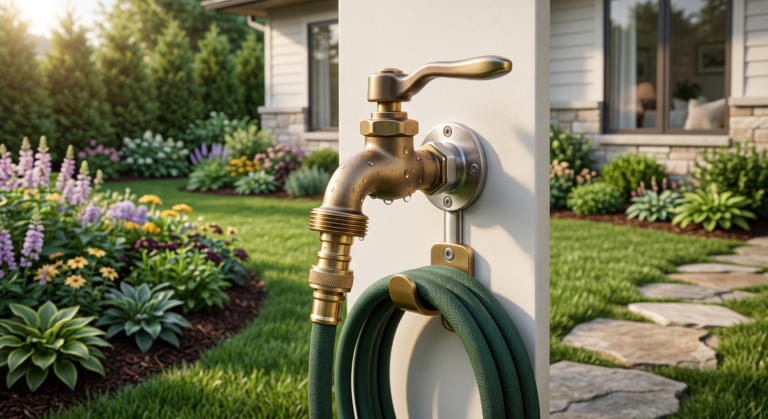
Outdoor Installations
For outdoor installations exposed to sunlight and changing weather conditions, a stainless steel braided or full SUS304 flexible hose is generally a better choice than a standard PVC hose.
🛠 ToollQ Real-World Experience
The first question we ask every customer is where the flexible hose will be installed. Once we know the application, choosing the right hose becomes much easier.
💡 ToollQ Expert Tip
Never choose a flexible hose based on material alone.Always match the hose to its intended application.
Choose the Right Material
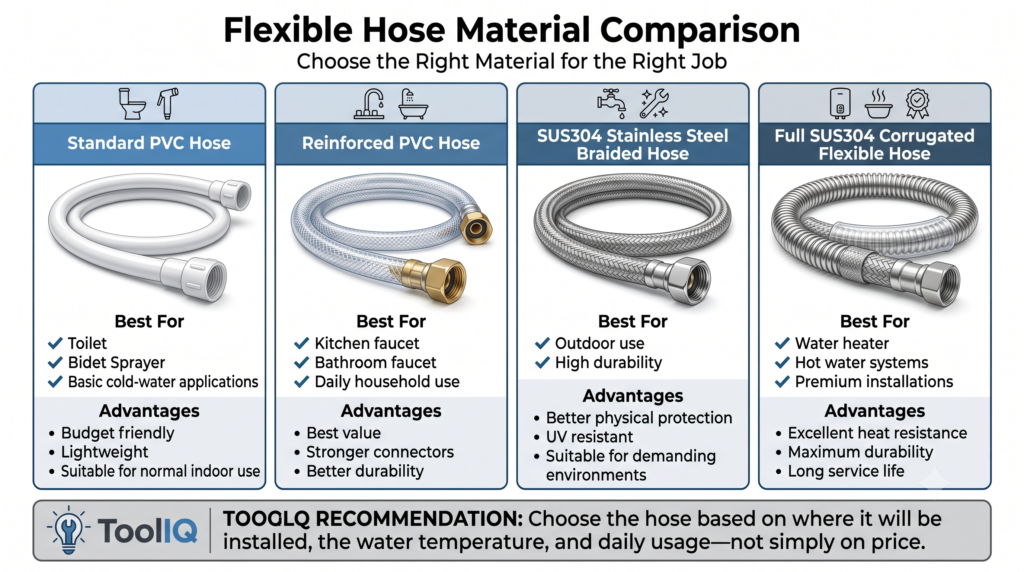
Choosing the right hose material is one of the most important decisions when buying a flexible hose.
Different materials offer different levels of durability, heat resistance, flexibility, and long-term reliability.
Standard PVC Hose
A standard PVC flexible hose is an affordable option for basic plumbing applications such as toilets and bidet sprayers.
It performs well in normal indoor conditions where hot water and heavy daily use are not major concerns.
Reinforced PVC Hose
A reinforced PVC hose with brass or stainless steel connectors is the best choice for most households.
Its reinforced construction provides better durability, while the metal connectors create a stronger and more reliable connection.
Full SUS304 Stainless Steel Hose
A full SUS304 stainless steel flexible hose is designed for demanding applications such as water heaters, hot water systems, and outdoor installations.
It offers excellent durability, corrosion resistance, and long-term reliability.
🛠 ToollQ Real-World Experience
Many homeowners assume the most expensive hose is always the best. In reality, the best hose is the one that matches the installation environment and daily usage.
💡 ToollQ Expert Tip
Don’t choose a flexible hose based on price alone.Choose the material that matches where and how the hose will be used.
Choose the Right Hose Length
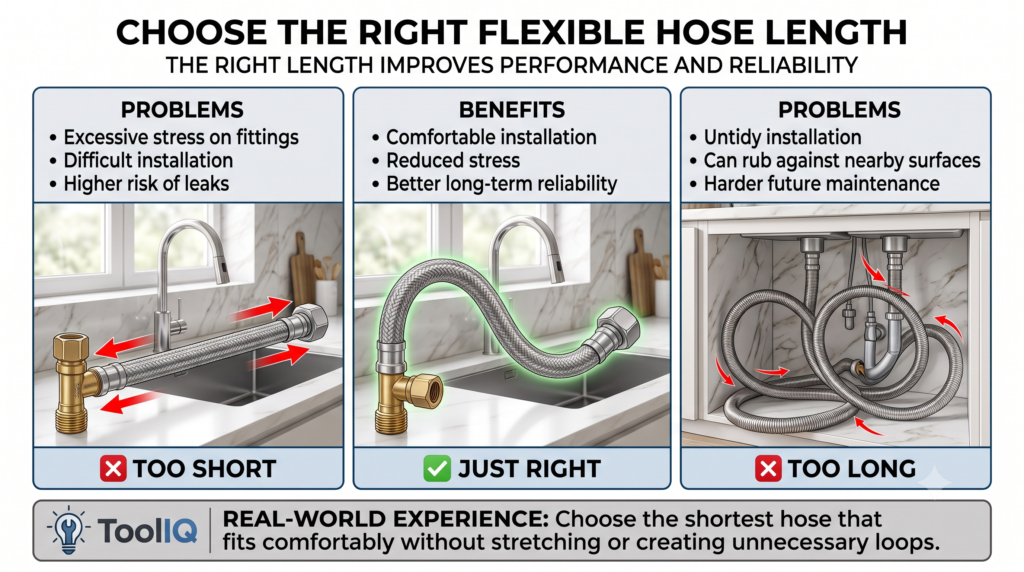
Choosing the correct hose length is just as important as choosing the right material.
A hose that is too short may place unnecessary stress on the connectors, while a hose that is too long can create loops, making the installation untidy and harder to maintain.
Use the Shortest Practical Length
Whenever possible, choose the shortest hose that can be installed comfortably without stretching or excessive bending.
A properly sized hose creates a cleaner installation and reduces unnecessary strain on the fittings.
Common Hose Lengths
Common flexible hose lengths include 12″, 18″, 24″, and 36″.
Always measure the required distance before buying instead of estimating by eye.
🛠 ToollQ Real-World Experience
We’ve seen many homeowners buy a hose that is longer than necessary because they think “longer is safer.” In reality, an excessively long hose can loop, rub against nearby surfaces, and make future maintenance more difficult.
💡 ToollQ Expert Tip
Measure first, then buy.A hose should be long enough for a comfortable installation—but no longer than necessary.
Choose the Right Connection Size
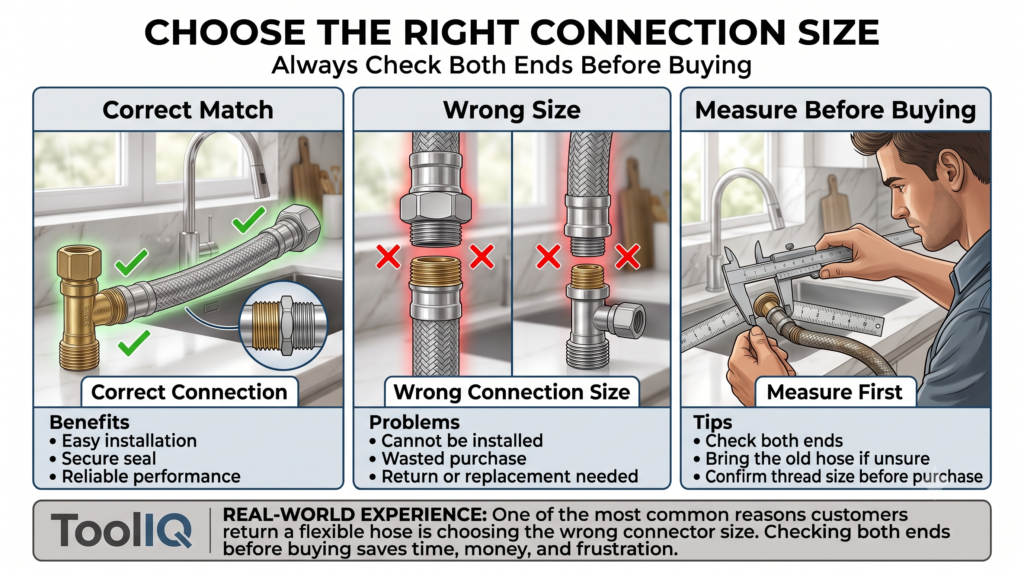
Even the best flexible hose won’t work if the connection size doesn’t match your plumbing fixtures.
Before buying, always check both ends of the hose to make sure they match your angle valve, faucet, toilet, or water heater connection.
Check Both Ends
Many flexible hoses have different connector sizes on each end.
Always verify both the inlet and outlet connections before making your purchase.
Don’t Guess the Size
Never assume your new hose uses the same fittings as the old one.
If you’re unsure, measure the existing connections or bring the old hose with you when buying a replacement.
🛠 ToollQ Real-World Experience
One of the most common reasons customers return a flexible hose is because the connector size doesn’t match. Spending a few minutes checking the fittings before buying can save a lot of time and frustration.
💡 ToollQ Expert Tip
Don’t rely on appearance alone.Always confirm the connector size before purchasing a flexible hose.
Common Buying Mistakes
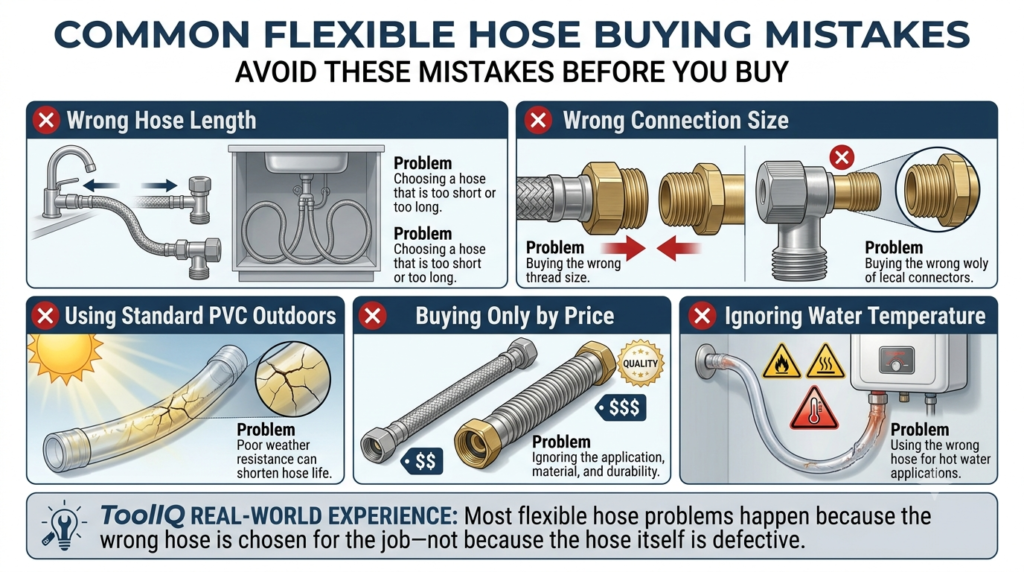
Many flexible hose problems happen because buyers choose the wrong hose for the application—not because the hose itself is defective.
Avoiding a few common mistakes can help prevent leaks, installation problems, and unnecessary replacement costs.
✘ Choosing the wrong hose length
✘ Buying the wrong connection size
✘ Using a standard PVC hose outdoors
✘ Buying based only on price
✘ Ignoring water temperature requirements
🛠 ToollQ Real-World Experience
One customer installed a standard PVC flexible hose outdoors because it was the cheapest option. After months of exposure to sunlight and rain, the hose became brittle and developed a leak. The problem wasn’t the price—it was using the wrong hose for the environment.
💡 ToollQ Expert Tip
Always match the flexible hose to its installation location, water temperature, and operating conditions—not simply to your budget.
Which Flexible Hose Should You Choose?
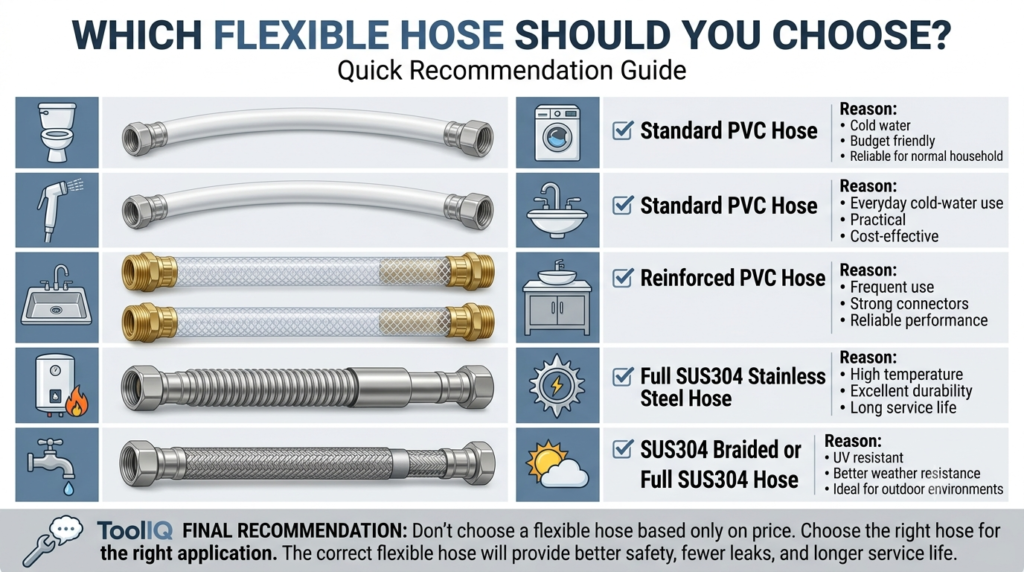
The best flexible hose isn’t always the most expensive one. It’s the one that matches your installation location, water temperature, and long-term needs.
Toilet & Bidet
For toilets, bidet sprayers, and other basic cold-water applications, a quality standard PVC flexible hose is usually a practical and cost-effective choice.
Kitchen & Bathroom
For kitchen and bathroom faucets, we usually recommend a reinforced PVC hose with brass or stainless steel connectors because it offers the best balance of durability, reliability, and value.
Water Heater & Hot Water
For water heaters and other hot water systems, a full SUS304 stainless steel flexible hose is the preferred choice because it is designed for higher temperatures and long-term reliability.
Outdoor Installations
For outdoor installations exposed to sunlight and changing weather conditions, choose a stainless steel braided or full SUS304 flexible hose instead of a standard PVC hose.
Best Overall Choice
For most homeowners, a reinforced PVC hose with brass or stainless steel connectors offers the best overall combination of performance, durability, and value for everyday household use.
🛠 ToollQ Real-World Experience
Many homeowners think buying the most expensive hose is always the safest choice. In reality, choosing the right hose for the right application is what prevents leaks and improves long-term reliability.
💡 ToollQ Final Recommendation
Choose your flexible hose based on where it will be installed—not simply on the material or price.The right hose in the right place will provide better performance, longer service life, and greater peace of mind.
Frequently Asked Questions
What is a flexible hose used for?
A flexible hose connects the water supply from an angle valve to plumbing fixtures such as kitchen faucets, bathroom faucets, toilets, bidet sprayers, and water heaters. It makes installation easier and allows for simple future maintenance.
Which flexible hose is best for a kitchen faucet?
For most kitchen faucets, we recommend a reinforced PVC hose with brass or stainless steel connectors because it offers an excellent balance of durability, reliability, and value for daily use.
Can I use a standard PVC flexible hose outdoors?
Standard PVC hoses are generally intended for indoor use. For outdoor installations exposed to sunlight and changing weather conditions, a stainless steel braided or full SUS304 stainless steel hose is usually a better long-term choice.
How do I choose the correct hose length?
Measure the distance before buying. Choose the shortest hose that can be installed comfortably without stretching, twisting, or excessive bending.
How long does a flexible hose last?
The lifespan depends on the hose material, installation environment, water quality, and usage. Regular inspection and replacing worn or damaged hoses can help prevent unexpected leaks.
💡 ToollQ Expert Advice
A flexible hose may be a small plumbing component, but choosing the correct one can prevent leaks, improve reliability, and reduce future maintenance costs.
Related Guides
Continue learning with these expert plumbing buying guides from ToollQ:
- Best Angle Valve (Shut-Off Valve) Buying Guide (2026)
- Best Kitchen Faucet Buying Guide (2026)
- Best Bathroom Faucet Buying Guide (2026)
- Best Shower Head Buying Guide (2026)
- Brass vs Stainless Steel Faucets: Which Material Is Better?
- SUS304 vs SUS201 Stainless Steel: What’s the Difference?
Conclusion
Choosing the right flexible hose isn’t about buying the most expensive option. It’s about selecting the right hose for your installation location, water temperature, connection size, and required length.
For most kitchens and bathrooms, a reinforced PVC hose with brass or stainless steel connectors offers the best balance of durability, reliability, and value. For hot water systems and demanding applications, a full SUS304 stainless steel hose is an excellent long-term investment.
By choosing the correct hose material, length, and connection size, you can reduce the risk of leaks, improve plumbing reliability, and avoid unnecessary replacement costs in the future.
💡 ToollQ Final Recommendation
Don’t choose a flexible hose based on price alone.
Choose the right hose for the right application.
A properly selected flexible hose will provide better performance, greater reliability, and a longer service life.
Quick Recommendation Table
| Application | Recommended Flexible Hose |
| Toilet | Standard PVC Hose |
| Bidet Sprayer | Standard PVC Hose |
| Kitchen Faucet | Reinforced PVC Hose with Brass or Stainless Steel Connectors |
| Bathroom Faucet | Reinforced PVC Hose with Brass or Stainless Steel Connectors |
| Water Heater | Full SUS304 Stainless Steel Hose |
| Outdoor | SUS304 Braided or Full SUS304 Stainless Steel Hose |
Choosing the right flexible hose for the correct application helps improve durability, reduce leaks, and extend the life of your plumbing system.
Looking for more plumbing buying guides?
Explore ToollQ’s expert guides to compare materials, avoid common mistakes, and choose the right plumbing products with confidence.