Why Does My Jet Pump Keep Losing Prime? Common Causes and Fixes (2026)
A jet pump that runs but cannot draw water has often lost its prime. This means the pump body or suction pipe no longer contains enough water for the pump to operate correctly.
The most common causes are a leaking foot valve, air entering through the suction pipe, a falling well-water level, or a damaged mechanical seal.
This guide explains how to identify the cause, safely re-prime the pump, and decide whether the problem requires a pipe repair, a new foot valve, or a replacement pump.
At a Glance
Pump loses prime after sitting:
Check the foot valve for water draining back into the well.
Water contains air or flows irregularly:
Inspect the suction pipe, fittings, unions, and priming plug for air leaks.
Problem appears during dry weather:
The pumping water level may have fallen below the intake.
Pump remains unable to draw water:
Stop the pump and check for suction or internal mechanical problems.
Why You Can Trust ToollQ
ToollQ’s recommendations are based on 15 years of experience with residential plumbing hardware, water pumps, valves, pipe fittings, and customer troubleshooting.
In many cases, the Jet Pump is not the first component that needs replacement. A failed Foot Valve or a small suction-side air leak can prevent an otherwise usable pump from drawing water.
Real Customer Experience
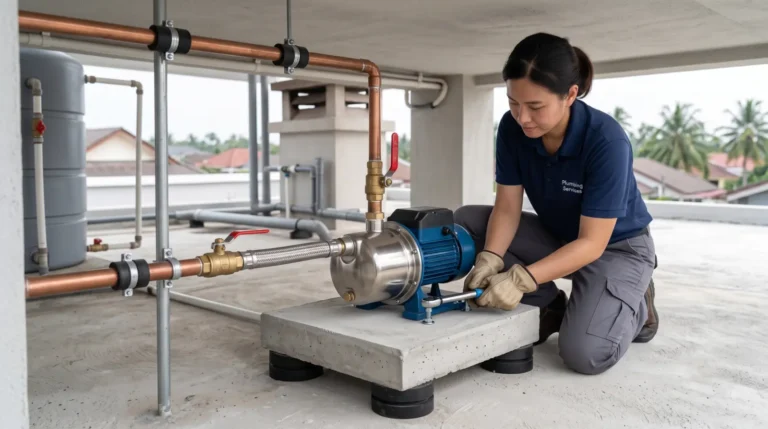
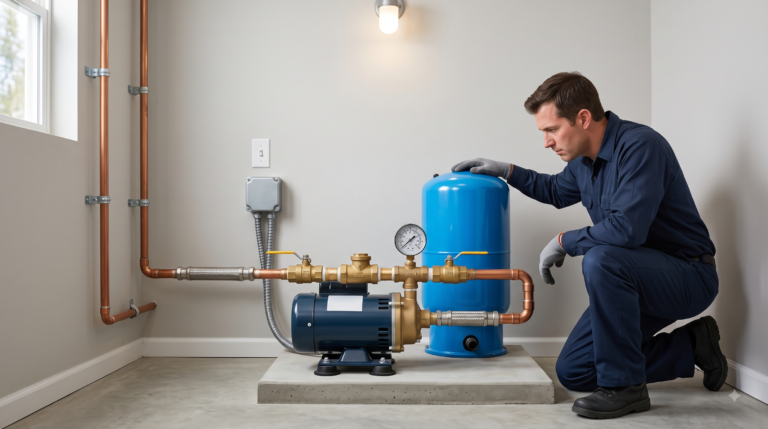
One customer used a Jet Pump and pressure tank to supply an entire home from a shallow well. The motor operated, but the pump could not draw any water.
Symptoms:
The pump body had lost its water, pressure could not build, and the discharge contained air.
Diagnosis:
The suction-pipe connection was leaking air, and the Foot Valve was no longer sealing properly.
Solution:
The Foot Valve was replaced, the suction connection was resealed, and the pump was re-primed.
Result:
The original Jet Pump returned to normal operation and could maintain its prime.
This case shows why replacing the entire pump should not be the first step. The complete suction system must be checked before deciding that the pump has failed.
What Does “Losing Prime” Mean?
A Jet Pump must contain water before it can draw water from a well. If water drains out of the pump body or suction pipe, air takes its place and the pump may run without producing water.
“Self-priming” does not mean that the pump can begin completely dry. The pump housing must normally be filled during initial installation and after a loss-of-prime event. Always follow the instructions supplied with your pump.
Four Common Causes of Lost Prime
1. The Foot Valve Does Not Seal
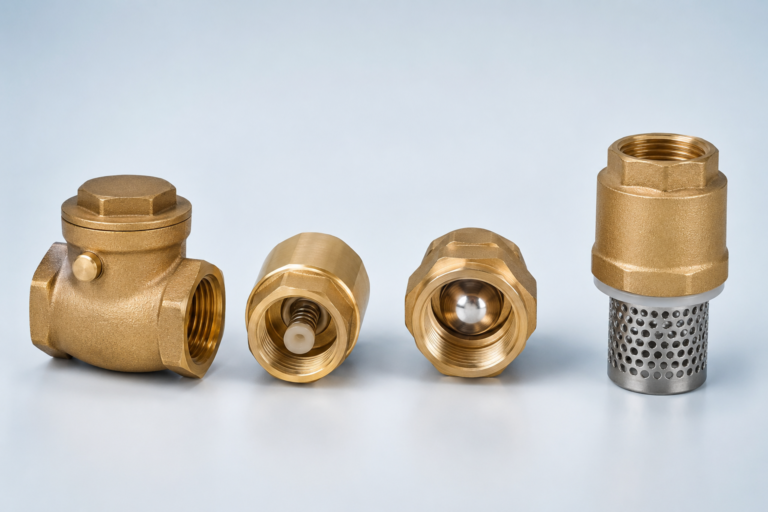
The Foot Valve keeps water inside the suction pipe when the pump stops. A worn seal, corrosion, or trapped debris can allow water to drain back into the well.
A common sign is a pump that works after priming but loses its water again after sitting unused.
2. The Suction Pipe Leaks Air
A loose threaded fitting, damaged pipe, leaking union, or poorly sealed priming plug can draw air into the suction line. Because this side operates under suction, it may pull in air without showing an obvious external water leak.
3. The Well-Water Level Has Fallen
The total well depth is not the same as the pumping water level. During dry weather or heavy water use, the water level may fall below the Foot Valve or beyond the pump’s practical suction capability.
4. The Mechanical Seal or Pump Is Damaged
A worn mechanical seal or damaged internal component may prevent the pump from creating adequate suction. This becomes more likely after dry running, overheating, or many years of service.
How to Diagnose the Problem
Start with the external suction system before dismantling or replacing the pump.
Check in This Order
- Switch off the power and allow the pump to stop completely.
- Open the priming port and check whether the pump body still contains water.
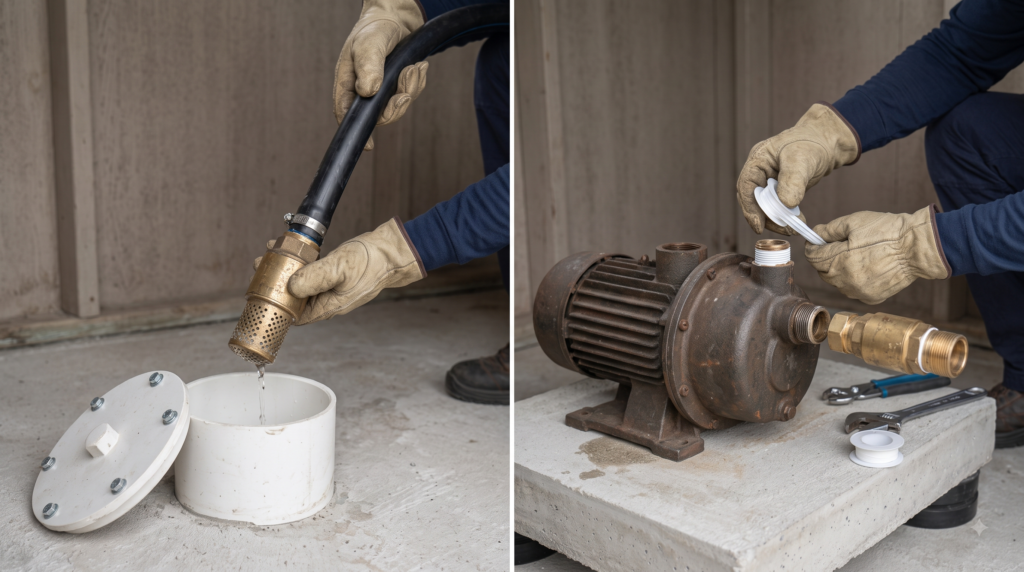
- Inspect the priming plug, unions, fittings, and suction pipe for looseness or damage.
- Re-prime the pump and observe whether pressure begins to build.
- Check for air or irregular flow at the discharge.
- Confirm the pumping water level and inspect the Foot Valve when necessary.
A falling pressure gauge alone does not prove that the Foot Valve is faulty. Water may also be escaping through a pipe, fixture, valve, or another part of the system.
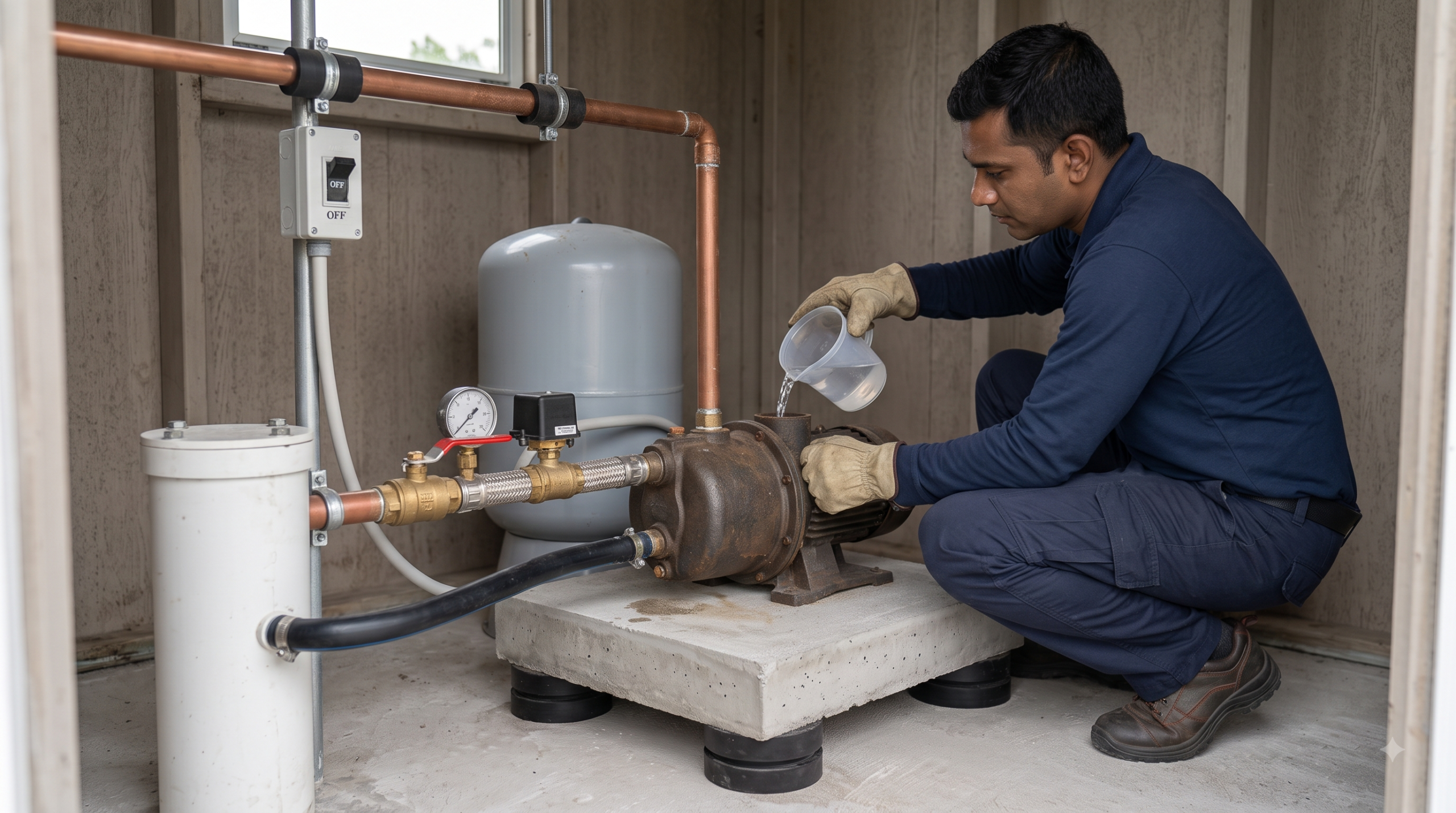
How to Re-Prime a Jet Pump
- Disconnect the electrical power.
- Open the priming port on top of the pump.
- Fill the pump body and suction pipe with clean water as completely as possible.
- Refit and seal the priming plug correctly.
- Confirm that all required valves are in their correct operating positions.
- Restore power and observe the discharge flow and pressure gauge.
Important Safety Warning
Do not allow a Jet Pump to continue running without water. Dry running can damage the mechanical seal, impeller, and motor. If the pump cannot establish flow, switch it off and find the cause.
How to Choose a Replacement Foot Valve
For many residential shallow wells, a Brass Foot Valve is a practical choice because it is durable and widely available. However, material alone does not guarantee reliable operation.
- Size: Match the suction pipe and confirm the correct thread standard.
- Seal quality: Choose a valve that closes reliably and is suitable for the water conditions.
- Strainer: It should protect the pump without becoming easily blocked.
- Direction: Install the valve so water flows upward toward the pump.
- Position: Keep it submerged but not directly against the sandy or muddy well bottom.
ToollQ Pro Tip
Replacing only the Foot Valve may not solve the problem if the suction pipe also leaks air. Inspect both parts before reassembling the system.
Common Mistakes
- Allowing the pump to run dry for an extended period.
- Repeatedly adding water without finding where the prime is being lost.
- Replacing the complete pump before inspecting the suction system.
- Replacing the Foot Valve but ignoring leaking pipe connections.
- Using sealant as a temporary repair on a cracked suction pipe.
Repair or Replace the Jet Pump?
Repair the System When:
- The Foot Valve or suction connection is the main problem.
- The motor and pump body remain in usable condition.
- The pump returns to normal after the leak is repaired and it is re-primed.
Consider Replacement When:
- The motor has burned out or the pump body is cracked.
- Several major components are damaged.
- The pump is old and repair parts are difficult to obtain.
- The original pump type or capacity is unsuitable for the well system.
Frequently Asked Questions
Why does my Jet Pump lose prime overnight?
Water may be draining back through a leaking Foot Valve or suction-pipe connection. Check the entire suction system instead of assuming that the pump is damaged.
How can I tell whether the Foot Valve is faulty?
A pump that works after priming but loses its water after sitting may have a leaking Foot Valve. Final confirmation may require inspecting the valve and suction pipe.
Can an air leak exist without leaking water?
Yes. A suction-side joint can draw air inward while the pump operates without producing an obvious external water leak.
Can a pressure tank cause a Jet Pump to lose prime?
A damaged or incorrectly charged pressure tank usually causes frequent cycling rather than directly draining the pump. However, cycling can add wear, so the pressure tank should also be checked.
Should I keep adding water if the pump will not prime?
No. Repeated priming without repairing a leaking Foot Valve, suction pipe, or low-water problem will not provide a lasting solution.
Related Guides
Choosing between a surface pump and a pump installed inside the well? Read our Jet Pump vs Submersible Pump Guide.
To understand how one-way valves prevent water from draining backward, read our Best Check Valve Buying Guide.
If the pump starts and stops repeatedly, read Why Does My Booster Pump Keep Cycling?.
Final Recommendation
When a Jet Pump runs but cannot draw water, switch it off and inspect the suction system before replacing the pump. Check whether the pump body still contains water, then inspect the Foot Valve, suction pipe, connections, and well-water level.
For many residential shallow-well systems, replacing a failed Brass Foot Valve and properly resealing the suction pipe can restore normal operation. If the pump still cannot establish pressure after the water supply and suction system are corrected, have its seal, impeller, and motor inspected.