How to Size a Water Pressure Booster Pump: Flow, Pressure and Total Head Explained (2026)
A water pressure booster pump must provide enough flow at the pressure your home requires. Choosing by horsepower alone can result in weak pressure, excessive noise, frequent cycling, or unnecessary energy use.
Correct sizing starts with simultaneous water demand, available inlet pressure, required outlet pressure, and total head. Pipe size, vertical lift, and friction loss also affect how much water the pump can actually deliver.
This guide explains GPM, PSI, total head, and pump curves in simple terms. It will help you collect the right information before comparing booster pump models or requesting professional sizing.
At a Glance
Estimate simultaneous flow:
Add the GPM of the fixtures that may operate at the same time.
Measure available pressure:
Check the inlet pressure while water is flowing—not only when every fixture is closed.
Determine the required boost:
Include the desired pressure, vertical lift, and pressure loss through the pipes.
Check the pump curve:
Choose a pump that delivers the required GPM at the calculated total head.
Why Correct Booster Pump Sizing Matters
A pump that is too small may provide acceptable pressure at one faucet but struggle when several fixtures operate together. The result is weak showers, slow filling, and unstable whole-house pressure.
A pump that is too large can create excessive pressure, noise, water hammer, leaks, or frequent cycling. It may also cost more to buy and operate without improving normal household comfort.
In ToollQ’s plumbing and hardware experience, many sizing mistakes happen because buyers compare horsepower before checking flow and total head. Horsepower is only useful after the required operating point has been identified.
Information You Need Before Sizing
Collect the following information before comparing pump models. Estimates can help with initial planning, but measured values produce a more reliable result.
- Water source: Storage tank, municipal supply, or shallow well.
- Available inlet pressure: Measure the PSI while water is flowing.
- Simultaneous fixtures: Identify which showers, faucets, and appliances may operate together.
- Highest fixture: Measure the vertical distance from the pump to the highest outlet.
- Pipe system: Check the pipe size, approximate length, fittings, valves, and restrictions.
- Required pressure: Decide how much pressure should remain at the fixtures during normal use.
Important:
Static pressure measured with every fixture closed may look acceptable. Measure inlet pressure while water is flowing to understand the pressure actually available during use.
Step 1: Estimate Simultaneous Flow (GPM)
Flow is measured in gallons per minute (GPM). Add the rated flow of the fixtures that may realistically operate at the same time.
Use the actual flow ratings shown on your showerheads, faucets, and appliances whenever possible. Do not assume that every fixture in the house has the same flow rate.
Simple Flow Example
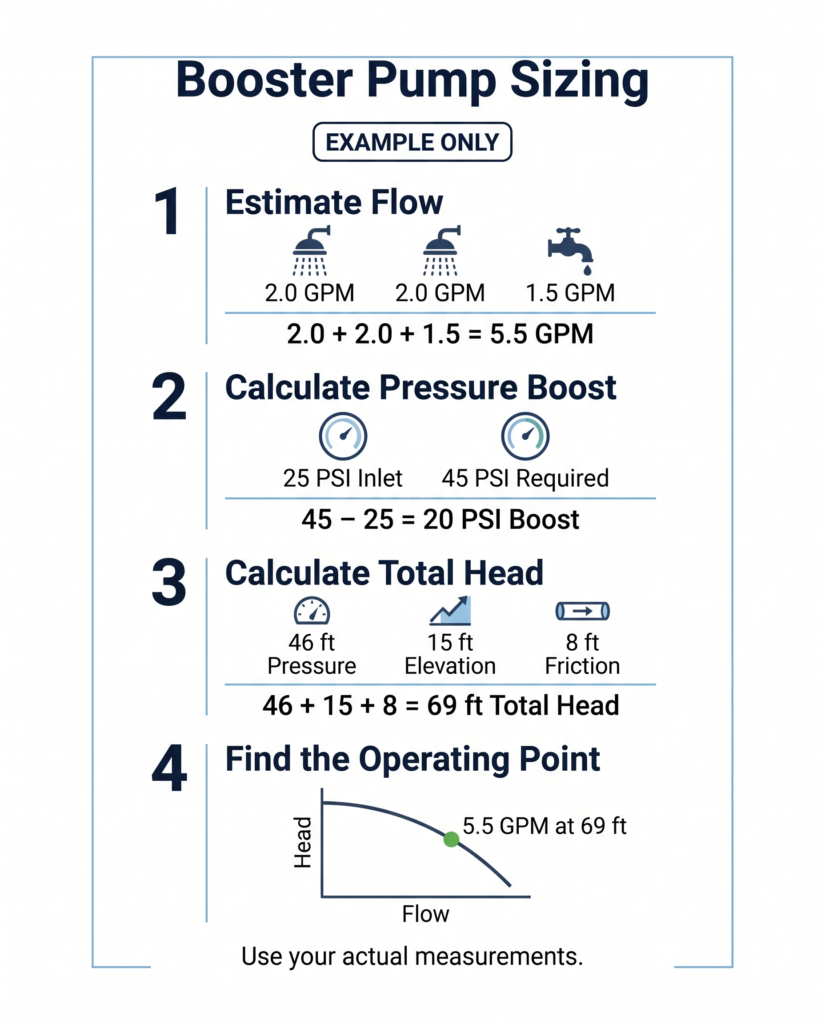
Two showers at 2.0 GPM each + one faucet at 1.5 GPM = 5.5 GPM (20.8 L/min)
The booster pump should provide at least this flow at the required total head—not only under maximum-flow or zero-head conditions.
Do not add every fixture unless they may truly operate together. An unrealistic demand estimate can result in an oversized and more expensive pump.
Step 2: Determine the Required Pressure Boost
Measure the inlet pressure at the pump while the expected water demand is flowing. This dynamic pressure is more useful for sizing than static pressure measured with every outlet closed.
Next, decide the pressure required during use. Follow local plumbing requirements and confirm that pipes, faucets, flexible hoses, valves, and water heaters can safely handle the selected pressure.
Simple Pressure Example
Desired pressure − available inlet pressure = required pressure boost
For example, increasing flowing pressure from 25 PSI (1.7 bar) to 45 PSI (3.1 bar) requires approximately 20 PSI (1.4 bar) of pressure boost before accounting for elevation and pipe loss.
Do not select the highest pressure available. Excessive pressure can increase noise, water hammer, leaks, component wear, and frequent pump cycling.
Step 3: Calculate Total Head
Total head represents the complete resistance the pump must overcome. It is measured in feet of head (ft) or meters of head (m), not horsepower.
- Pressure head: Every 1 PSI is approximately 2.31 ft of head (0.70 m).
- Elevation head: Measure the vertical rise from the pump to the highest fixture.
- Friction loss: Include resistance from pipe length, pipe size, fittings, valves, and filters.
- Suction lift: Add the lift and suction-side losses when the pump draws water from below its inlet.
Simple Total Head Example
20 PSI pressure boost × 2.31 = 46 ft of pressure head
46 ft pressure head + 15 ft elevation + 8 ft estimated friction loss = approximately 69 ft of total head (21 m).
The example operating point is therefore approximately 5.5 GPM at 69 ft of head.
Friction loss varies with flow, pipe diameter, length, and fittings. Use a reliable pipe-loss chart, manufacturer sizing tool, or qualified technician instead of guessing when the system is complex.
Step 4: Use the Pump Curve
A pump curve shows how much flow a pump can provide at different head levels. Flow is normally shown on the horizontal axis, while head is shown on the vertical axis.
- Find your required flow: Locate the calculated GPM on the horizontal axis.
- Find your total head: Locate the calculated feet of head on the vertical axis.
- Check the operating point: Choose a pump curve that meets this point within the manufacturer’s recommended operating range.
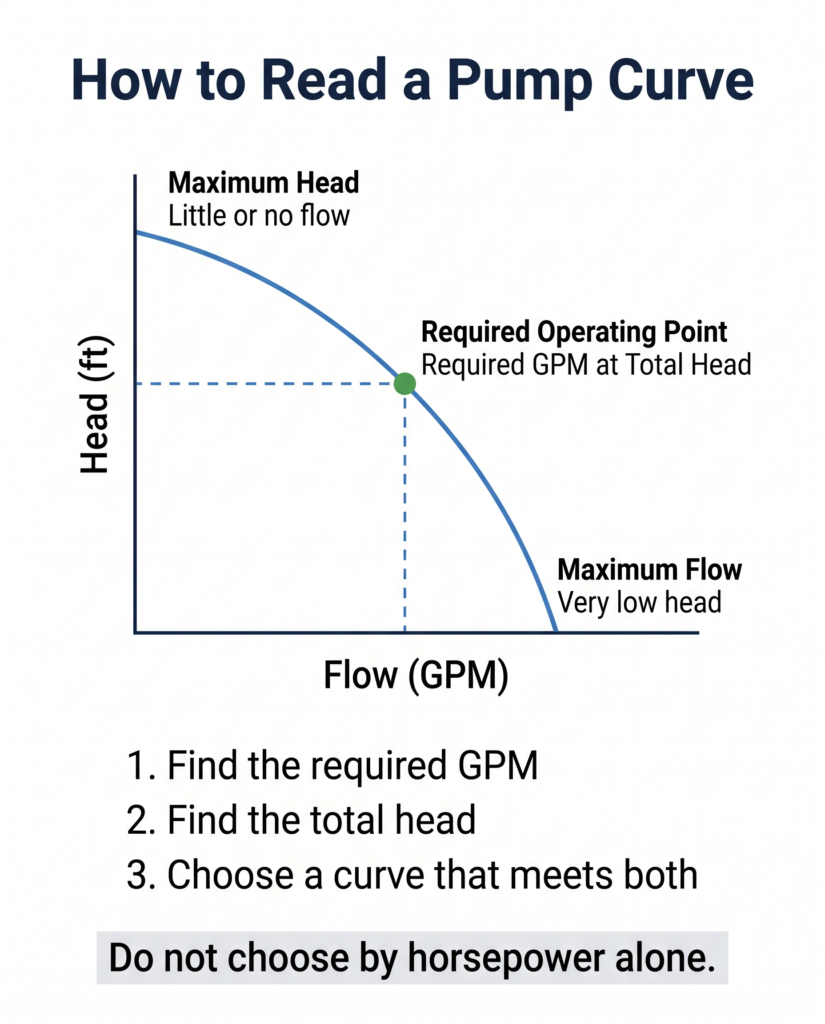
Maximum flow is usually measured at very low head, while maximum head occurs at little or no flow. Neither value alone shows how the pump will perform in your home.
ToollQ Buying Rule
Compare pumps at the required GPM and total head. Do not compare only horsepower, maximum flow, or maximum pressure.
How Pump Type Affects Sizing
The required flow and total head remain important for every pump, but the control method changes how the system responds to different water demands.
Automatic Household Booster Pump
Confirm that the pump can start at the expected minimum flow and still provide enough pressure when several fixtures operate together. A basic model may perform well at one shower but lose pressure as demand increases.
Variable-Speed Constant-Pressure Pump
Choose a model that can adjust across the expected minimum and maximum flow range. It should maintain the selected pressure without operating continuously at its highest speed.
Jet Pump with a Pressure Tank
Include suction lift and suction-pipe loss in the total head. The pressure tank and pressure-switch settings must also suit the pump to reduce frequent cycling.
Common Booster Pump Sizing Mistakes
A sizing mistake can leave the home with poor pressure or create new plumbing problems. Avoid these common errors.
- Choosing by horsepower alone: Horsepower does not show the available GPM at the required head.
- Using only static pressure: Inlet pressure may fall significantly when several fixtures operate.
- Adding every fixture: Unrealistic simultaneous demand can produce an oversized pump.
- Ignoring elevation and friction: A pump may provide less pressure at upper-floor fixtures than expected.
- Reducing the pipe size: Undersized pipes can restrict flow, increase pressure loss, and create noise.
- Buying extra pressure for safety: Excessive pressure can cause leaks, water hammer, component damage, and frequent cycling.
A larger pump cannot correct an empty tank, insufficient well supply, clogged pipe, major leak, or badly restricted plumbing. Diagnose the water system before increasing pump size.
When to Get Professional Pump Sizing
A simple residential system can often be estimated using measured flow, pressure, elevation, and a manufacturer’s pump curve. Professional sizing is safer when the system has additional variables.
- The pump will connect directly to a municipal water supply.
- The home has several floors or many fixtures that may operate together.
- The available inlet pressure or water-supply flow is unstable.
- The pump must draw water through a suction line or from a well.
- The system uses variable-speed controls, several pumps, or complex electrical equipment.
Direct municipal boosting may be restricted by local utility or plumbing requirements. Confirm the rules before buying or installing the pump.
Frequently Asked Questions
How many GPM should my booster pump provide?
Add the rated flow of the fixtures likely to operate at the same time. Then choose a pump that can deliver this GPM at the required total head.
Should I choose a 0.75 HP or 1 HP booster pump?
Do not decide by horsepower alone. Compare both models at your required GPM and total head because pumps with the same horsepower can have different performance curves.
How much pressure boost do I need?
Subtract the available inlet pressure under flowing conditions from the required operating pressure. Then account for elevation, friction loss, and any suction lift.
Can a booster pump be too large?
Yes. An oversized pump may create excessive pressure, noise, water hammer, leaks, higher energy use, and frequent cycling.
Related Guides
Before selecting a pump type, read our Best Water Pressure Booster Pump Buying Guide to compare automatic, variable-speed, and jet pump systems.
If your existing pump starts and stops every few seconds, read Why Does My Booster Pump Keep Cycling? before replacing or resizing it.
Final Recommendation
Size a booster pump by simultaneous flow and total head—not horsepower alone. Measure the inlet pressure while water is flowing, include elevation and pipe loss, and identify the required operating point in GPM and feet of head.
Choose a pump whose performance curve meets that operating point within the manufacturer’s recommended range. If the water source, friction loss, electrical requirements, or local installation rules are unclear, obtain professional sizing before purchasing.