Best Angle Valve (Shut-Off Valve) Buying Guide (2026)
Many homeowners don’t think about angle valves until one starts leaking or needs to be replaced.
Choosing the right angle valve isn’t just about price. The installation location, material, and connection type all affect long-term reliability.
After more than 15 years in the plumbing and hardware industry, I’ve found that the first question isn’t “Which material is best?” It’s “Where will the angle valve be installed?” The right recommendation depends on whether it’s for a bathroom, kitchen, outdoor tap, or water heater connection.
In this guide, you’ll learn how to choose the right angle valve based on real plumbing experience, helping you avoid leaks, choose the correct material, and make a smarter long-term investment.
Quick Answer
The best angle valve depends on where it will be installed. Different locations have different requirements for safety, durability, and long-term performance.
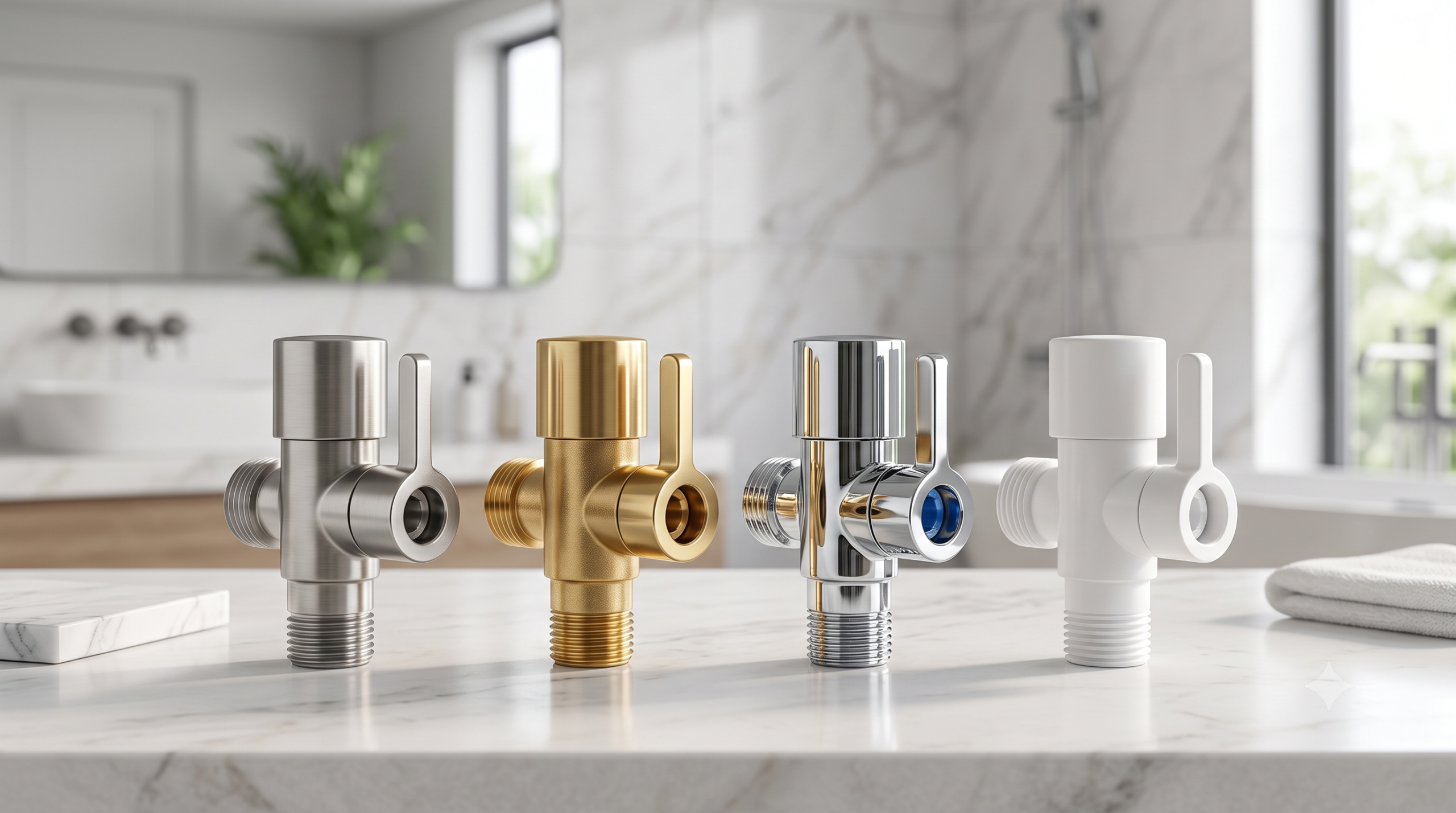
For most bathrooms and kitchens, a high-quality SUS304 stainless steel angle valve is an excellent choice. For outdoor installations, brass remains a reliable option. For connections between a shower and a water heater, a quality virgin PVC angle valve is often the safest choice because it does not conduct electricity.
✔ Bathroom → SUS304 Stainless Steel
✔ Kitchen → SUS304 Stainless Steel
✔ Outdoor / Garden → Brass
✔ Shower to Water Heater → Quality Virgin PVC
Before buying an angle valve, always consider where it will be installed, how often it will be used, and whether the connection size matches your plumbing system.
Why You Can Trust ToollQ
At ToollQ, we don’t recommend an angle valve based on price or appearance alone.
The first question we ask is where the angle valve will be installed because different locations require different materials, connection types, and levels of durability.
Our recommendations are based on more than 15 years of real plumbing and hardware industry experience, helping homeowners choose the right valve instead of simply buying the most expensive one.
Before making a recommendation, we always ask a few simple questions:
✔ Where will the angle valve be installed?
✔ Is it for a kitchen, bathroom, outdoor tap, or water heater?
✔ How often will the valve be used?
✔ What is your budget?
These simple questions help us recommend the right angle valve for your specific installation instead of giving the same answer to everyone.
The ToollQ Buying Method
Choosing the right angle valve isn’t just about buying the most expensive one.
We first identify where the valve will be installed, then check the material, connection size, thread length, and expected usage before making a recommendation.
Our buying process follows these five simple steps:
✔ Installation location
✔ Material selection
✔ Connection size
✔ Thread length
✔ Daily usage
Following these five steps helps you choose the right angle valve, avoid leaks, and reduce future maintenance costs.
🛠 ToollQ Real-World Experience
One of the most common mistakes we see is that customers choose an angle valve before checking where it will be installed. In reality, the installation location should always come first because it determines the most suitable material and valve type.
💡 ToollQ Expert Tip
Don’t start by asking which material is best.
Start by asking where the angle valve will be installed.
Choose the Right Installation Location
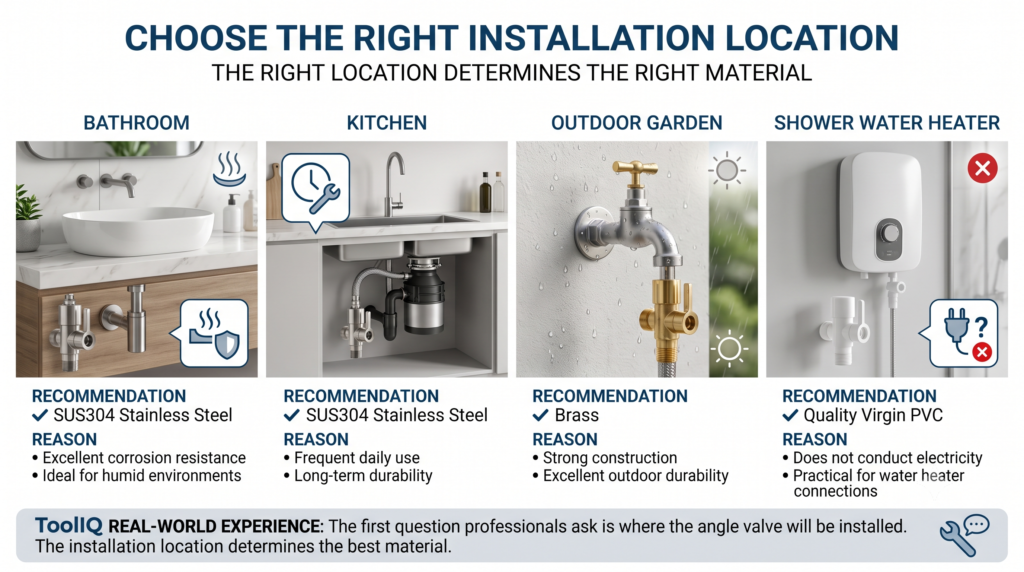
The installation location is the most important factor when choosing an angle valve.
Different locations have different requirements for durability, safety, corrosion resistance, and daily usage.
Bathroom
For most bathroom installations, we usually recommend a high-quality SUS304 stainless steel angle valve because it offers excellent corrosion resistance and performs well in humid environments.
Kitchen
Kitchen angle valves are used frequently, so durability is important. A quality SUS304 stainless steel angle valve is usually the best long-term choice.
Outdoor
For outdoor installations, a quality brass angle valve is often the better choice because it performs well in outdoor environments and offers excellent durability.
Shower Water Heater Connection
For the connection between a shower and a water heater, we often recommend a quality virgin PVC angle valve because it does not conduct electricity, making it a practical choice for this application.
🛠 ToollQ Real-World Experience
The first question we ask every customer is where the angle valve will be installed. The answer determines which material is the most suitable—not the other way around.
💡 ToollQ Expert Tip
Never choose an angle valve based on material alone. Always match the valve to its installation location.
Choose the Right Material
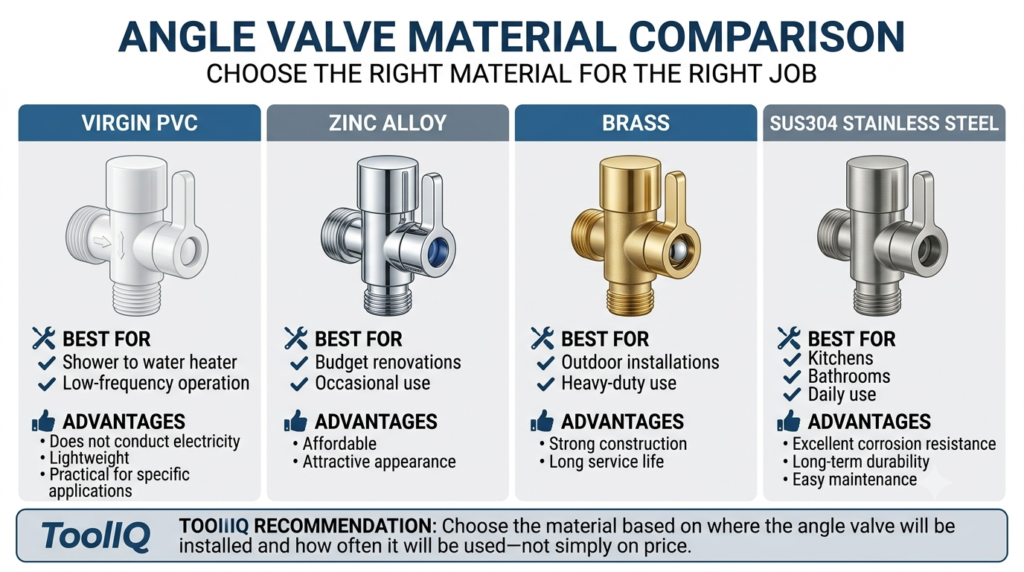
The best angle valve material depends on how often it will be used and where it will be installed.
A valve that is rarely operated doesn’t always need the most expensive material, while a valve used every day should offer excellent durability and long-term reliability.
PVC
Quality virgin PVC angle valves are a practical choice for certain applications, especially between a shower and a water heater because they do not conduct electricity.
They are also suitable for installations where the valve is rarely operated.
Zinc Alloy
Zinc alloy angle valves offer an attractive appearance at an affordable price.
They are suitable for light-duty applications where the valve is not used frequently.
Brass
Brass angle valves are highly durable and perform well under frequent use.
They are commonly recommended for outdoor installations because of their strength and long service life.
SUS304 Stainless Steel
SUS304 stainless steel is our preferred choice for most kitchens and bathrooms because it offers excellent corrosion resistance, durability, and long-term reliability.
For homeowners planning to stay in their home for many years, it is often the best long-term investment.
🛠 ToollQ Real-World Experience
If we were choosing angle valves for our own home, we would install SUS304 stainless steel throughout the house. The main exceptions are outdoor installations, where brass is an excellent option, and shower-to-water-heater connections, where we often recommend a quality virgin PVC angle valve.
💡 ToollQ Expert Tip
Choose the material based on how the valve will be used—not simply on its price. The right material in the right location will provide the best long-term performance.
Choose the Right Connection Size
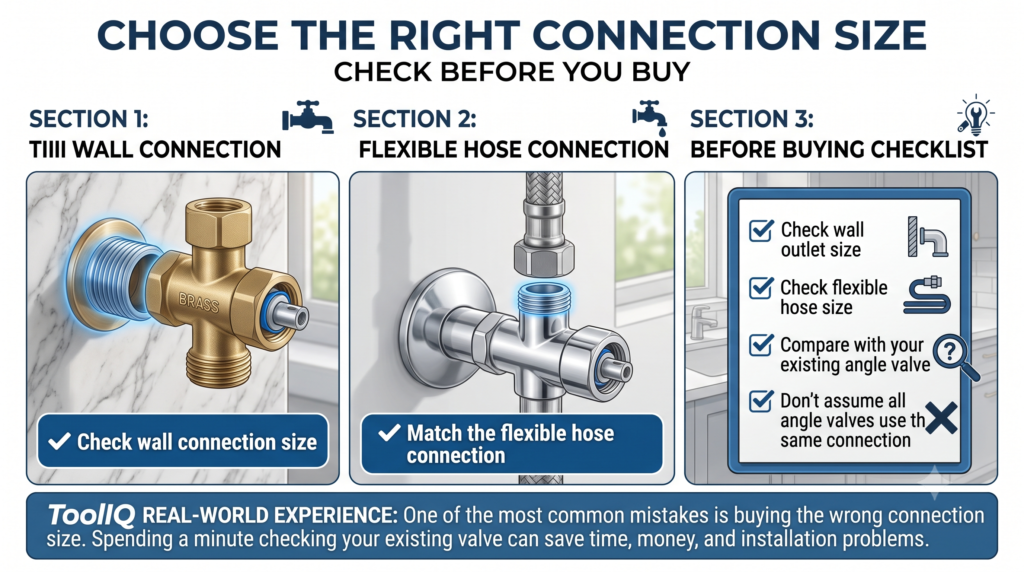
Choosing the correct connection size is just as important as choosing the right material.
Even the highest-quality angle valve won’t work properly if it doesn’t match your plumbing connection or flexible hose.
Check the Thread Size
The most common angle valve connection size is 1/2 inch, but always check your existing plumbing and flexible hose before buying.
Never assume all angle valves use the same connection size.
Match Your Flexible Hose
Make sure the outlet connection matches the flexible hose you’re using.
A mismatched connection can delay installation and may require additional adapters.
🛠 ToollQ Real-World Experience
One of the most common problems we see is customers buying the wrong size. Many assume every angle valve is the same, but checking the connection size before purchasing can save time, money, and unnecessary frustration.
💡 ToollQ Expert Tip
Before buying an angle valve, check both the wall outlet connection and the flexible hose connection. A few minutes of checking can prevent installation problems later.
Check the Thread Length
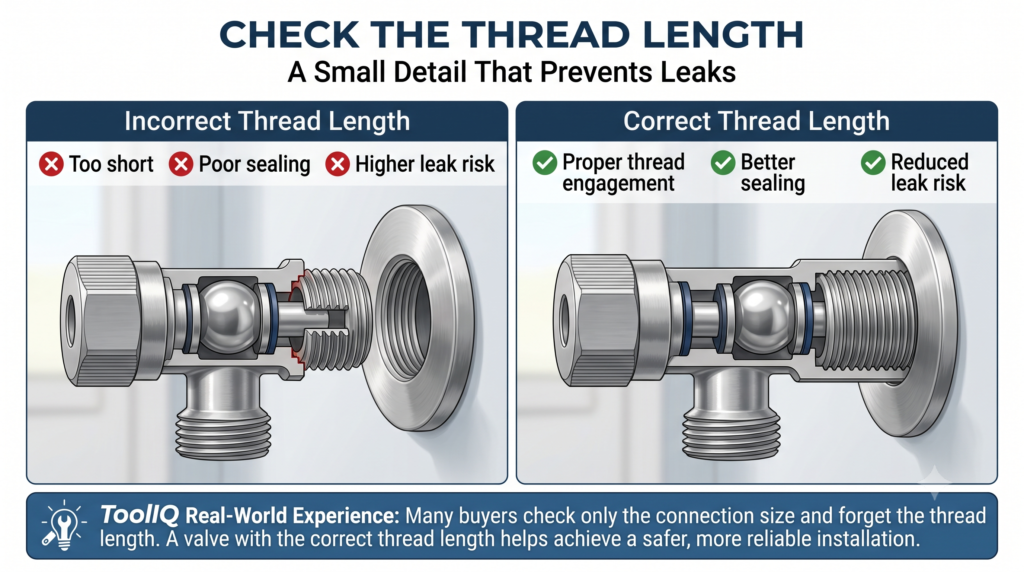
Many homeowners focus on the connection size but overlook the thread length.
An angle valve with threads that are too short may not seal properly, increasing the risk of leaks after installation.
Choose the Right Thread Length
Before buying an angle valve, compare the thread length with your existing valve.
Choosing the correct thread length helps create a secure connection and makes installation much easier.
Avoid Future Leaks
A quality angle valve with the correct thread length helps achieve a better seal and reduces the risk of water leaks over time.
🛠 ToollQ Real-World Experience
We’ve seen many customers buy the correct connection size but overlook the thread length. A valve with threads that are too short can be difficult to install properly and may lead to leaks.
💡 ToollQ Expert Tip
Don’t compare connection size alone. Always compare both the connection size and the thread length before buying a replacement angle valve.
Common Buying Mistakes
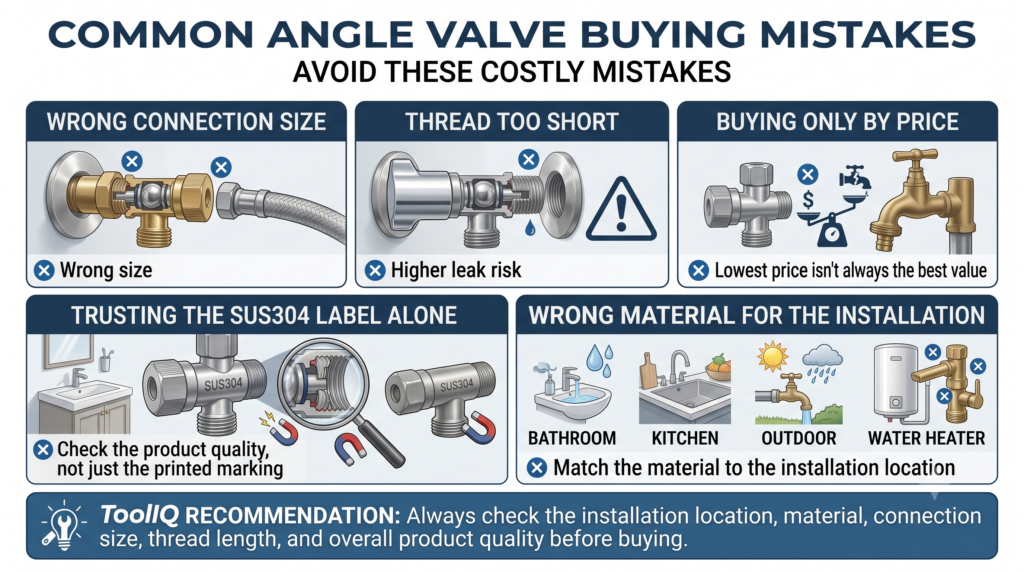
Many angle valve problems start before installation because buyers choose the wrong product.
Avoiding a few common mistakes can save you from leaks, replacement costs, and unnecessary frustration.
✘ Choosing the wrong connection size
✘ Ignoring the thread length
✘ Buying based only on the lowest price
✘ Trusting the “SUS304” label without checking product quality
✘ Choosing the wrong material for the installation location
🛠 ToollQ Real-World Experience
One mistake we see quite often is customers assuming that an angle valve is genuine SUS304 simply because “SUS304” is printed on the body.
In reality, some low-quality products may use chrome-plated plastic or other inexpensive materials while displaying misleading markings.
Always buy from a trusted manufacturer or supplier instead of relying only on the printed label.
💡 ToollQ Expert Tip
Don’t judge an angle valve by its appearance or printed markings alone. Check the material, workmanship, connection size, thread length, and buy from a reputable brand or supplier.
Which Angle Valve Should You Choose?
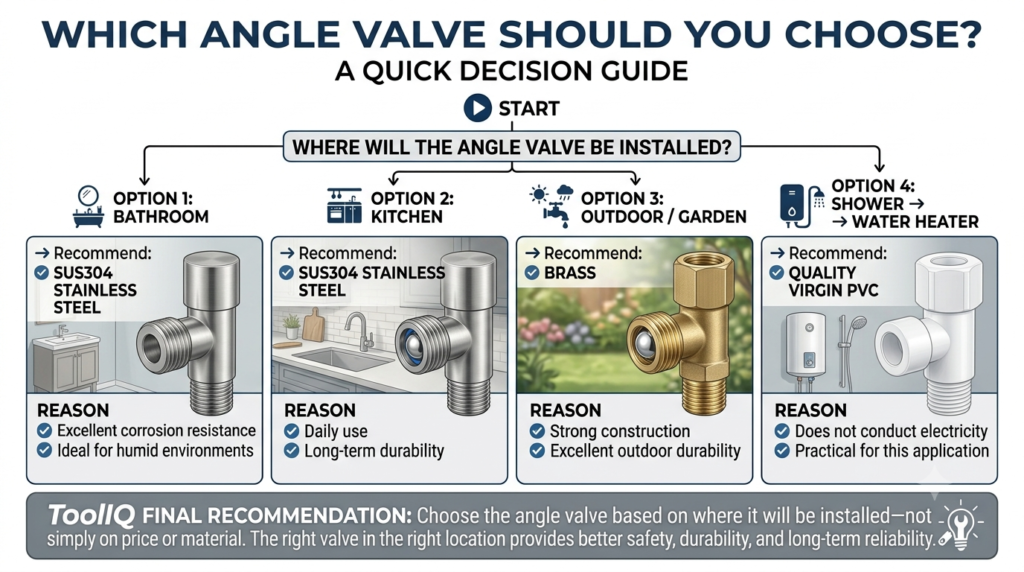
The best angle valve isn’t simply the most expensive one. It’s the one that matches your installation location, usage, and long-term needs.
Bathroom
For bathrooms, we usually recommend a high-quality SUS304 stainless steel angle valve because it offers excellent corrosion resistance and performs well in humid environments.
Kitchen
For kitchens, a quality SUS304 stainless steel angle valve is often the best long-term choice because it can handle frequent daily use and requires minimal maintenance.
Outdoor
For outdoor installations, a quality brass angle valve is an excellent choice thanks to its strength and long-term durability.
Shower to Water Heater
For the connection between a shower and a water heater, we often recommend a quality virgin PVC angle valve because it does not conduct electricity and is a practical choice for this application.
Whole House
If we were choosing angle valves for our own home, we would install SUS304 stainless steel angle valves throughout the house. The main exceptions are outdoor installations, where brass is an excellent option, and shower-to-water-heater connections, where we often recommend quality virgin PVC.
🛠 ToollQ Real-World Experience
Every home is different, so we don’t recommend the same angle valve to everyone. We first look at where it will be installed, how often it will be used, and then recommend the most suitable material.
💡 ToollQ Final Recommendation
Don’t ask which angle valve is the best.
Ask which angle valve is best for where you’re installing it.
That’s how professionals choose the right angle valve.
Frequently Asked Questions
What is an angle valve used for?
An angle valve controls the water supply to plumbing fixtures such as faucets, toilets, basins, and water heaters. It allows you to shut off the water to a single fixture without turning off the main water supply.
What is the best material for an angle valve?
There isn’t one best material for every situation. SUS304 stainless steel is an excellent choice for most kitchens and bathrooms, brass performs well outdoors, and quality virgin PVC is often recommended for shower-to-water-heater connections.
How do I know which angle valve size I need?
Check both the wall outlet connection and the flexible hose connection before buying. Never assume every angle valve uses the same connection size.
Why do angle valves leak?
Leaks can be caused by the wrong connection size, incorrect thread length, poor installation, or low-quality materials. Choosing the correct valve and installing it properly helps prevent future leaks.
Should I replace all the angle valves in my house?
If you’re renovating your home or replacing old plumbing fixtures, replacing aging angle valves is often a smart investment. New, high-quality valves can improve reliability and reduce the risk of unexpected leaks.
💡 ToollQ Expert Advice
The best angle valve isn’t the most expensive one.
It’s the one that matches your installation location, connection size, and daily usage.
Related Guides
Continue learning with these expert plumbing guides from ToollQ:
- Best Kitchen Faucet Buying Guide (2026)
- Best Bathroom Faucet Buying Guide (2026)
- Best Shower Head Buying Guide (2026)
- Brass vs Stainless Steel Faucets: Which Material Is Better?
- SUS304 vs SUS201 Stainless Steel: What’s the Difference?
Conclusion
Choosing the right angle valve starts with understanding where it will be installed—not simply choosing the most expensive material.
For most kitchens and bathrooms, a high-quality SUS304 stainless steel angle valve is an excellent long-term choice. For outdoor installations, brass remains a reliable option. For shower-to-water-heater connections, a quality virgin PVC angle valve is often the safest and most practical solution.
By choosing the correct material, connection size, and thread length, you can reduce the risk of leaks, improve reliability, and avoid unnecessary maintenance in the future.
💡 ToollQ Final Recommendation
Don’t choose an angle valve based on price alone.
Choose the right valve for the right installation location.
That’s how professionals build a plumbing system that lasts.
Looking for more plumbing buying guides?
Explore ToollQ’s expert guides to compare materials, avoid common mistakes, and choose the right products with confidence.