How to Reduce Booster Pump Noise and Vibration: Common Causes and Fixes (2026)
A water pressure booster pump should produce a steady operating sound, but loud humming, rattling, knocking, or vibration may indicate an installation or mechanical problem.
Common causes include a loose mounting base, unsupported pipes, missing flexible connectors, air entering the suction line, insufficient water supply, or worn internal parts. Installing an oversized pump too close to a bedroom can also make normal operating noise difficult to tolerate.
This guide explains how to identify the source of booster pump noise, which problems can be corrected through installation improvements, and when the pump should be inspected or replaced.
At a Glance
Continuous humming or floor vibration:
Check the mounting base, rubber pads, pipe supports, and installation location.
Rattling or pipe vibration:
Look for loose fittings, unsupported pipes, or rigid connections transferring vibration to the wall.
Irregular or crackling sound:
Check for suction-side air leaks, insufficient water supply, or dry-running conditions.
Grinding, overheating, or breaker trips:
Stop the pump and have the motor, bearings, impeller, and electrical system inspected.
Normal vs Abnormal Booster Pump Noise
A booster pump normally produces a steady motor hum and some water-flow sound while operating. The sound should remain consistent and stop when the pump shuts down.
A sudden increase in noise, strong vibration, rattling pipes, grinding, or an irregular sound should be investigated. Even a mechanically healthy pump can sound excessively loud when vibration travels through the floor, pipes, or nearby walls.
Real Customer Experience
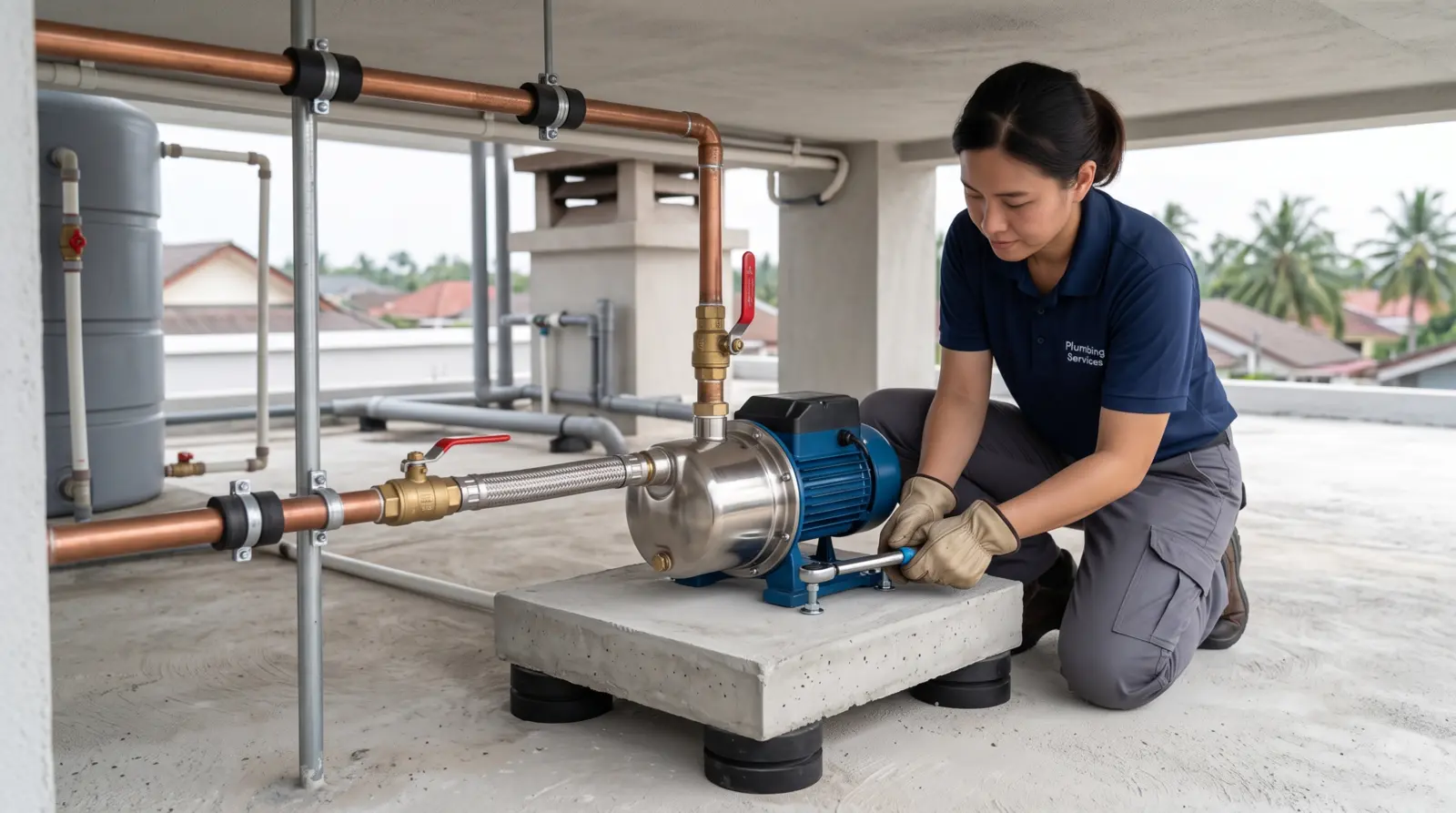
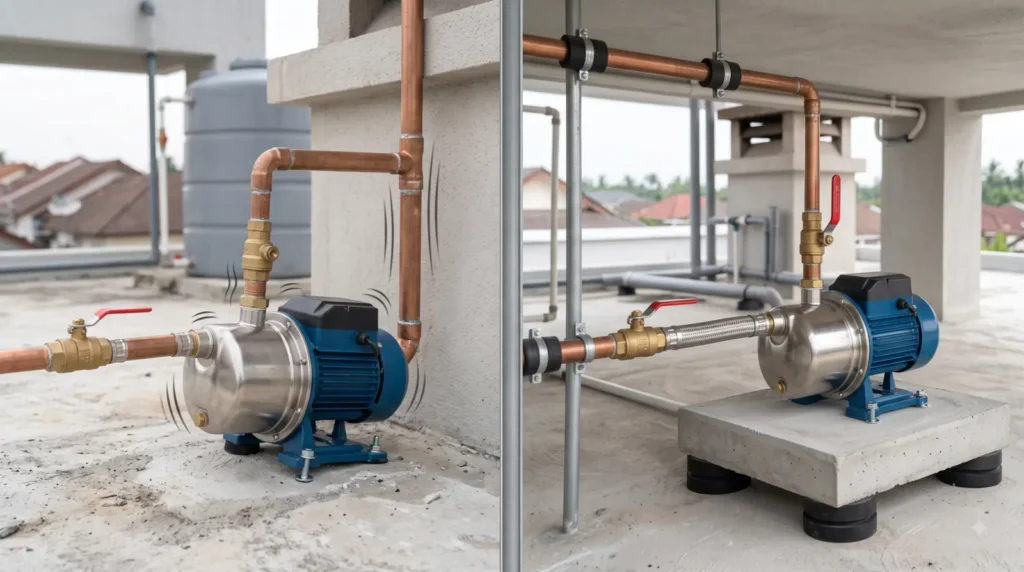
One customer had a booster pump installed on a rooftop. The pump produced a continuous humming sound that could be heard through the building.
Symptoms:
The pump produced a steady humming noise, and vibration travelled through the rooftop structure and nearby walls.
Diagnosis:
The mounting base was loose, the surface was uneven, and the pump vibration was being transferred into the building.
Solution:
The pump base was secured and anti-vibration rubber pads were installed. The noise and vibration were noticeably reduced.
This case shows that loud pump noise does not always mean the motor is damaged. A loose or uneven installation can amplify normal operating vibration throughout the building.
Common Causes of Booster Pump Noise and Vibration
1. A Loose or Uneven Mounting Base
A pump that is not firmly secured may vibrate against the floor during operation. An uneven base can also place stress on the pump and connected pipes.
2. Unsupported or Rigid Pipework
Pipes without adequate support can carry vibration into walls, ceilings, and floors. Rigid connections may make a normal motor hum sound much louder inside the home.
3. Missing Flexible Connectors
Pressure-rated flexible connectors can help isolate pump vibration from the fixed pipework. They must be correctly sized, approved for the application, and installed without twisting or excessive tension.
4. Air Entering the Suction Line
A leaking suction joint, low tank level, blocked inlet, or loss of prime can introduce air into the pump. This may cause irregular flow, crackling sounds, vibration, or damage from dry running.
5. An Oversized or Incorrect Pump
An oversized pump may create excessive flow, pressure, pipe noise, or frequent cycling. Pump size should be checked only after mounting, pipe support, water supply, and control problems have been inspected.
6. Worn Bearings or Impeller
Grinding, scraping, or a sudden change in motor sound may indicate worn bearings, a damaged impeller, or debris inside the pump. Continued operation may cause more serious damage.
7. Water Hammer or Valve Slam
A loud knock when the pump starts or stops may come from rapid pressure changes, unsupported pipes, or a fast-closing check valve. This is different from a continuous motor hum.
How to Diagnose the Noise
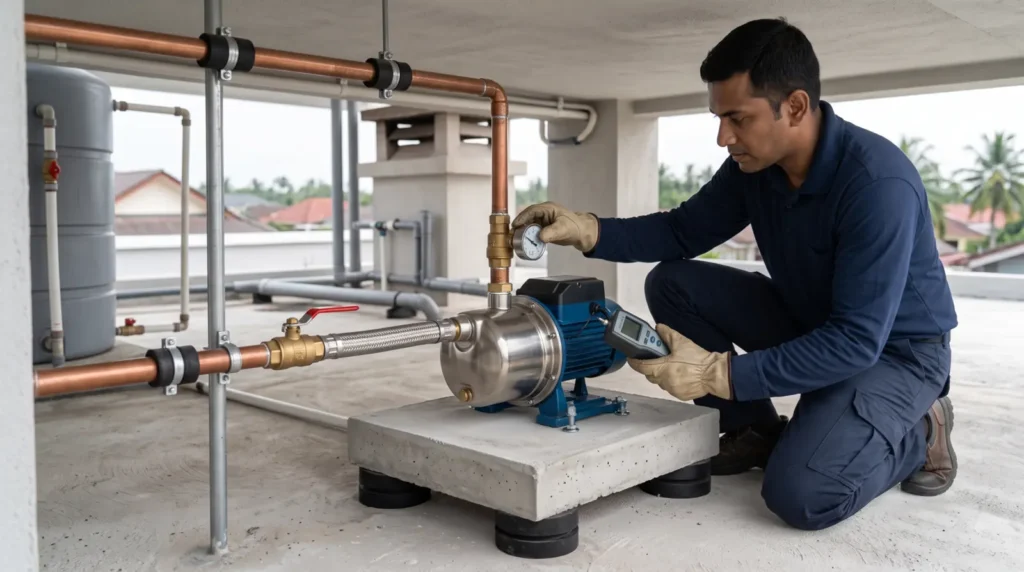
Identify when and where the noise occurs before replacing any parts. Start with the simplest external checks.
Check in This Order
- Observe whether the noise occurs during startup, continuous operation, or shutdown.
- Check whether the pump moves or rocks on its mounting base.
- Inspect pipe supports and identify where vibration enters a wall or floor.
- Check the tank level, suction joints, valves, and water flow for signs of air.
- Confirm that the pump is not cycling rapidly or producing excessive pressure.
- Stop the pump if grinding, overheating, leaking, or electrical problems are present.
Disconnect the power before touching the pump, mounting bolts, or electrical components. Electrical testing and internal motor repairs should be performed by a qualified technician.
How to Reduce Booster Pump Noise
Secure and Level the Pump Base
Mount the pump on a solid, flat surface and tighten the fasteners evenly. The base should support the pump without rocking, twisting, or placing strain on the pipes.
Install Anti-Vibration Rubber Pads
Place suitable anti-vibration pads between the pump base and mounting surface. The pads should reduce vibration while keeping the pump stable and correctly aligned.
Support and Isolate the Pipes
Add suitable pipe supports and prevent pipes from pressing directly against walls or structural surfaces. Use correctly rated flexible connectors where appropriate to reduce vibration transfer.
Restore a Stable Water Supply
Repair suction-side air leaks, refill an empty storage tank, clear inlet restrictions, and prime the pump when required. Do not allow the pump to continue operating without enough water.
Review the Pump Size and Settings
Confirm that the pump curve matches the required flow and total head. Excessive pressure may require a lower setting, a correctly sized pressure tank, a PRV, or a more suitable pump.
Do not completely enclose the pump in a soundproof box unless the design provides adequate ventilation, drainage, and service access. Trapped heat can shorten motor and control life.
Repair or Replace the Pump?
Noise alone does not prove that the entire pump needs replacement. Compare the cause, repair cost, pump age, and availability of replacement parts.
Repair Is Often Practical When:
- The base, rubber pads, pipe supports, or flexible connectors need correction.
- The fault involves a replaceable bearing, impeller, seal, switch, or sensor.
- The motor and pump body remain in good condition.
Replacement May Be Better When:
- The motor has burned out or the pump body is cracked.
- Several major mechanical or electronic components have failed.
- The pump is old, badly worn, or expensive to repair.
- The original pump type or size is unsuitable for the system.
How to Prevent Future Noise Problems
- Install the pump on a stable, level, and weather-protected base.
- Support the pipes and use suitable vibration-isolating connections.
- Keep the suction pipe airtight and maintain a stable water supply.
- Inspect changes in sound, vibration, leakage, and operating temperature.
- Choose the pump by required flow and total head—not horsepower alone.
ToollQ Pro Tip
If the pump has always been loud, inspect the mounting, pipes, location, and pump size. If the sound changed suddenly, check the water supply and internal components before continuing to operate it.
Frequently Asked Questions
Why does my booster pump make a loud humming noise?
A steady hum may be normal motor sound amplified by a loose base, rigid pipework, or nearby walls. A louder-than-normal hum can also indicate low voltage, a blocked pump, or a motor problem.
Will rubber pads completely silence the pump?
No. Rubber pads can reduce vibration transfer, but they cannot repair worn bearings, suction leaks, dry running, excessive pressure, or an incorrectly sized pump.
Can flexible connectors reduce pump vibration?
Yes. Correctly rated and installed flexible connectors can reduce vibration transfer into rigid pipes. They should not be used to compensate for badly aligned pipework.
When should I turn off a noisy booster pump?
Turn it off if it runs dry, overheats, smells burned, leaks near electrical parts, makes grinding sounds, or repeatedly trips the breaker.
Related Guides
If the pump type or size may be contributing to the noise, read our Best Water Pressure Booster Pump Buying Guide.
If the pump starts and stops repeatedly, read Why Does My Booster Pump Keep Cycling? before replacing it.
For flow, pressure, and total-head calculations, read our Booster Pump Sizing Guide.
Final Recommendation
Begin with the mounting base and connected pipework when a booster pump produces excessive humming or vibration. Secure the pump, level the base, support the pipes, and use suitable anti-vibration pads and flexible connectors where required.
Stop the pump if the sound changes suddenly or is accompanied by dry running, overheating, grinding, leakage, or electrical problems. Check the water supply, pump size, and internal condition before deciding whether repair or replacement provides better value.