Best Kitchen Faucet Materials: Brass vs Stainless Steel vs Zinc Alloy (2026 Guide)
Choosing the right kitchen faucet material is one of the most important decisions when buying a new faucet. While many faucets may look similar, the material used inside determines how long the faucet will last, how well it resists corrosion, and whether it offers good long-term value.
In this guide, ToollQ compares brass, stainless steel, and zinc alloy based on durability, corrosion resistance, maintenance, safety, and price. Whether you’re renovating your kitchen, replacing an old faucet, or choosing one for a rental property, this guide will help you make a confident buying decision.
Quick Answer
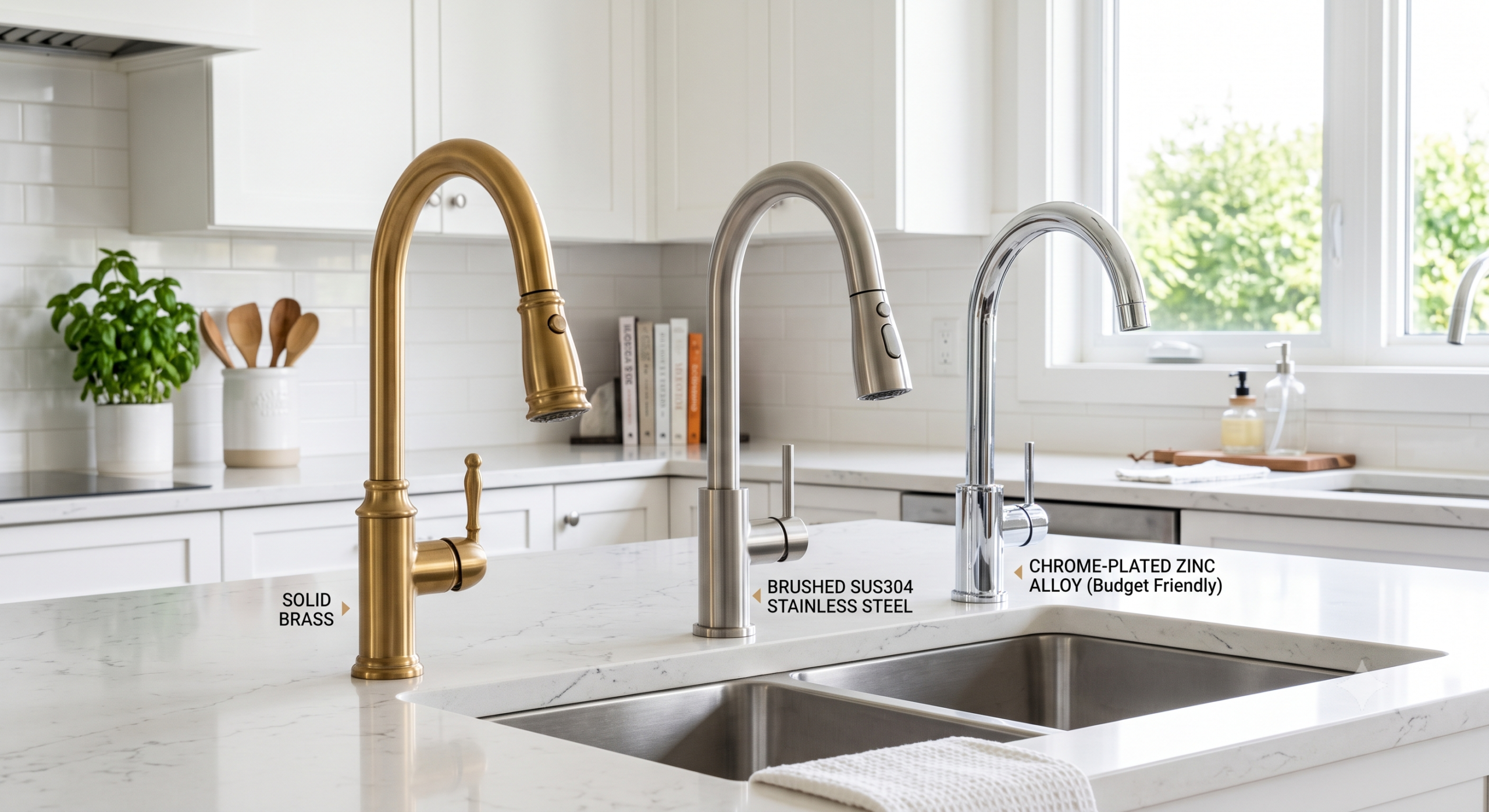
If you’re looking for the best overall kitchen faucet material, choose SUS304 stainless steel or solid brass.
- Brass offers exceptional durability and has been trusted for decades in high-quality plumbing fixtures.
- SUS304 stainless steel is rust-resistant, hygienic, lead-free, and an excellent choice for modern kitchens.
- Zinc alloy is the most affordable option but is generally less durable and better suited for temporary use or rental properties.
For most homeowners, SUS304 stainless steel with a high-quality ceramic cartridge provides the best balance of durability, safety, appearance, and value.
Why You Can Trust ToollQ
ToollQ is built on practical plumbing and hardware knowledge gained from years of experience helping customers choose faucets, valves, fittings, and other plumbing products. Rather than recommending the most expensive option, we focus on helping homeowners, DIY enthusiasts, and professionals choose products that match their needs, budget, and long-term expectations.
Our buying guides are written in clear, practical language to help you make confident purchasing decisions based on real-world use instead of marketing claims.
Table of Contents
- Brass: The Best Choice for Long-Term Durability
- Stainless Steel: Modern, Hygienic, and Rust-Resistant
- Zinc Alloy: An Affordable Option for Budget Buyers
- Brass vs Stainless Steel vs Zinc Alloy Comparison
- Which Material Should You Choose?
- How to Identify Different Faucet Materials
- Kitchen Faucet Buying Checklist
- Frequently Asked Questions
- Related Buying Guides
- Conclusion
Brass: The Best Choice for Long-Term Durability
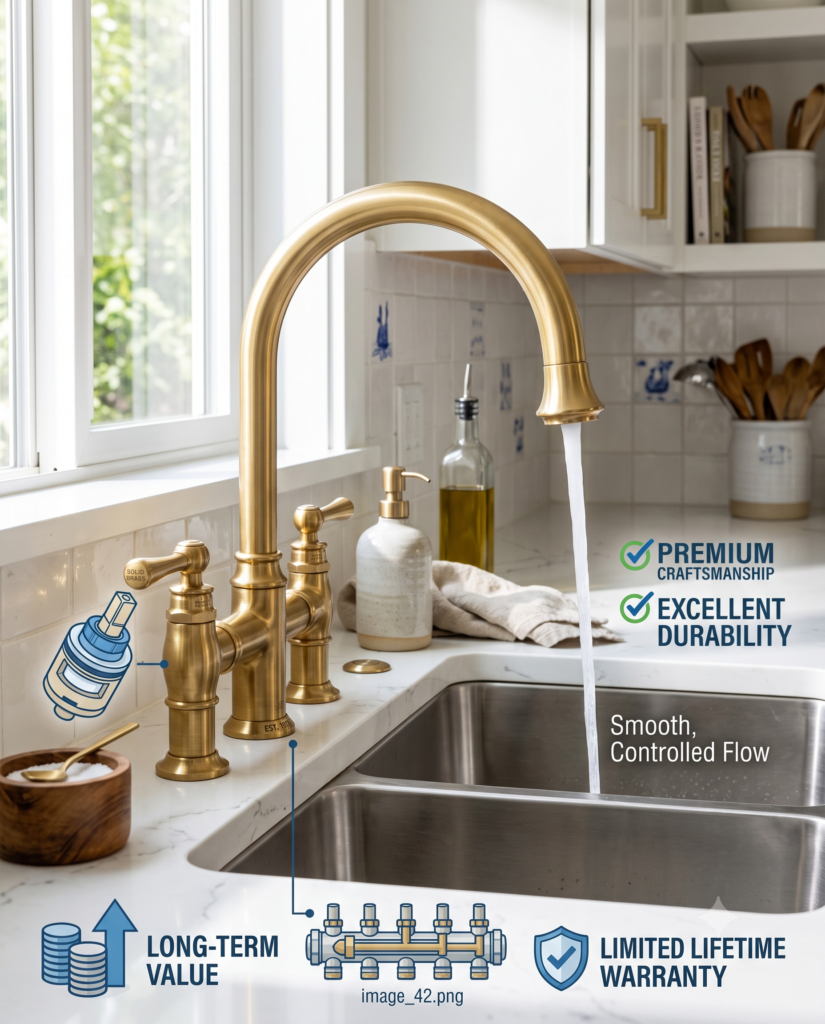
Brass has been one of the most trusted materials for kitchen faucets for decades. Known for its exceptional strength and corrosion resistance, solid brass faucets can withstand daily use while maintaining reliable performance for many years.
Although brass faucets usually cost more than budget alternatives, they often provide better long-term value because they are less likely to crack, corrode, or require frequent replacement. Many premium kitchen faucets still use solid brass bodies because of their proven durability.
Best for:
- Homeowners planning to stay in their home for many years
- Families looking for maximum durability
- Heavy daily kitchen use
- Buyers who prioritize long-term value over the lowest upfront cost
ToollQ Expert Tip:
When choosing a brass faucet, look beyond the material alone. A solid brass body combined with a high-quality ceramic cartridge offers excellent durability and can provide reliable performance for many years with proper maintenance.
Stainless Steel: Modern, Hygienic, and Rust-Resistant
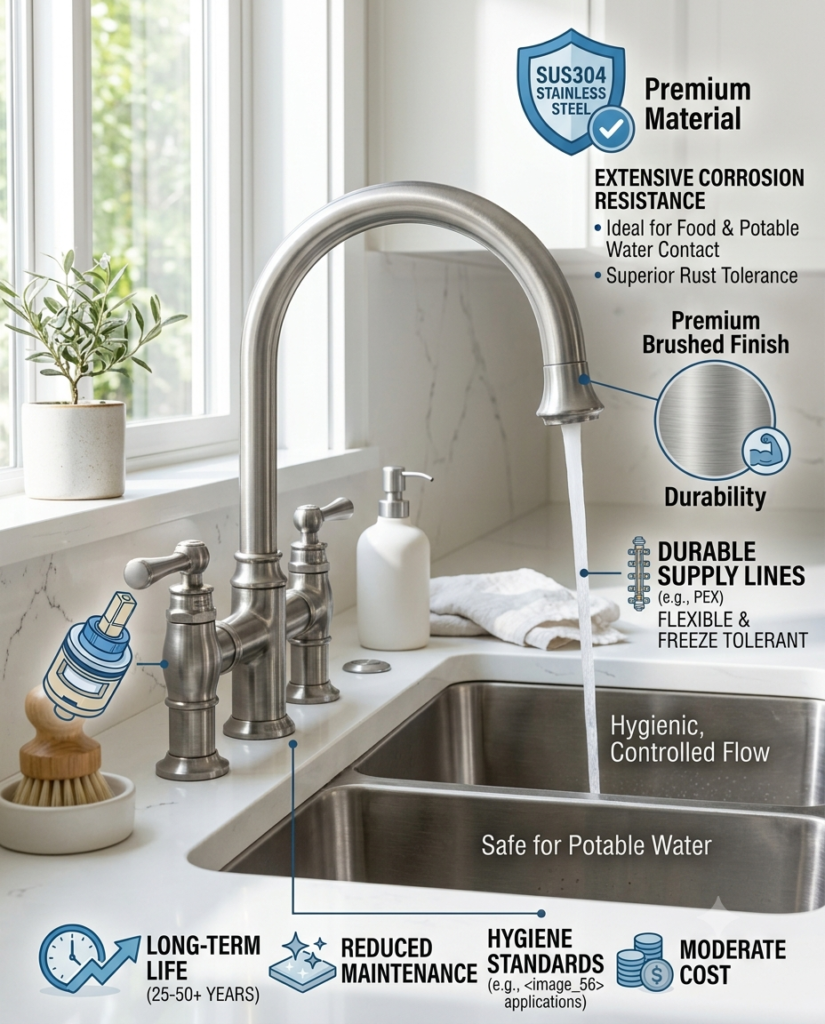
Stainless steel has become one of the most popular materials for modern kitchen faucets because it combines durability, corrosion resistance, and a clean, contemporary appearance. High-quality SUS304 stainless steel is especially valued for its excellent rust resistance, lead-free composition, and easy maintenance.
Unlike lower-grade stainless steel, SUS304 performs better in humid kitchen environments and is less likely to develop rust or staining over time. It is also a preferred choice for homeowners who want a safe, hygienic faucet for everyday drinking water.
Best for:
- Modern kitchens
- Families who prioritize hygiene and drinking water safety
- Homeowners looking for low-maintenance faucets
- Buyers seeking the best balance between quality and price
ToollQ Expert Tip:
Not all stainless steel faucets are made from SUS304. Some budget models use SUS201, which has lower corrosion resistance. Before buying, always check the product specifications or ask the seller which stainless steel grade is used. To learn more, read our guide: SUS304 vs SUS201 Stainless Steel: What’s the Difference?
Zinc Alloy: An Affordable Option for Budget Buyers
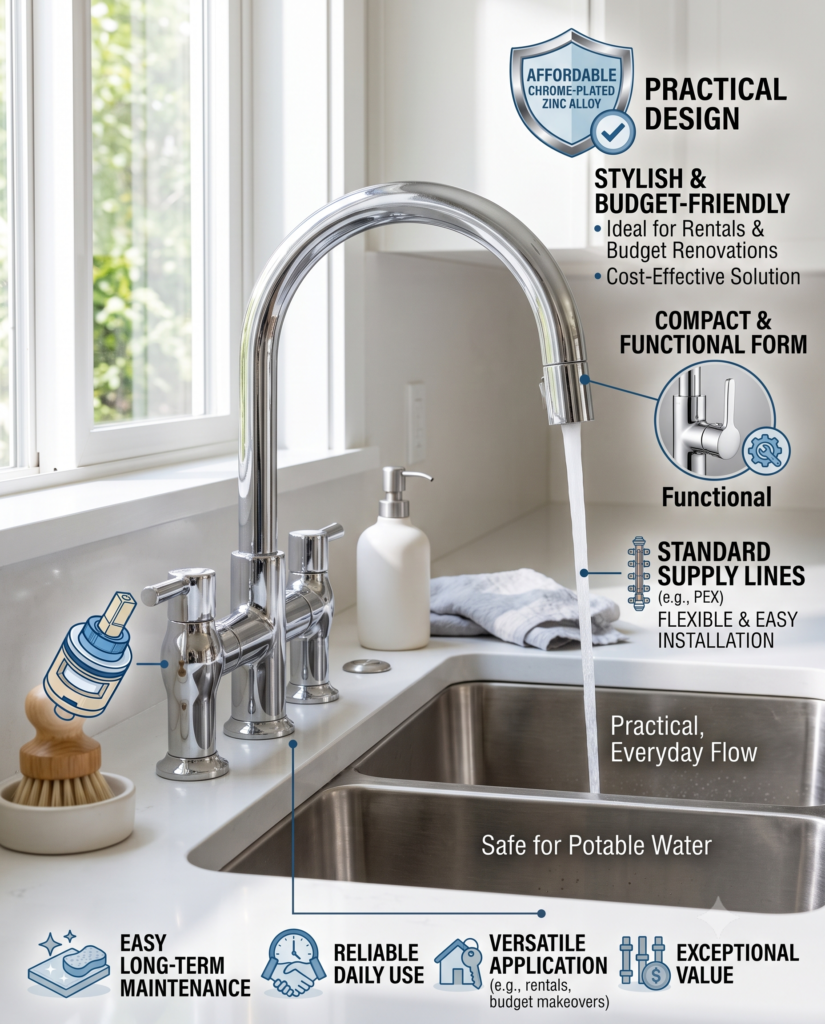
Zinc alloy is commonly used in entry-level kitchen faucets because it is lightweight, inexpensive, and easy to manufacture. While it can be a practical solution for budget-conscious buyers, it generally does not offer the same level of durability or corrosion resistance as solid brass or SUS304 stainless steel.
For kitchens with light daily use, a quality zinc alloy faucet may perform adequately. However, if you’re looking for a faucet that can withstand years of heavy use, investing in a higher-quality material is usually the better long-term choice.
Best for:
- Rental properties
- Temporary installations
- Budget renovations
- Buyers with limited budgets
ToollQ Expert Tip:
If you’re buying a faucet for your own home and plan to use it for many years, spending a little more on solid brass or SUS304 stainless steel can reduce the need for future repairs or replacements, making it a smarter long-term investment.
Brass vs Stainless Steel vs Zinc Alloy: Quick Comparison
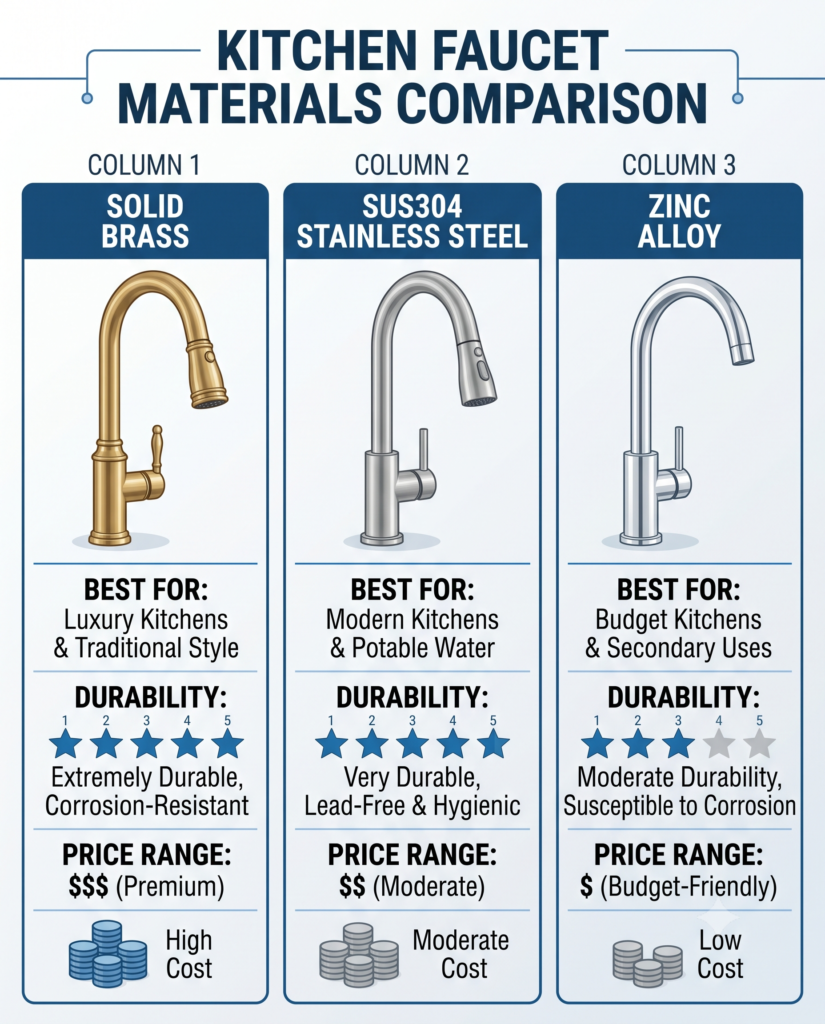
If you’re comparing kitchen faucet materials, here’s a quick overview to help you choose the best option based on your needs and budget.
Quick Comparison
| Material | Best For | Overall Rating |
| Brass | Long-term homeowners | ⭐️⭐️⭐️⭐️⭐️ |
| SUS304 Stainless Steel | Most homeowners | ⭐️⭐️⭐️⭐️⭐️ |
| Zinc Alloy | Budget & Rental Properties | ⭐️⭐️⭐️ |
Brass
- Durability: ⭐⭐⭐⭐⭐
- Corrosion Resistance: Excellent
- Maintenance: Low
- Price Range: $$$
- Ideal For: Homeowners looking for long-term reliability
SUS304 Stainless Steel
- Durability: ⭐⭐⭐⭐⭐
- Corrosion Resistance: Excellent
- Maintenance: Very Low
- Price Range: $$–$$$
- Ideal For: Most modern households
Zinc Alloy
- Durability: ⭐⭐⭐
- Corrosion Resistance: Fair
- Maintenance: Moderate
- Price Range: $
- Ideal For: Rental properties and temporary installation
ToollQ Expert Tip:
If you’re buying a faucet for your own home, solid brass and SUS304 stainless steel are both excellent long-term investments. If you’re choosing between them, consider your priorities: brass is known for its proven durability, while SUS304 stainless steel offers excellent corrosion resistance, a modern appearance, and lead-free construction. Zinc alloy is best reserved for budget-conscious or short-term applications.
Which Material Should You Choose?
Choosing the right kitchen faucet material depends on how you plan to use it, how long you expect it to last, and your budget. Instead of simply buying the most expensive option, choose the material that best matches your needs.
Choose Brass If you:
- Plan to stay in your home for many years
- Want maximum durability
- Don’t mind paying more for long-term value
- Prefer proven reliability
Choose SUS304 Stainless Steel If you:
- Want the best balance of quality and price
- Prefer a modern, clean appearance
- Need excellent corrosion resistance
- Want a lead-free faucet for everyday use
Choose Zinc Alloy If you:
- Have a limited budget
- Need a faucet for a rental property
- Are replacing a faucet temporarily
- Don’t expect heavy daily use
ToollQ Recommendation:
For most homeowners, a SUS304 stainless steel faucet with a high-quality ceramic cartridge offers the best combination of durability, corrosion resistance, hygiene, appearance, and overall value. If you’re planning to stay in your home for many years and don’t mind spending a little more, a solid brass faucet is also an excellent long-term investment.
How to Identify Different Faucet Materials
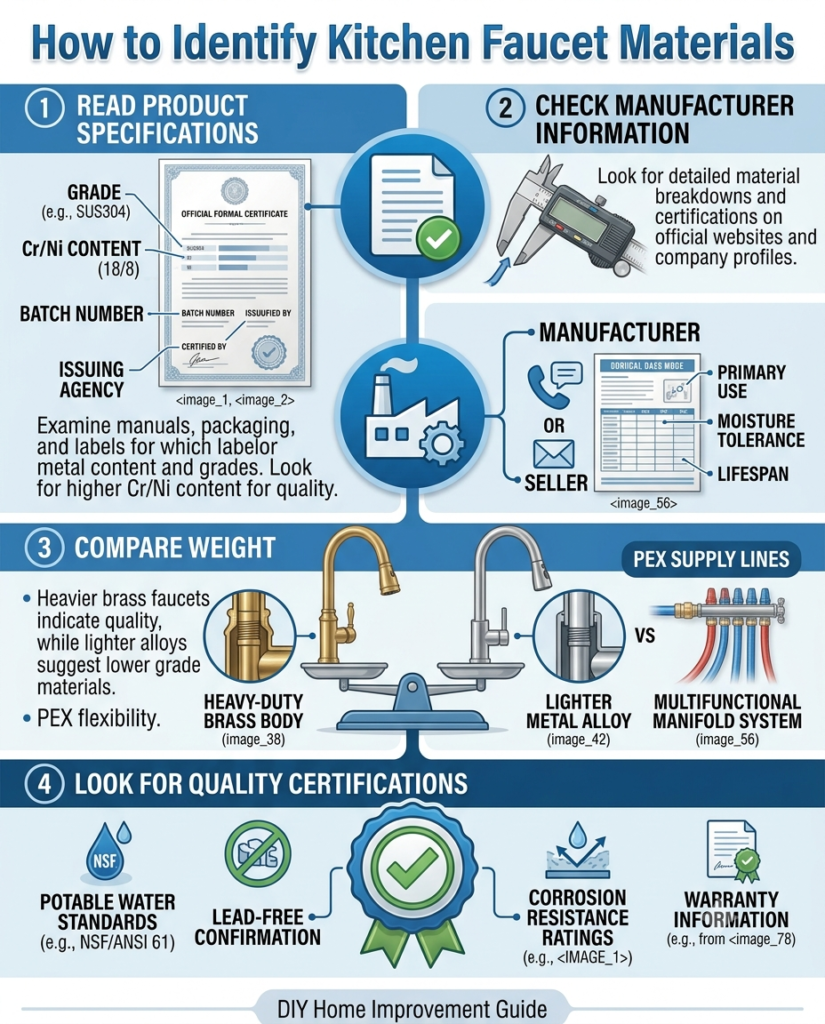
Choosing the right faucet isn’t just about appearance. Many faucets look similar on the outside, but the material used inside can be very different. Here are a few simple ways to identify what your kitchen faucet is made of before you buy.
Check the Product Specifications
The easiest way to identify a faucet material is by reading the product description or specifications. Reputable manufacturers usually state whether the faucet is made from solid brass, SUS304 stainless steel, or zinc alloy.
Ask the Seller or Manufacturer
If the material isn’t clearly listed, ask the seller directly. A trustworthy retailer should be able to tell you what material the faucet body is made from and whether it uses a ceramic cartridge.
Compare the Weight
Solid brass faucets are usually the heaviest, while zinc alloy faucets are noticeably lighter. SUS304 stainless steel faucets typically fall somewhere in between, depending on their design and wall thickness.
Look for Quality Certifications
Some premium faucets carry certifications related to drinking water safety or material quality. These certifications can provide additional confidence when choosing a faucet for long-term use.
ToollQ Expert Tip:
Don’t judge a faucet by its appearance alone. Two faucets may look almost identical, but the material inside can greatly affect durability, corrosion resistance, and long-term performance. Always verify the material before making your purchase.
Kitchen Faucet Buying Checklist
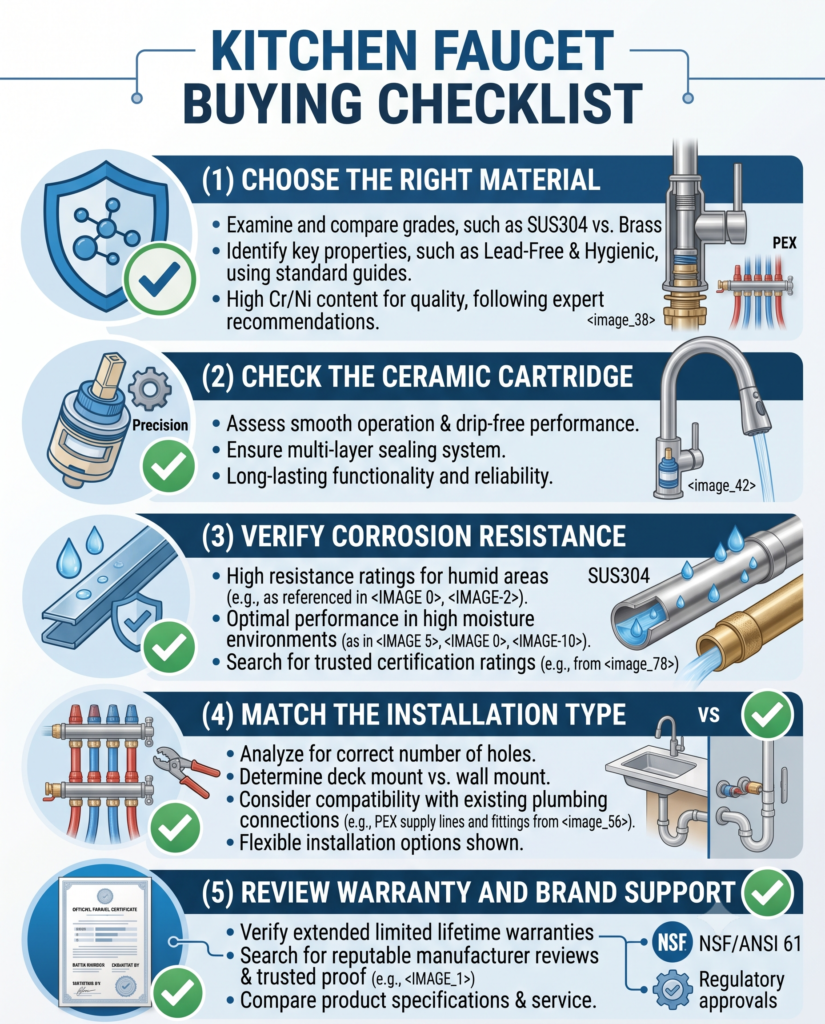
Before buying a kitchen faucet, use this simple checklist to make sure you’re choosing the right material for your home and budget.
✅ Material
- Choose solid brass for maximum durability.
- Choose SUS304 stainless steel for the best balance of quality, hygiene, and value.
- Choose zinc alloy only if you have a limited budget or need a temporary solution
✅ Cartridge
- Look for a high-quality ceramic cartridge for smooth operation and long service life.
- Avoid faucets that don’t specify the cartridge type.
✅ Corrosion Resistance
- For humid kitchens or long-term use, select materials with excellent corrosion resistance such as solid brass or SUS304 stainless steel.
✅ Installation Purpose
- Own Home: Invest in a higher-quality material for better long-term value.
- Rental Property: A budget-friendly option may be sufficient if heavy daily use isn’t expected.
✅ Warranty & Brand Support
- Buy from reputable brands that provide clear product specifications and warranty coverage.
- A longer warranty often reflects greater confidence in product quality.
ToollQ Buying Tip:
The best kitchen faucet isn’t always the most expensive one. Choose the material based on where it will be used, how long you plan to use it, and your budget. A faucet that matches your needs will usually provide better long-term value than simply choosing the cheapest or most expensive option.
Related Buying Guides
Want to learn more before choosing your next kitchen faucet? These guides will help you compare materials, understand stainless steel grades, and make a smarter buying decision.
- SUS304 vs SUS201 Stainless Steel: What’s the Difference? — Learn how different stainless steel grades affect corrosion resistance, durability, and long-term performance.
- Best Kitchen Faucet Buying Guide (2026) — Discover the key factors to consider before buying a kitchen faucet, including materials, cartridges, installation, and budget.
- Kitchen Faucet Finishes Explained: Chrome vs Brushed Nickel vs Matte Black — Compare the most popular faucet finishes and choose the one that best matches your kitchen style and maintenance preferences.
ToollQ Tip:
Reading a few related buying guides before purchasing can help you avoid costly mistakes and choose a faucet that better fits your home, budget, and long-term needs.
Frequently Asked Questions
Which kitchen faucet material lasts the longest?
Solid brass and SUS304 stainless steel are widely considered the most durable materials for kitchen faucets. Both offer excellent corrosion resistance and can last for many years when paired with a high-quality ceramic cartridge.
Is stainless steel better than brass for kitchen faucets?
Neither material is universally better. Solid brass is known for its long history of durability, while SUS304 stainless steel offers excellent corrosion resistance, a modern appearance, and a lead-free construction. The best choice depends on your budget and preferences.
Is zinc alloy a good choice for kitchen faucets?
Zinc alloy is a practical option for budget-conscious buyers, rental properties, or temporary installations. However, it generally doesn’t provide the same durability or long-term performance as solid brass or SUS304 stainless steel.
How can I tell if a faucet is made from SUS304 stainless steel?
Check the product specifications, ask the manufacturer, or look for “SUS304” or “304 Stainless Steel” in the product description. Reputable brands usually provide this information clearly.
What should I look for besides the faucet material?
Besides the faucet body material, pay attention to the ceramic cartridge, corrosion resistance, warranty, installation compatibility, and the reputation of the manufacturer. These factors also affect long-term performance and reliability.
Conclusion
Choosing the right kitchen faucet material isn’t about buying the most expensive option—it’s about choosing the one that best fits your home, budget, and long-term needs.
For most homeowners, SUS304 stainless steel offers the best balance of durability, corrosion resistance, hygiene, and value. If you’re looking for maximum longevity and don’t mind spending more, solid brass remains one of the most reliable materials available. Zinc alloy can still be a practical choice for rental properties or temporary installations where keeping costs low is the priority.
ToollQ Final Recommendation:
Before buying a kitchen faucet, compare the material, ceramic cartridge, warranty, and intended use rather than focusing on price alone. Choosing the right combination will provide better performance, fewer maintenance issues, and greater long-term value.